As we began our Serengeti safari we kept hearing the term “the Big Five”. If we had seen the big five yet, wishing us luck on seeing all big five, and so on. Jesse, the calloused safari veteran, knew the term well (and happened to not have seen all five yet), but I didn’t know exactly what the term meant – maybe the five biggest, or the five coolest, or perhaps the five most interesting animals? Very quickly I learned the term actually has an inglorious origin, denoting the five animals in Africa that are the most dangerous to hunt by big game hunters.
Big game hunting has received a lot of press lately, as well as poaching. This blog is meant for sharing our experiences traveling this summer, not for getting on a soapbox. But suffice it to say – these animals are magnificent alive, and we both feel privileged to have spent some time with them in their natural environment.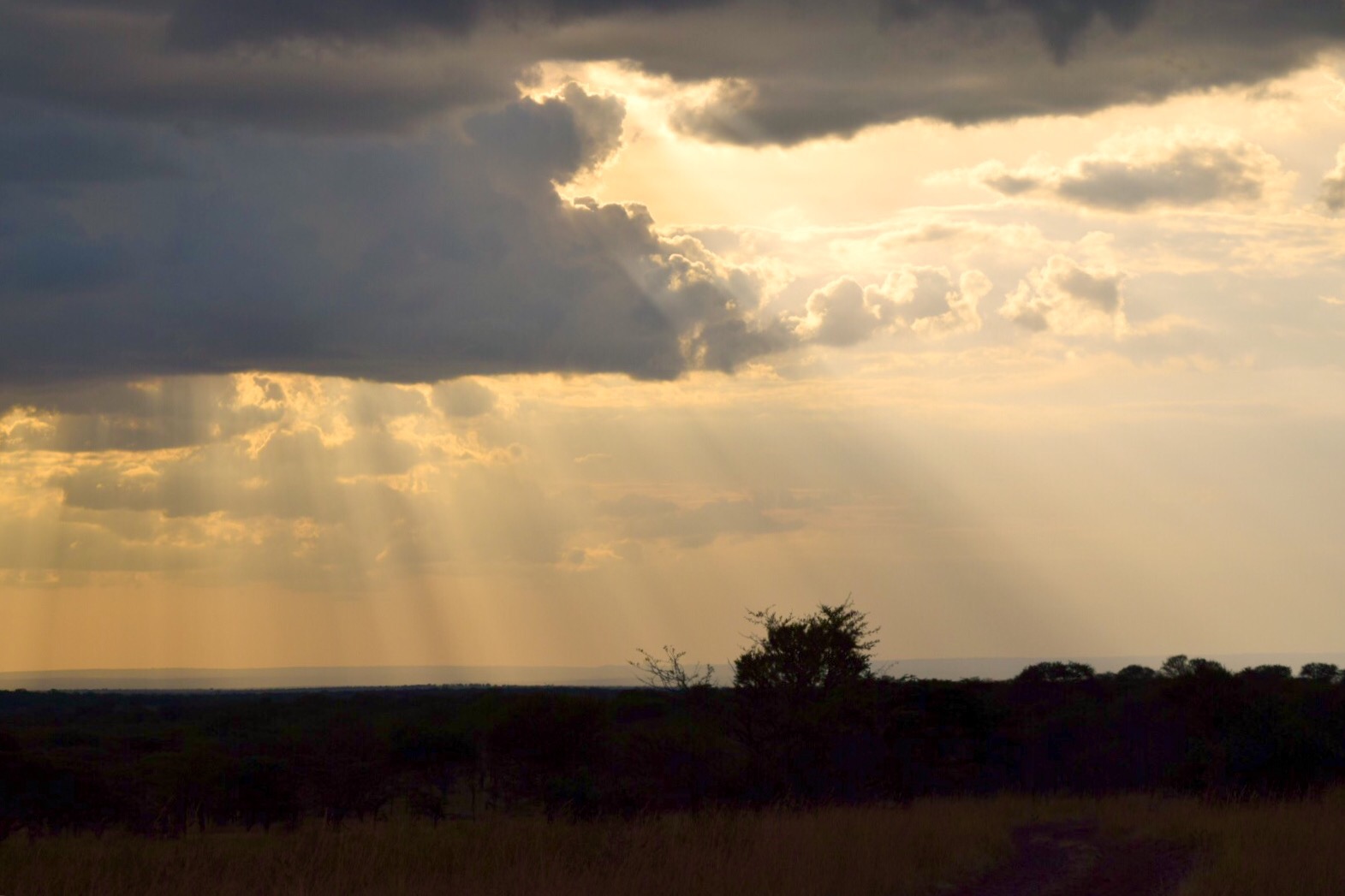 The other thing that bothered me about the term “the big five”, is that ALL the animals in the Serengeti are cool and interesting, and I didn’t want to focus on finding animals just to check them off on a list. That being said, by day 3 or so, we had seen a LOT of gazelle, wildebeest, giraffes, and baboons, so having the goal of seeing a particularly elusive animal gave us a fun challenge.
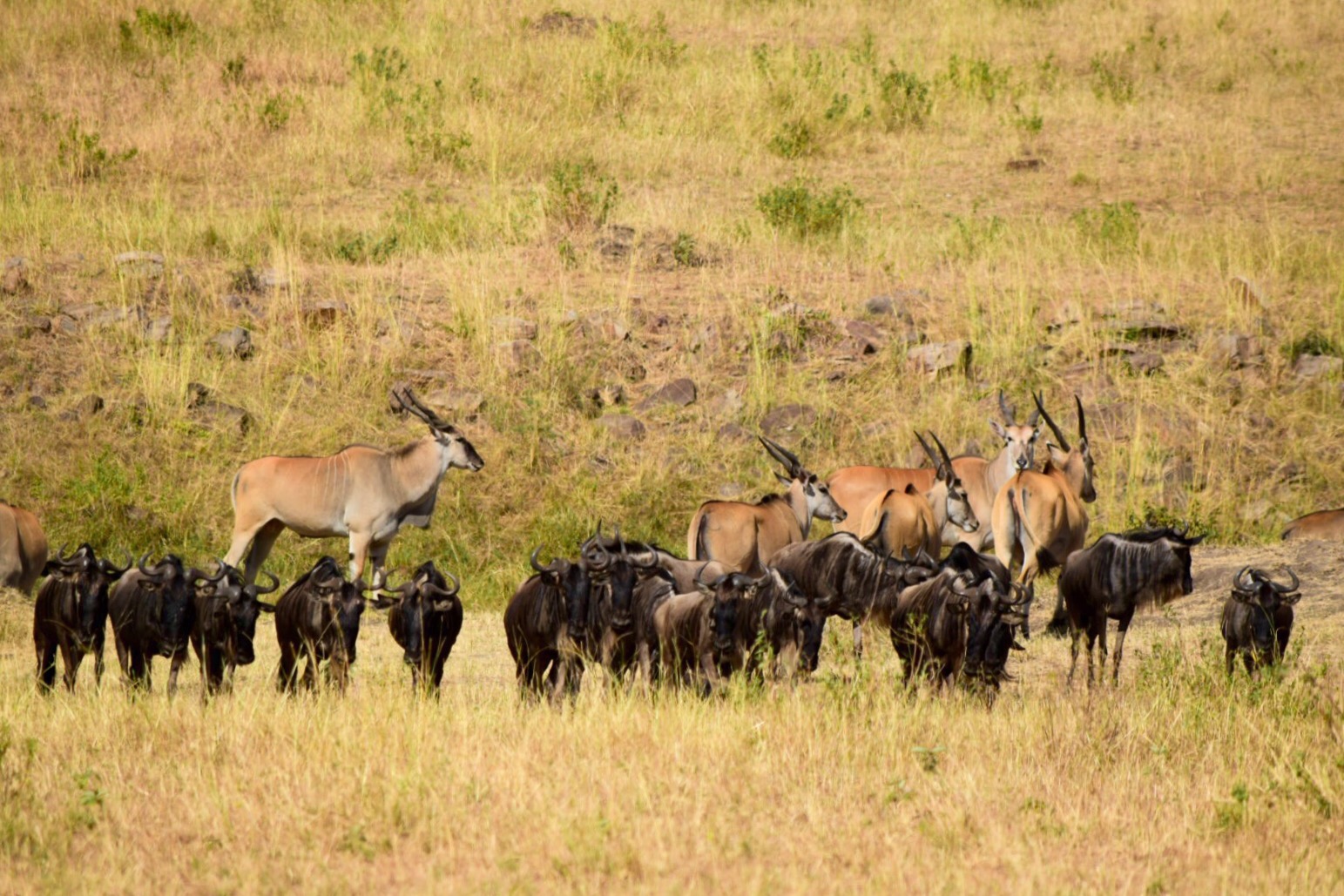 So the big five are: elephant, buffalo, lion, rhino, and leopard. All five can be seen in South Africa, Botswana, Tanzania, Kenya, DRC, Zambia, Zimbabwe, Namibia, Ethiopia, Uganda, and Malawi.
Elephants were probably the easiest, as they were everywhere, were huge and easy to spot, and didn’t seem to mind being near us at all. Here is a large herd taking a mud bath in the middle of the road ahead of us.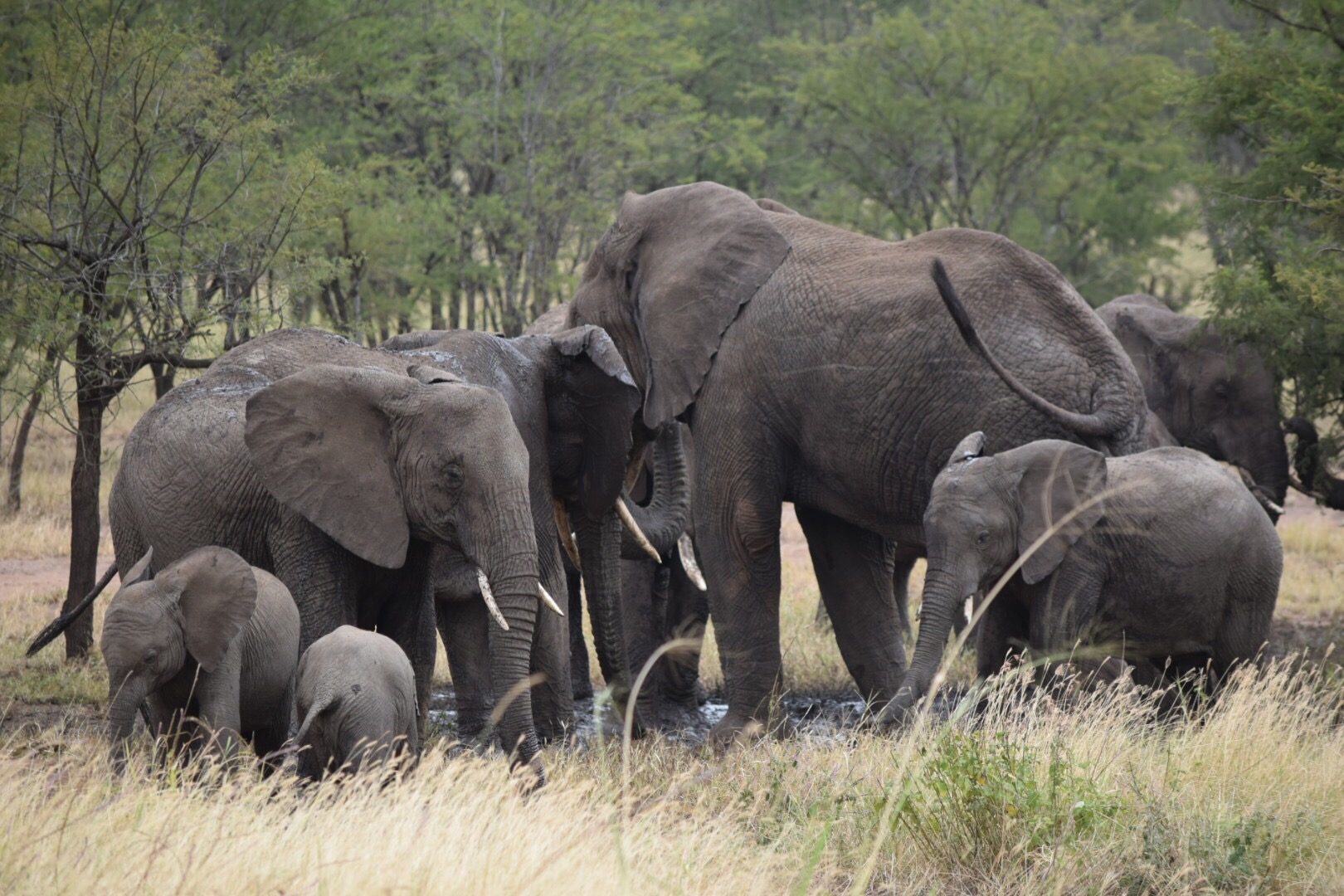
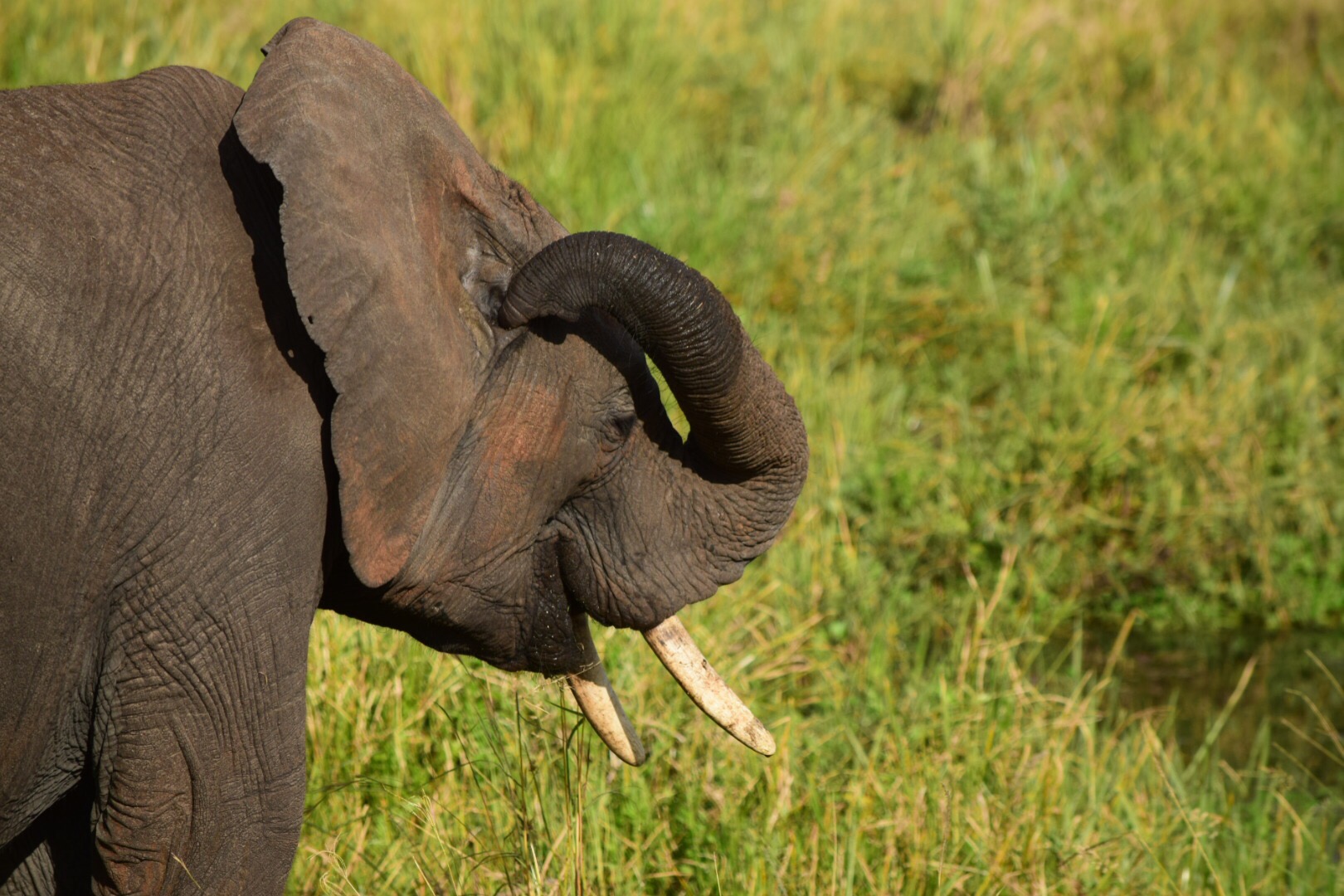
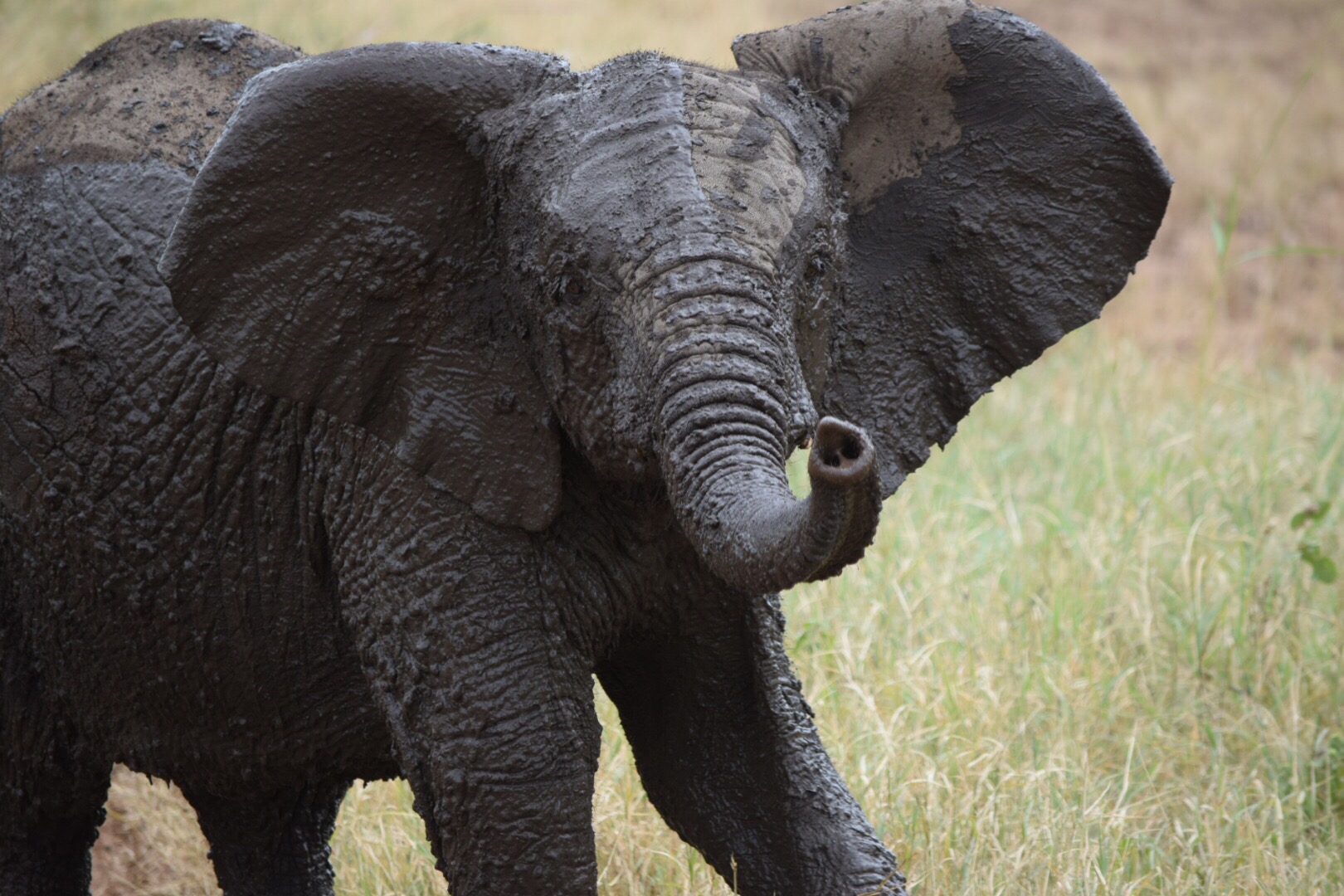 Ears need cleaning too.
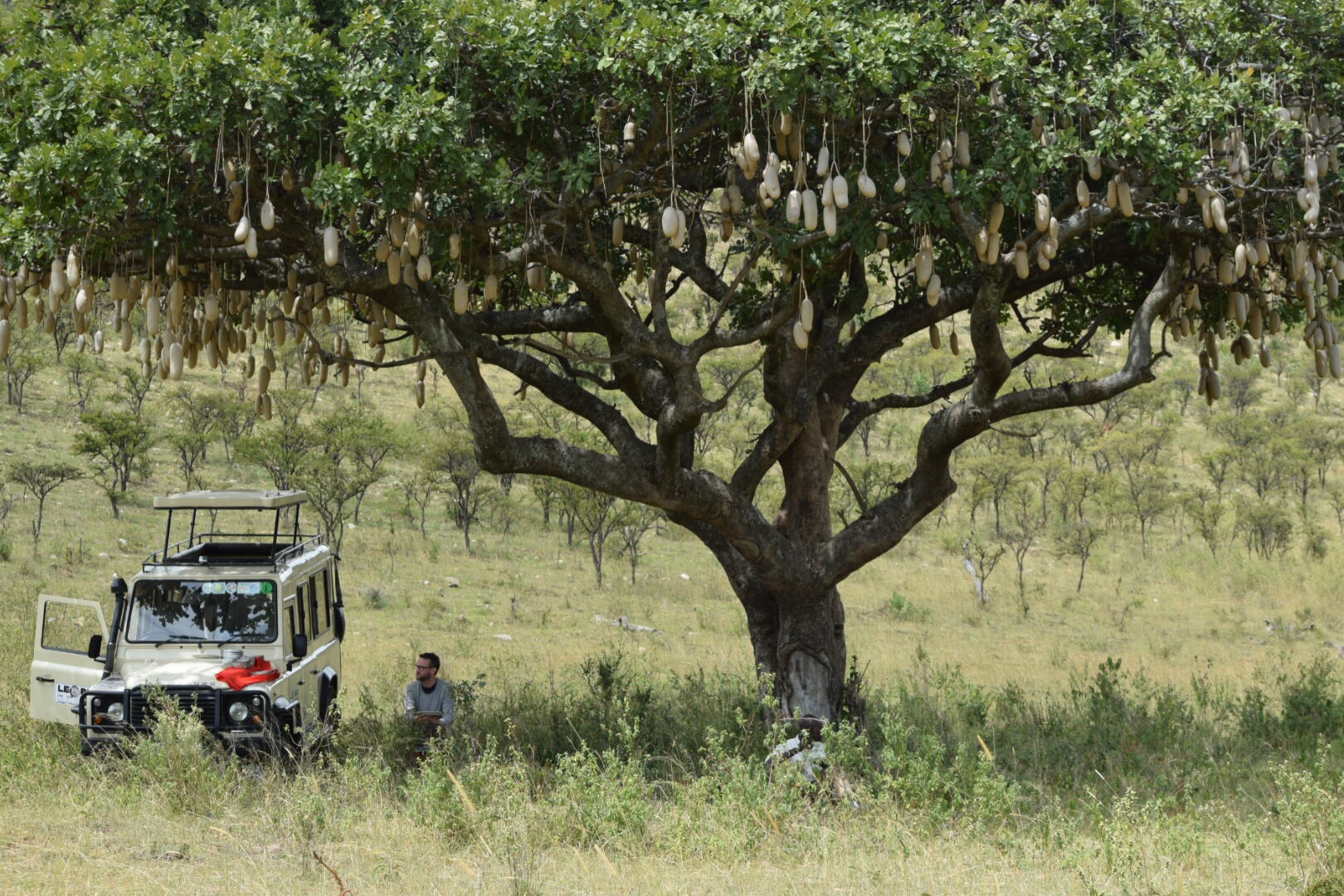
 One memorable lunch, we stopped to eat under a sausage tree (so named for the seed pods that look like enormous sausage links)…
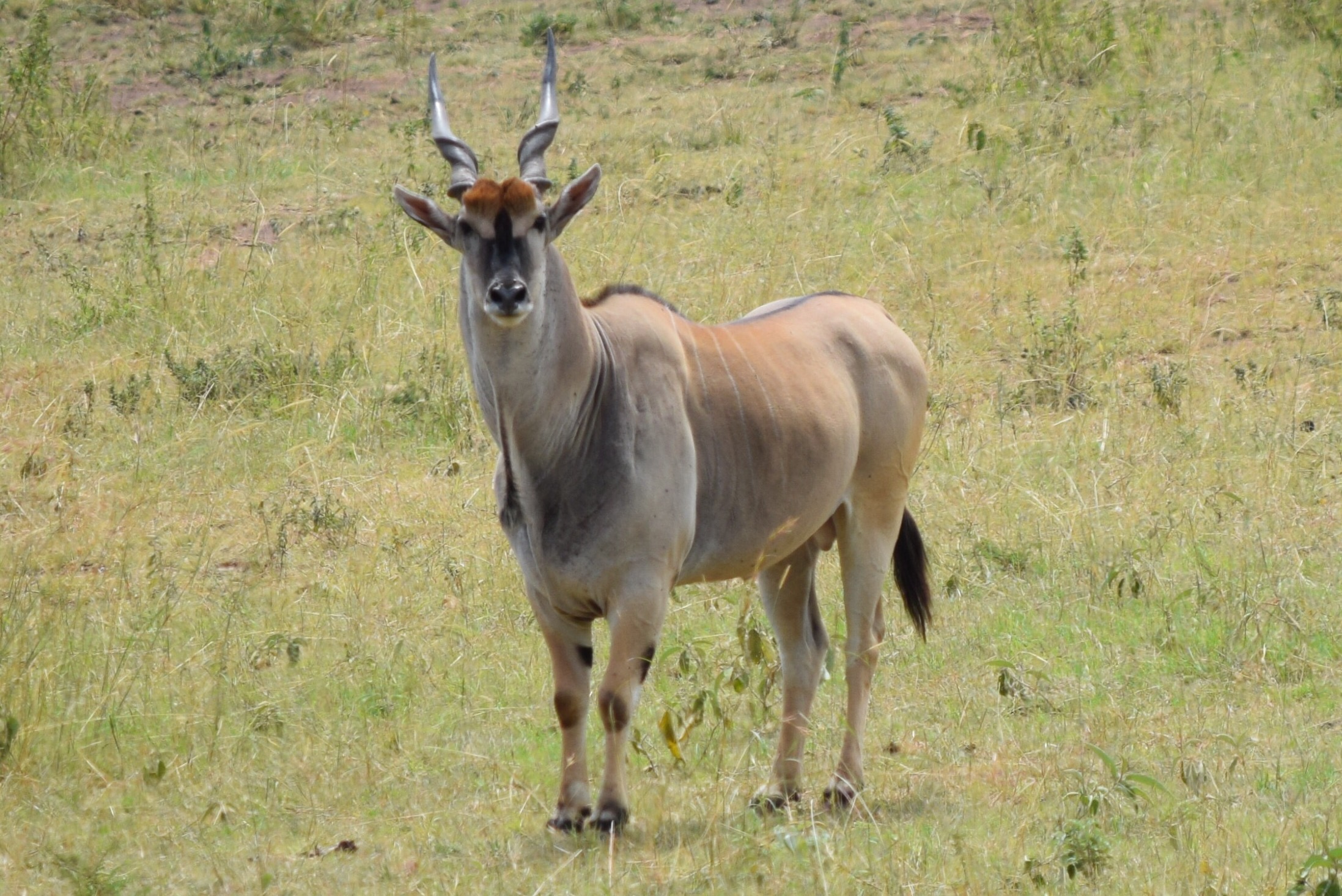
 We saw a shy eland come bounding over the hill towards us, becoming completely shocked and terrified as soon as he heard the camera click.
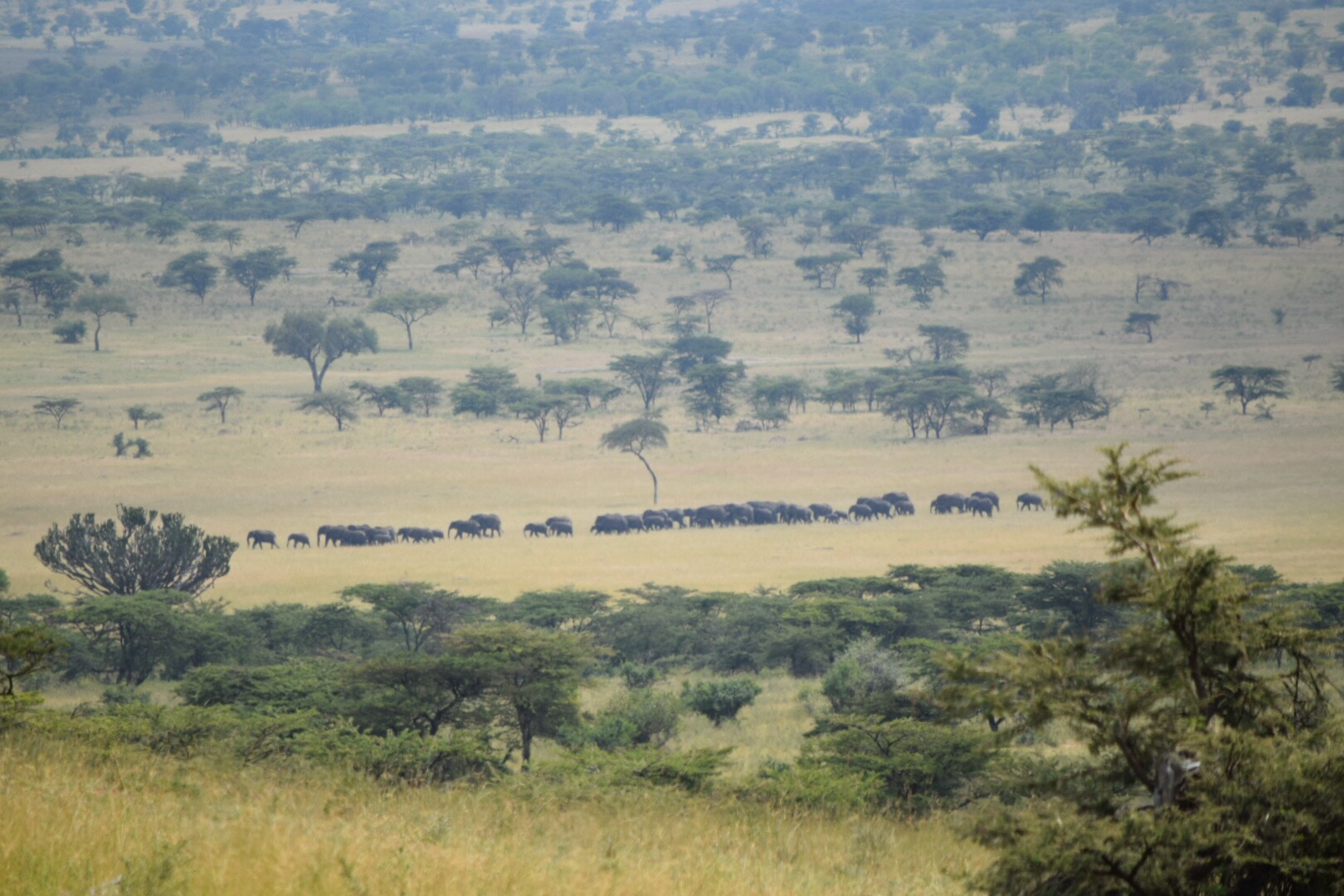
 Then we saw a herd of over a hundred elephants crossing the plain down below.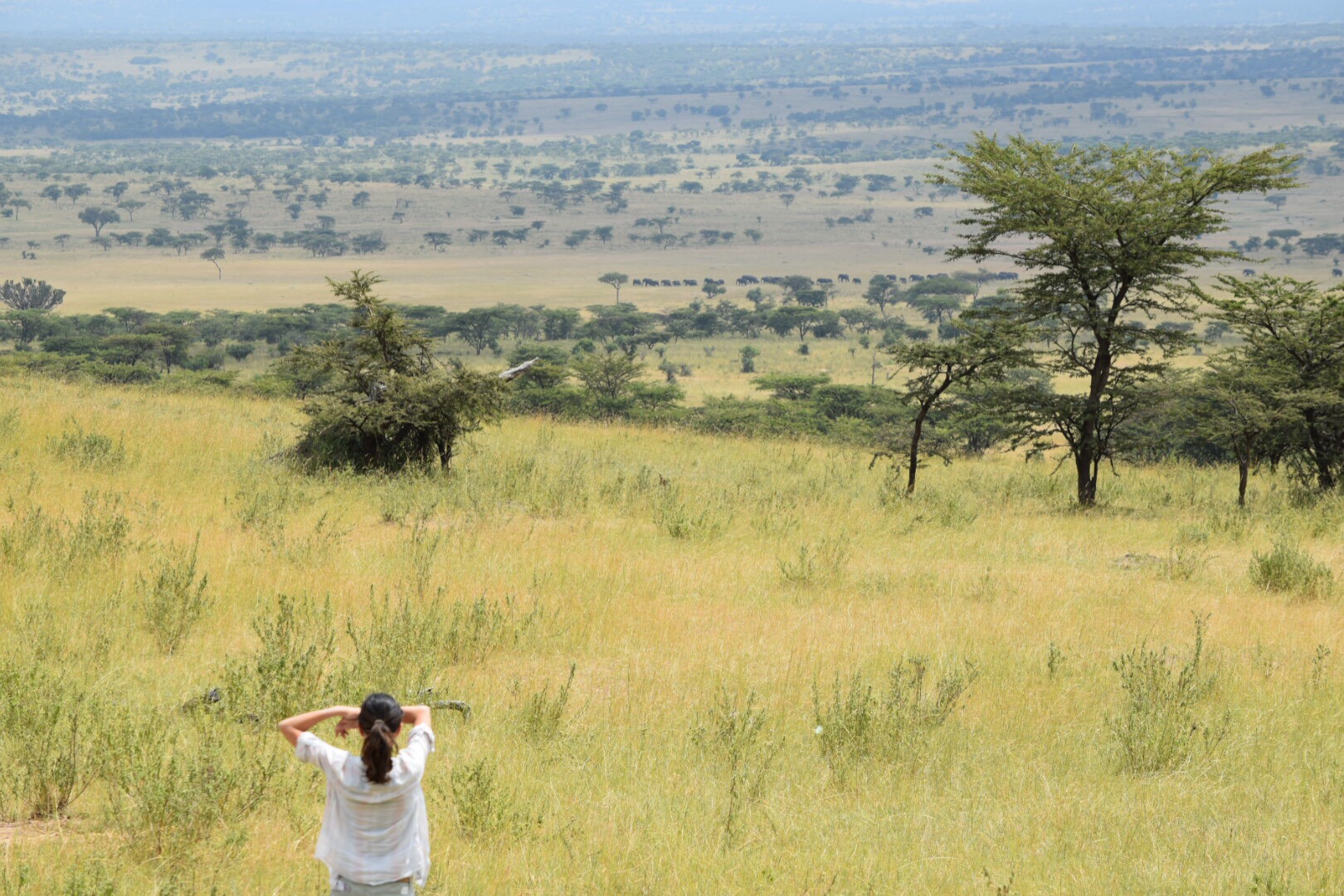
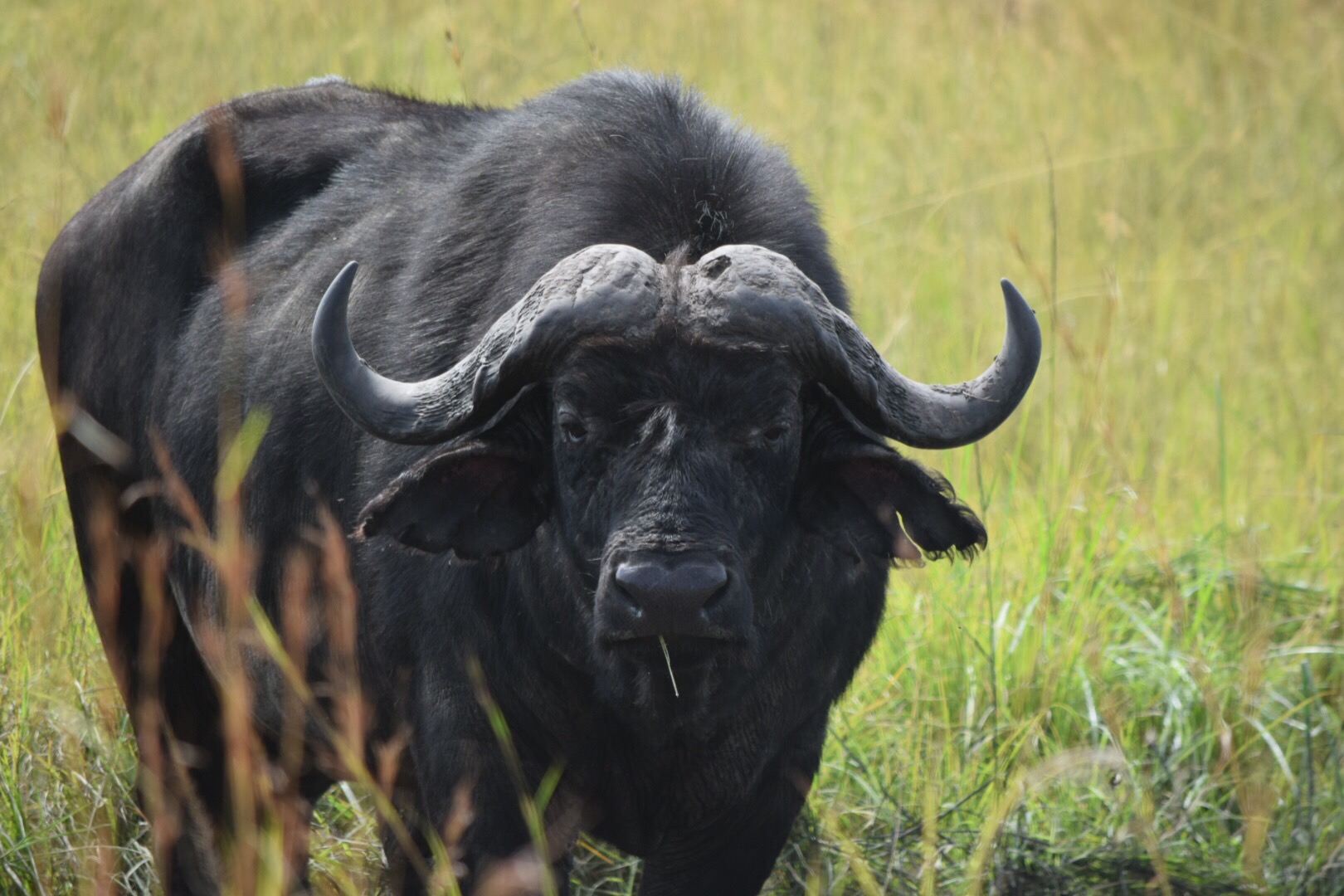
 Cape buffalo are one of the most dangerous animals in the park, according to our guide Max. He told us about a ranger friend of his that was very recently killed by a buffalo. They are responsible for about 200 deaths a year, and can be wily and vengeful in their attacks.
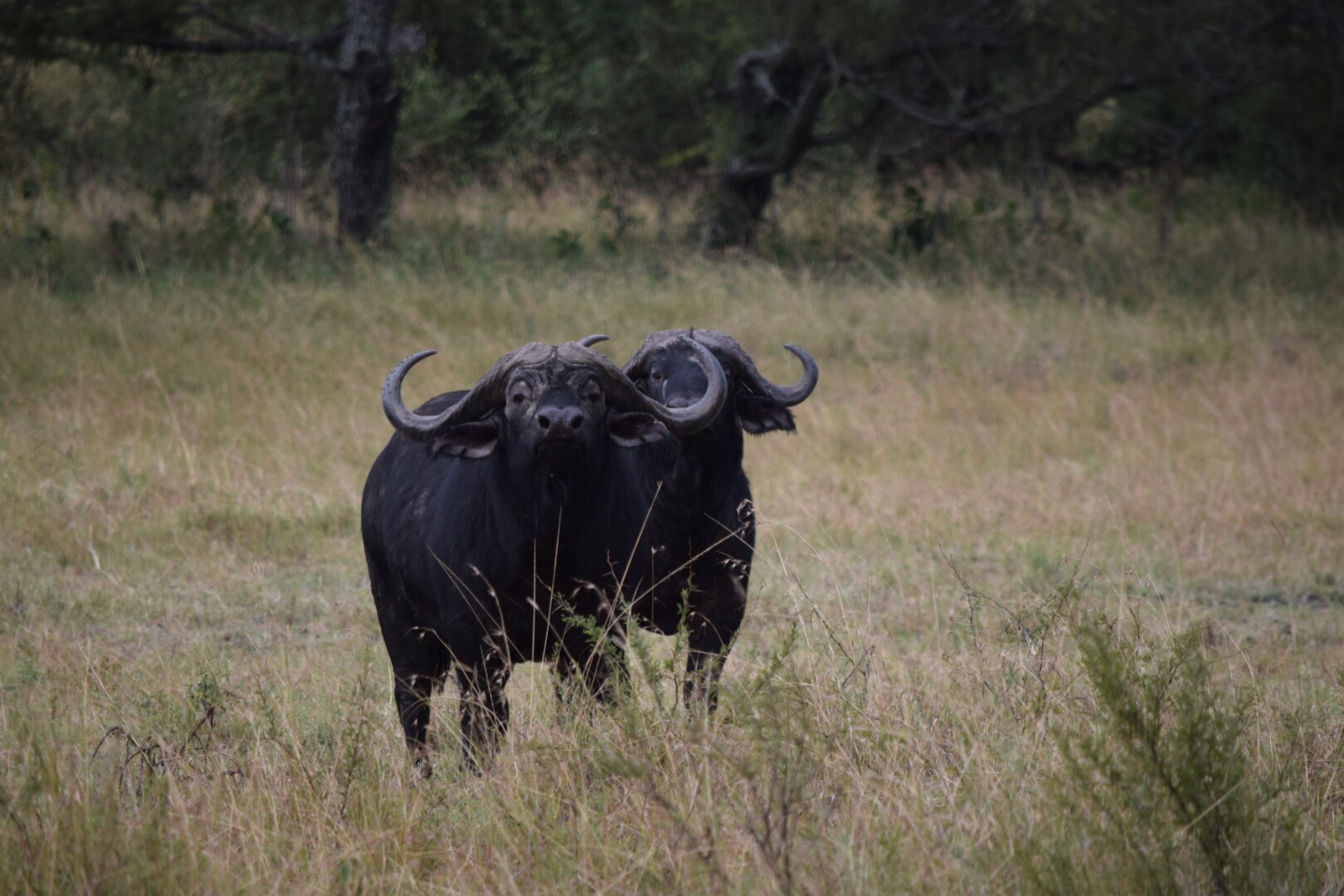
 They are also ubiquitous. We even saw them within touching distance at the restaurant of the Serengeti Serena (the second place we stayed). At both the Serena and the Migration Camp we had to be accompanied by trained guards to walk to our room after sunset, not only for the buffalo, but for the hippos and leopards as well.
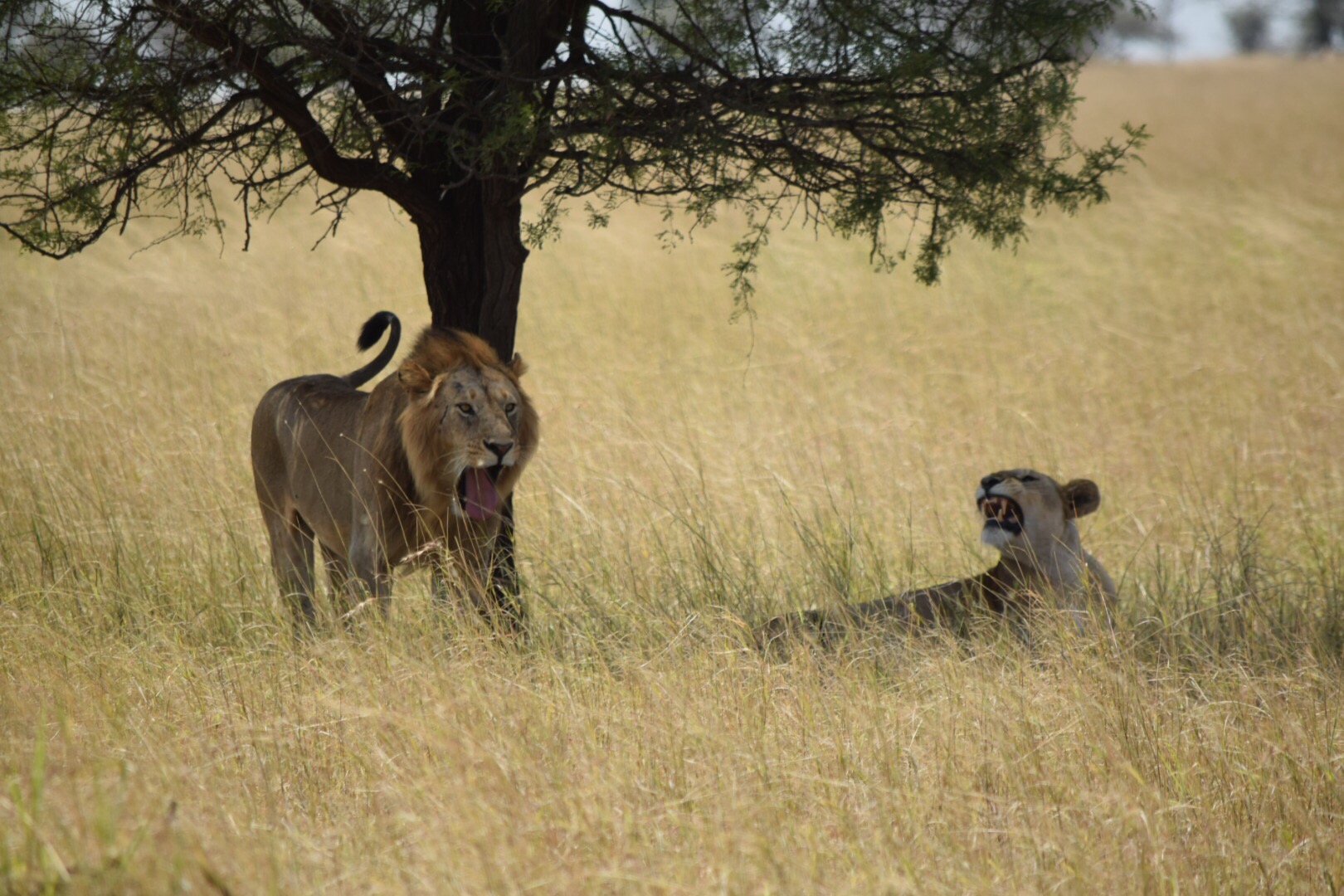
 We saw quite a few lions as well, including a pair of lions mating. Apparently, lions couple up for 6 days at a time when the lioness is in heat. They get together every 15 minutes the first few days, then every 30 minutes, and by the last couple days they’re down to every hour or so. We caught these two as their romantic interlude was ending, so we waited for awhile while the female lion slept.
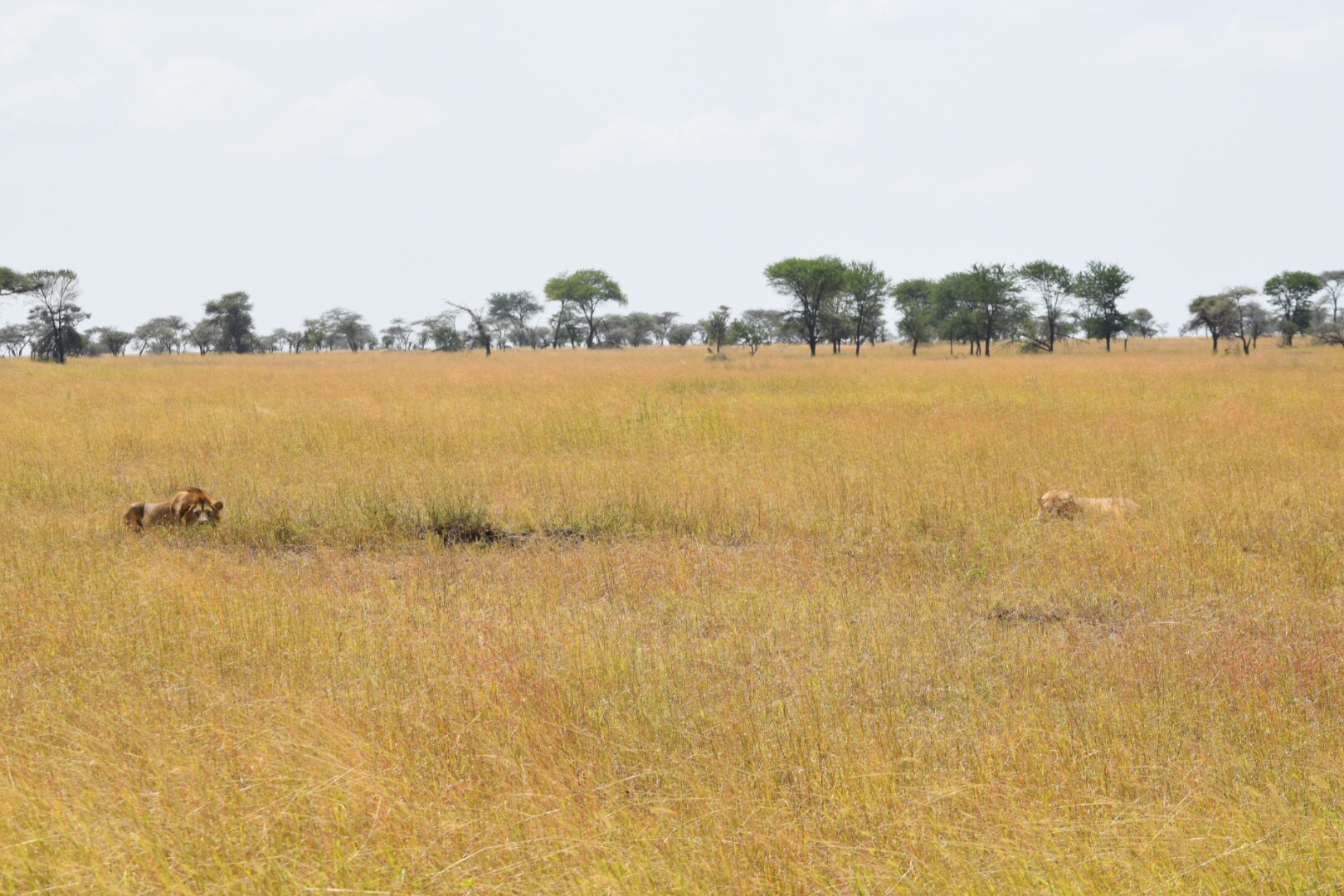 According to Max, the female decides everything about the timing, and if the male approaches too early and wakes her up, she bites or scratches him. This waiting male lion seemed quite on edge, and charged at a tourist in a neighboring cruiser who was trying to climb on the roof to take a better picture.
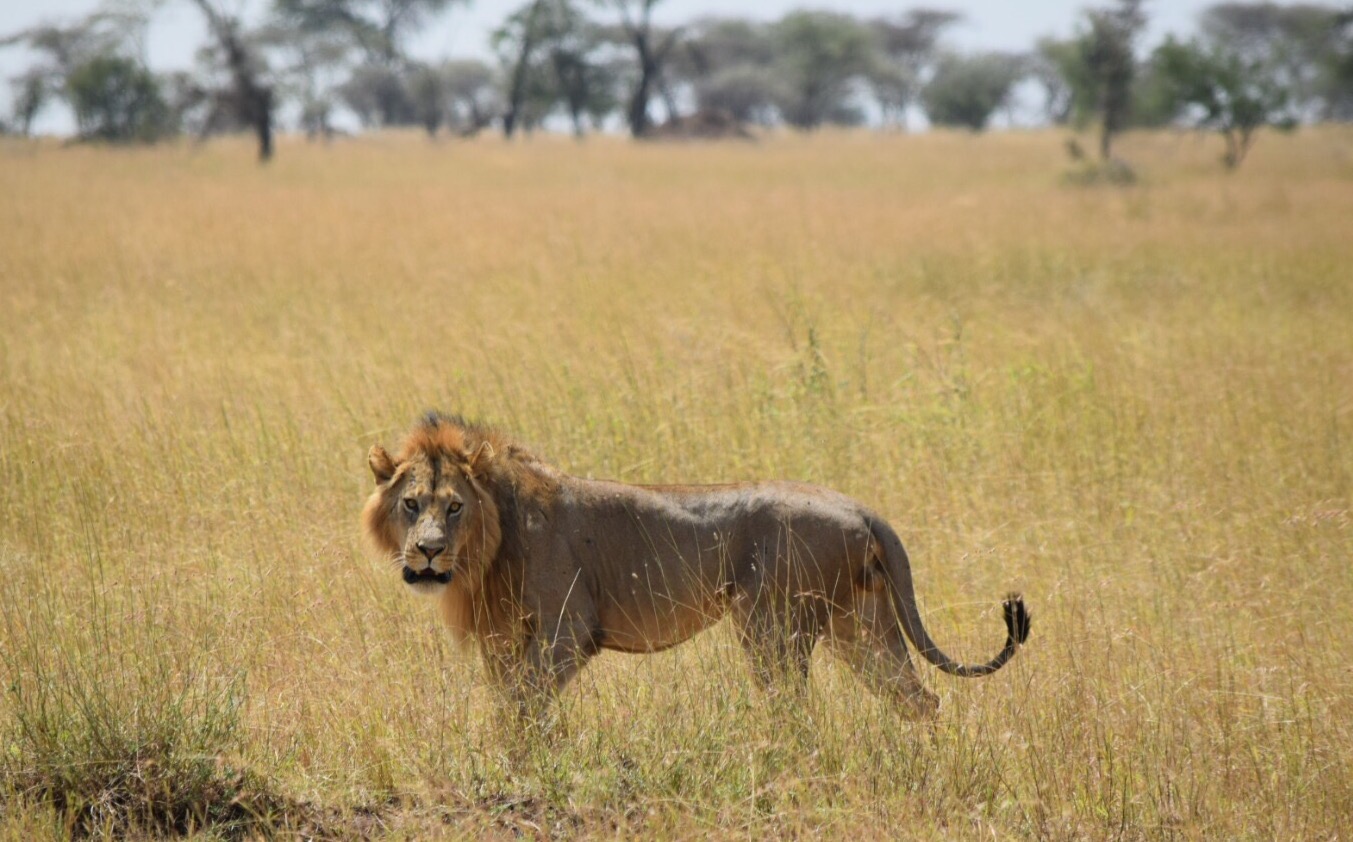 She finally woke up…
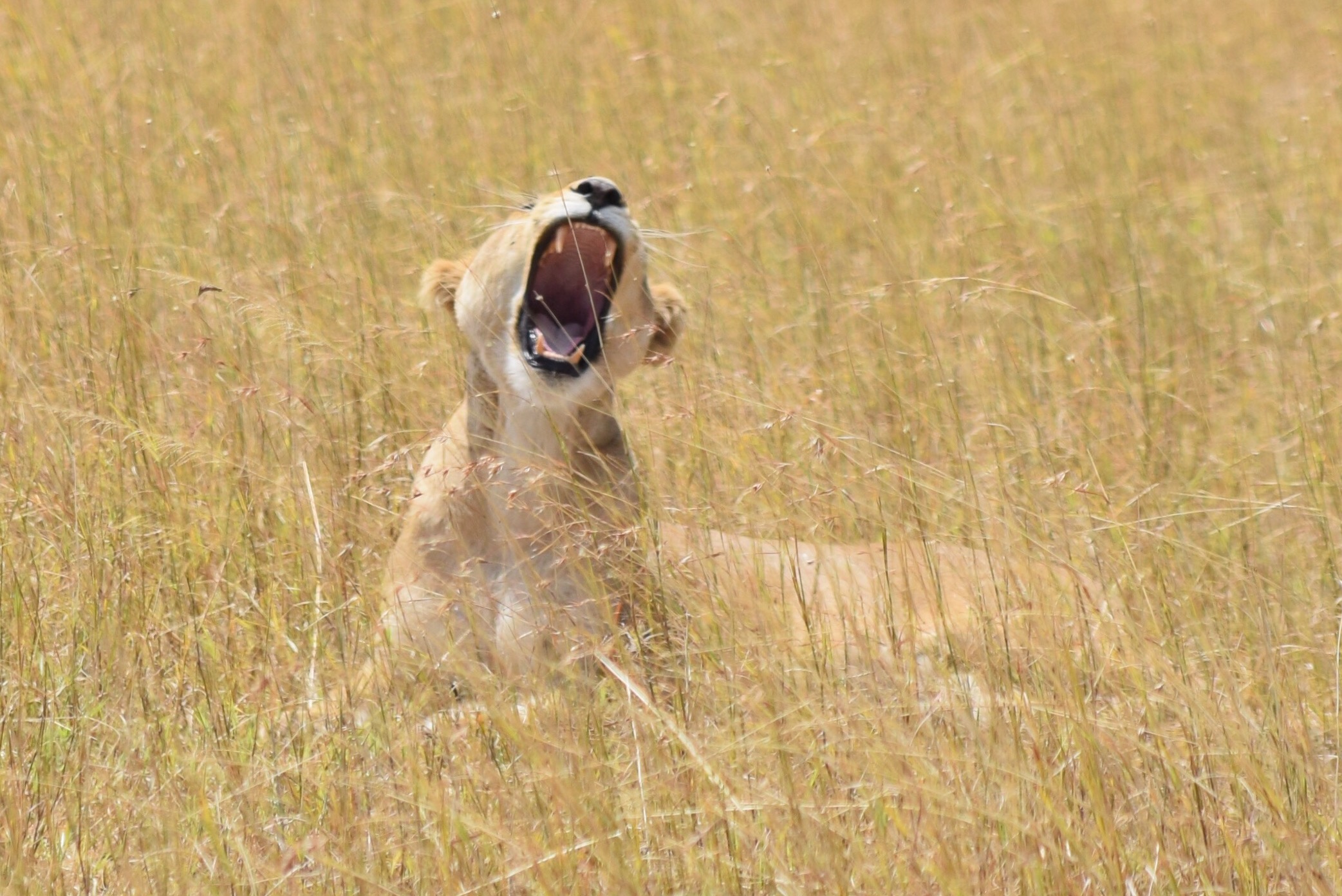 And got ready.
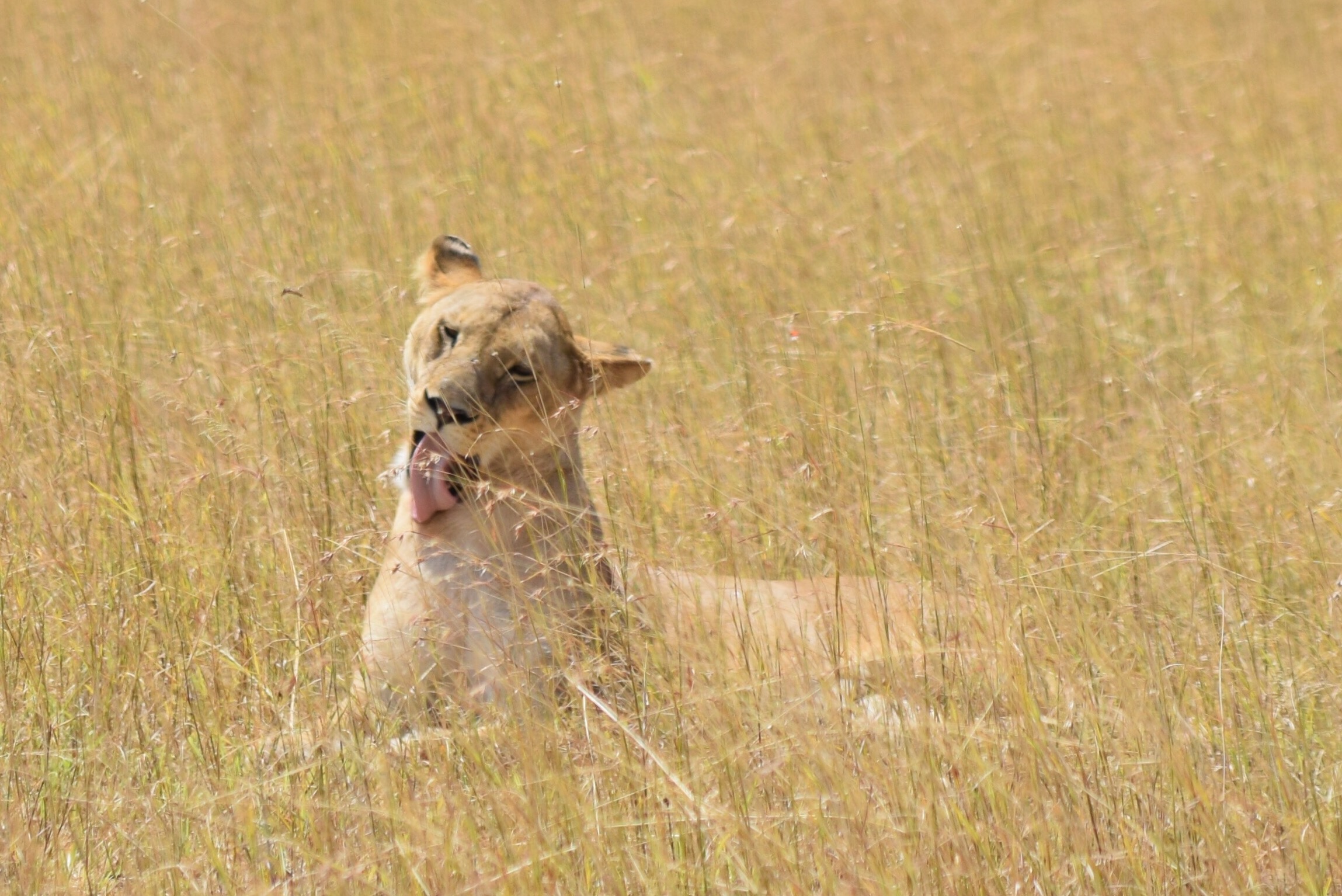 The female lion then walked over to the male lion and it was all over in about 10 seconds.
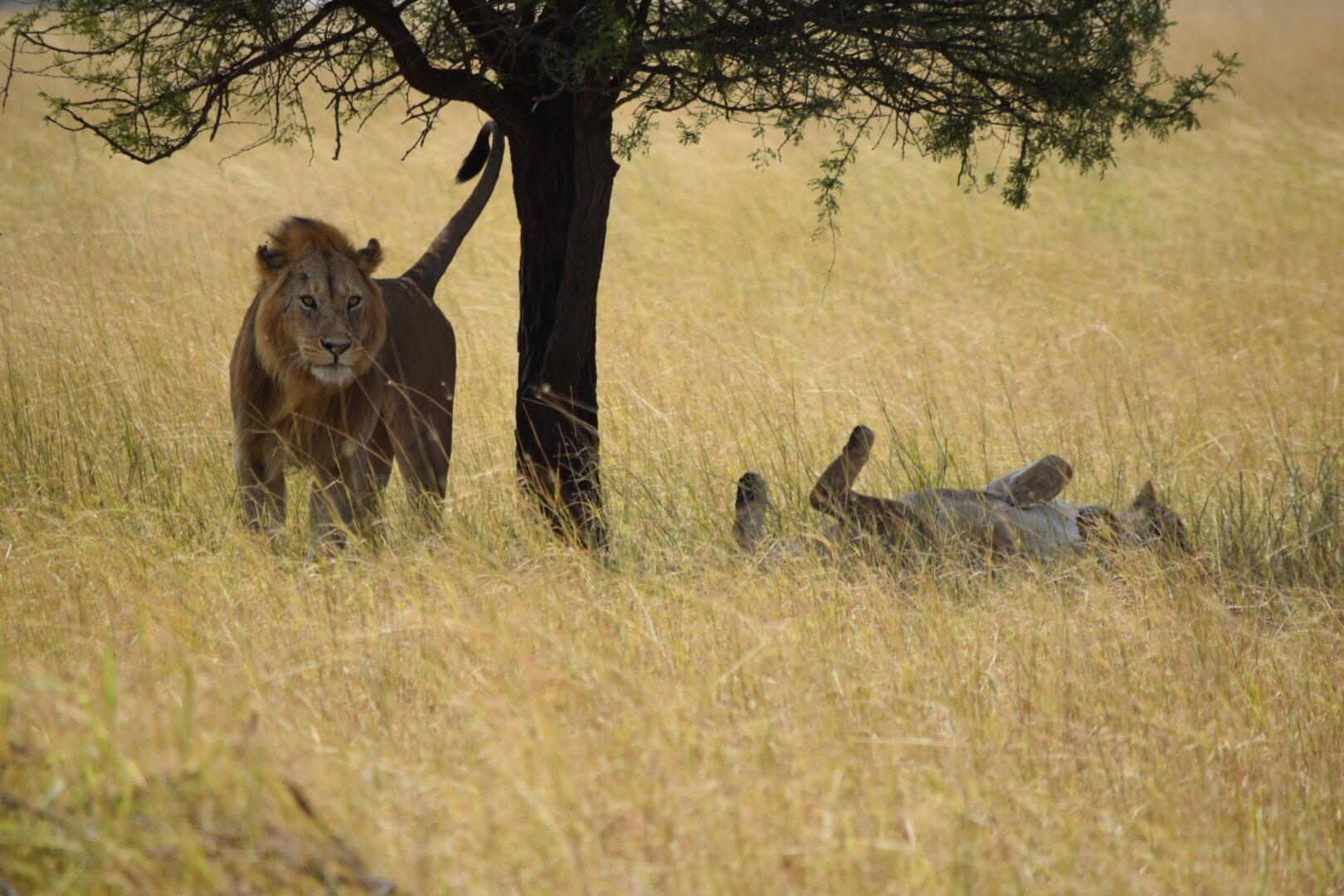 He made some yawny faces.
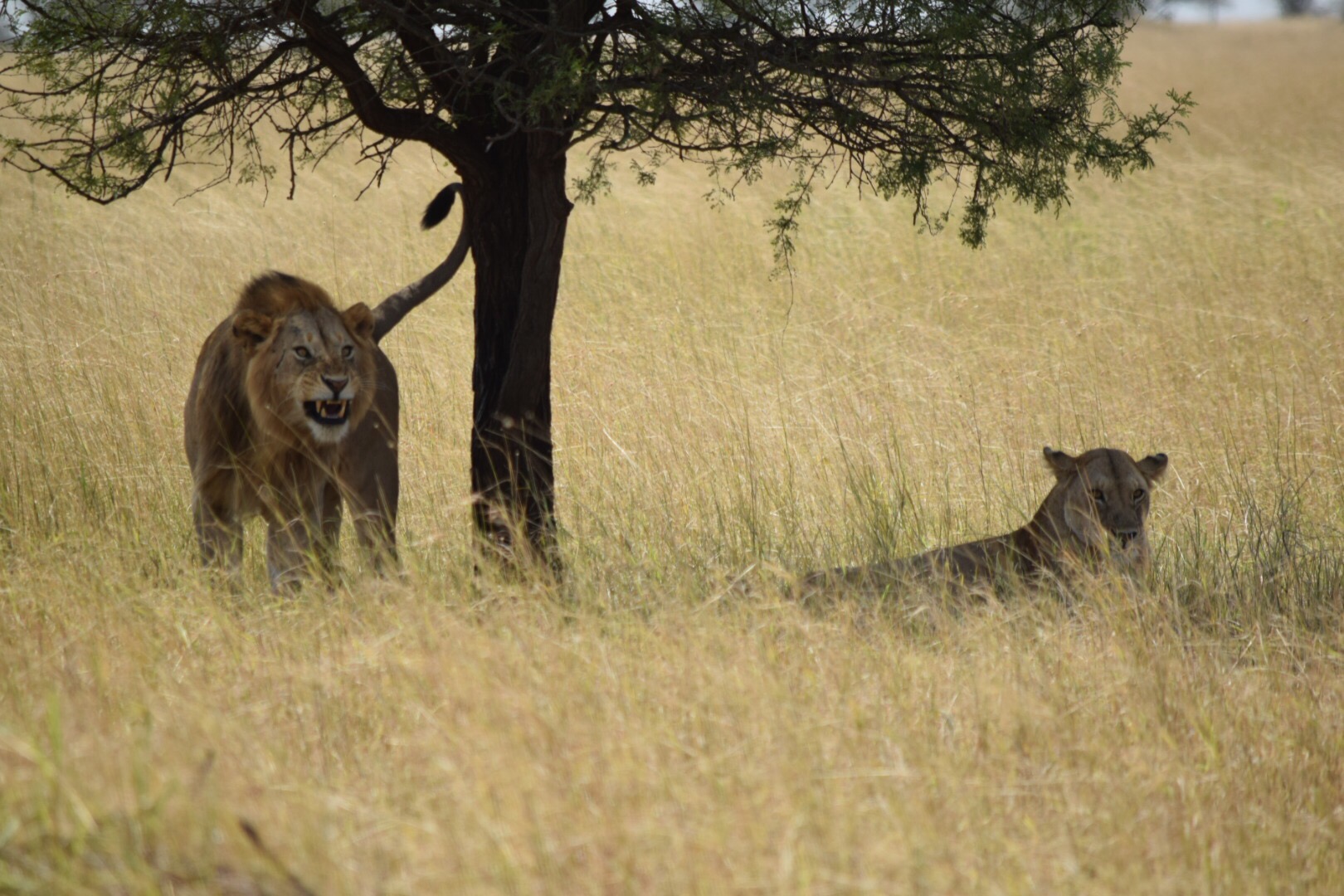 And when he tried to walk over and cuddle she got mad at him and found some shade of her own.
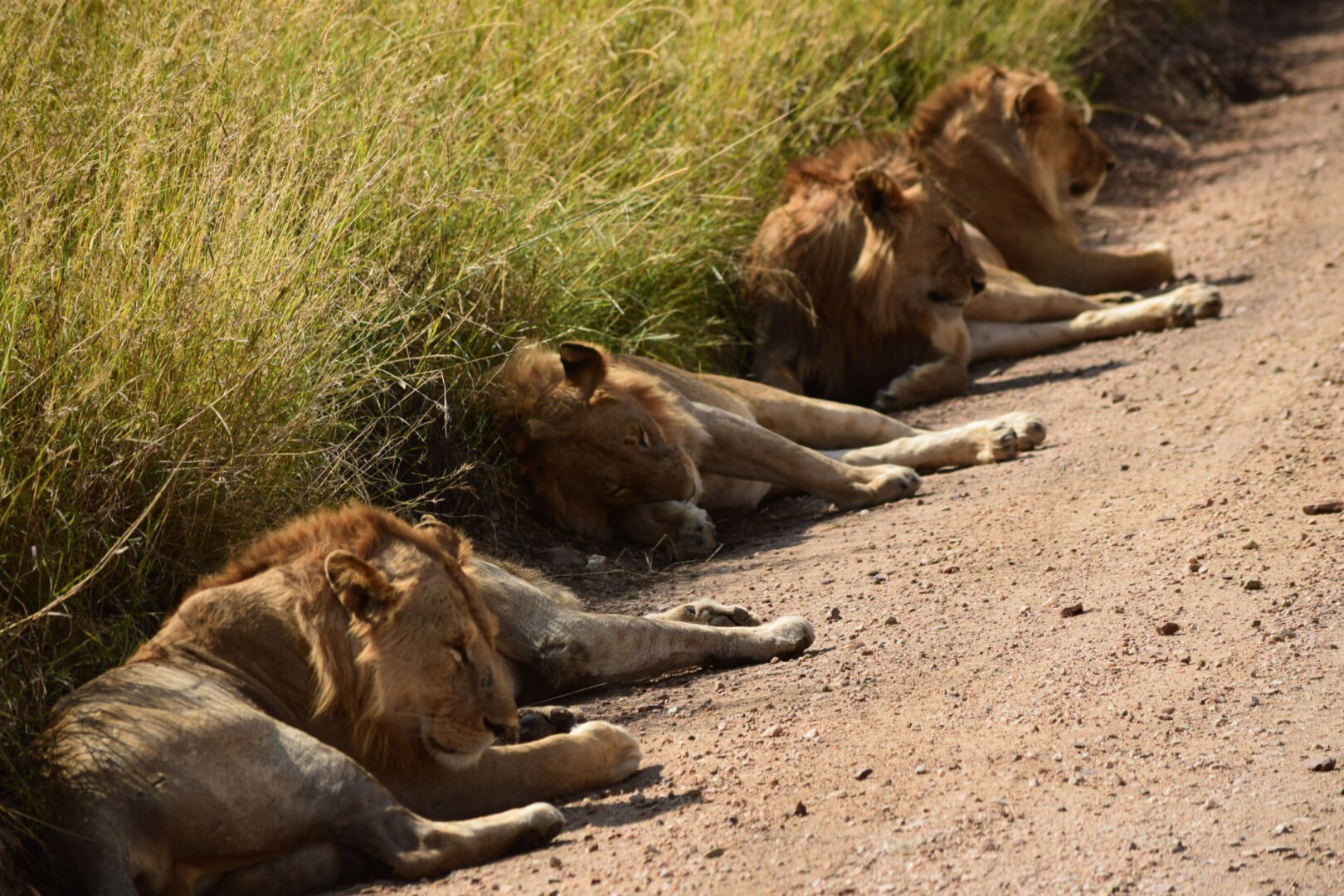
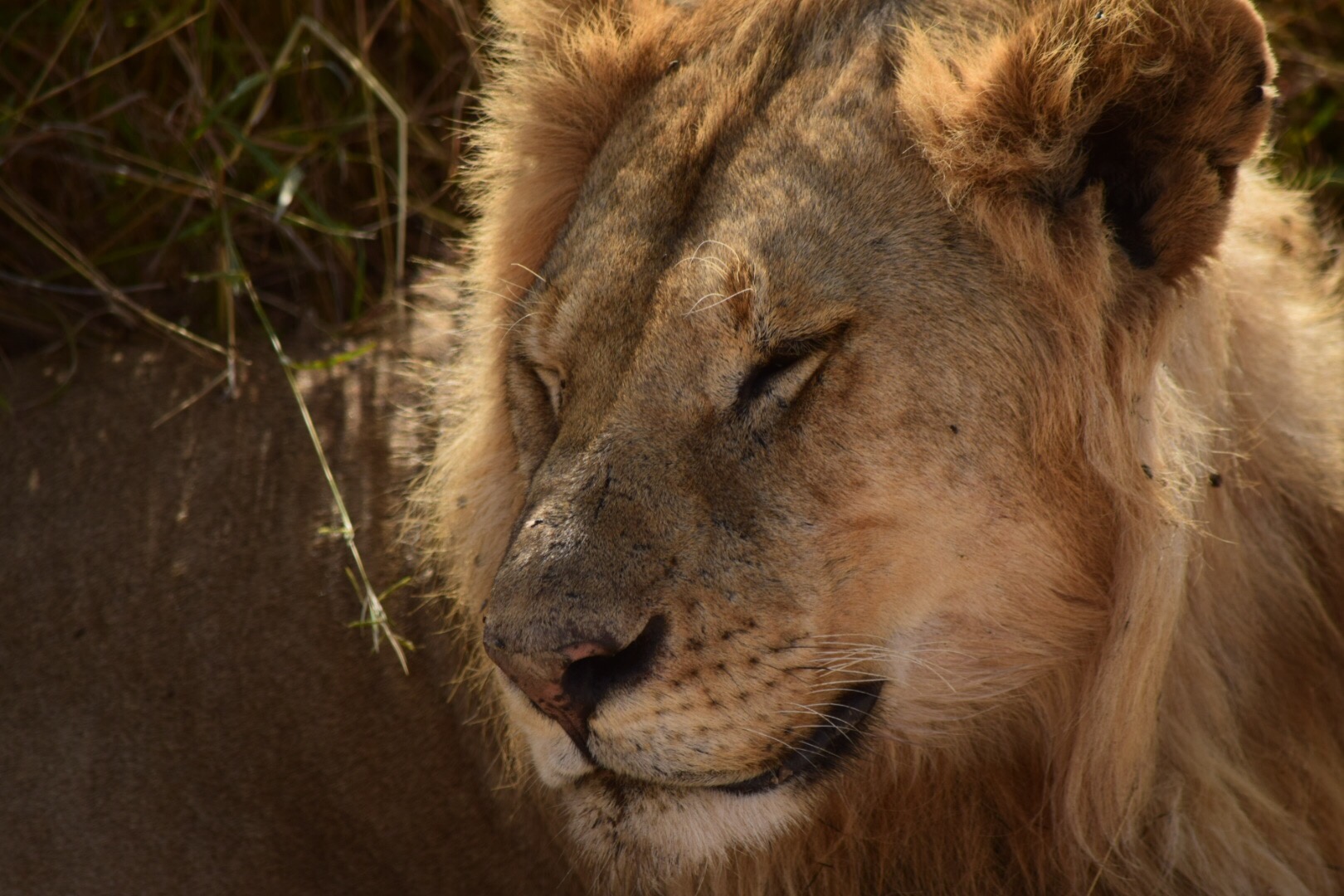
 We also saw a bunch of young male lions hanging out by the side of the road. They must have just eaten, as they were very sleepy and very comfortable with the vehicles.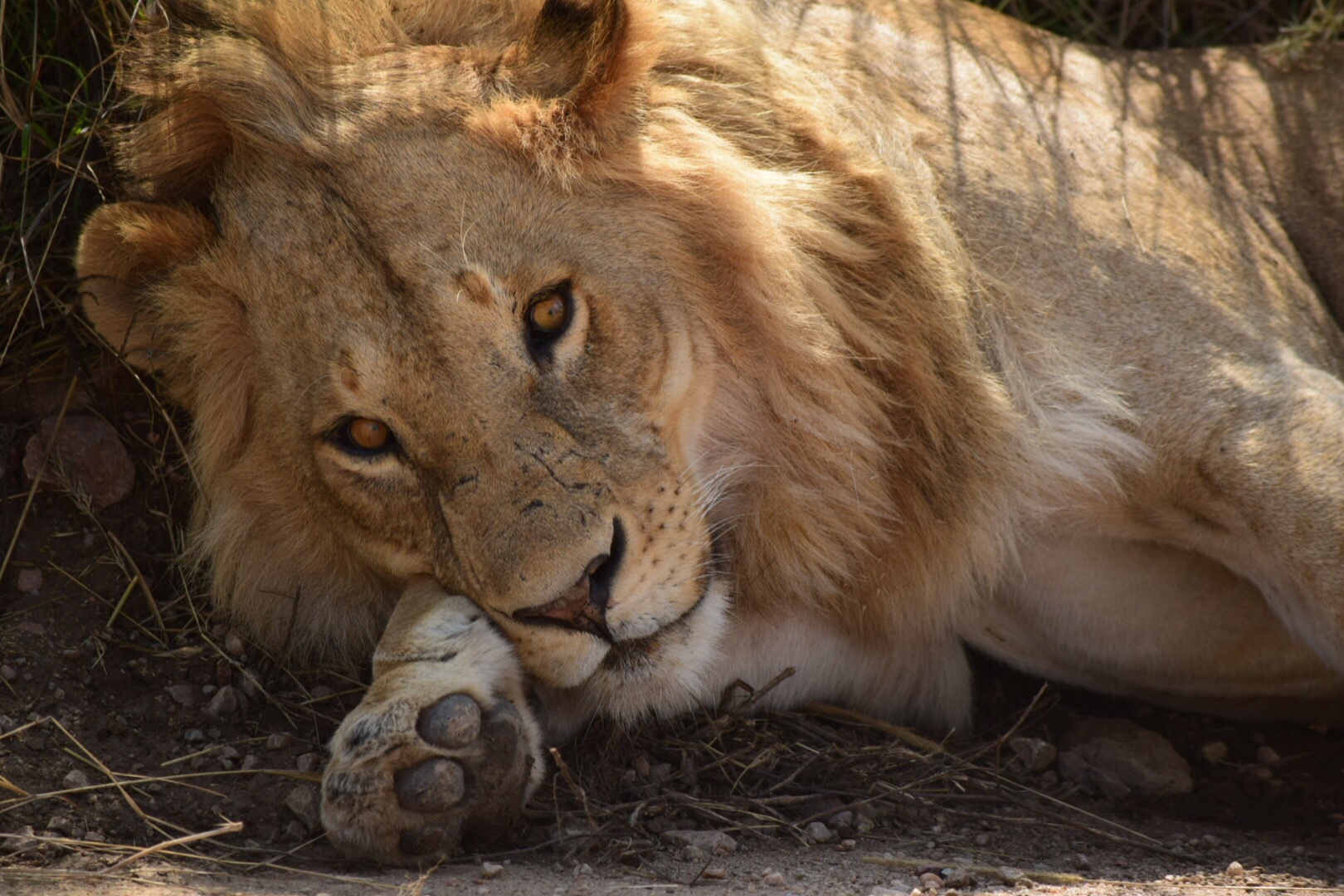
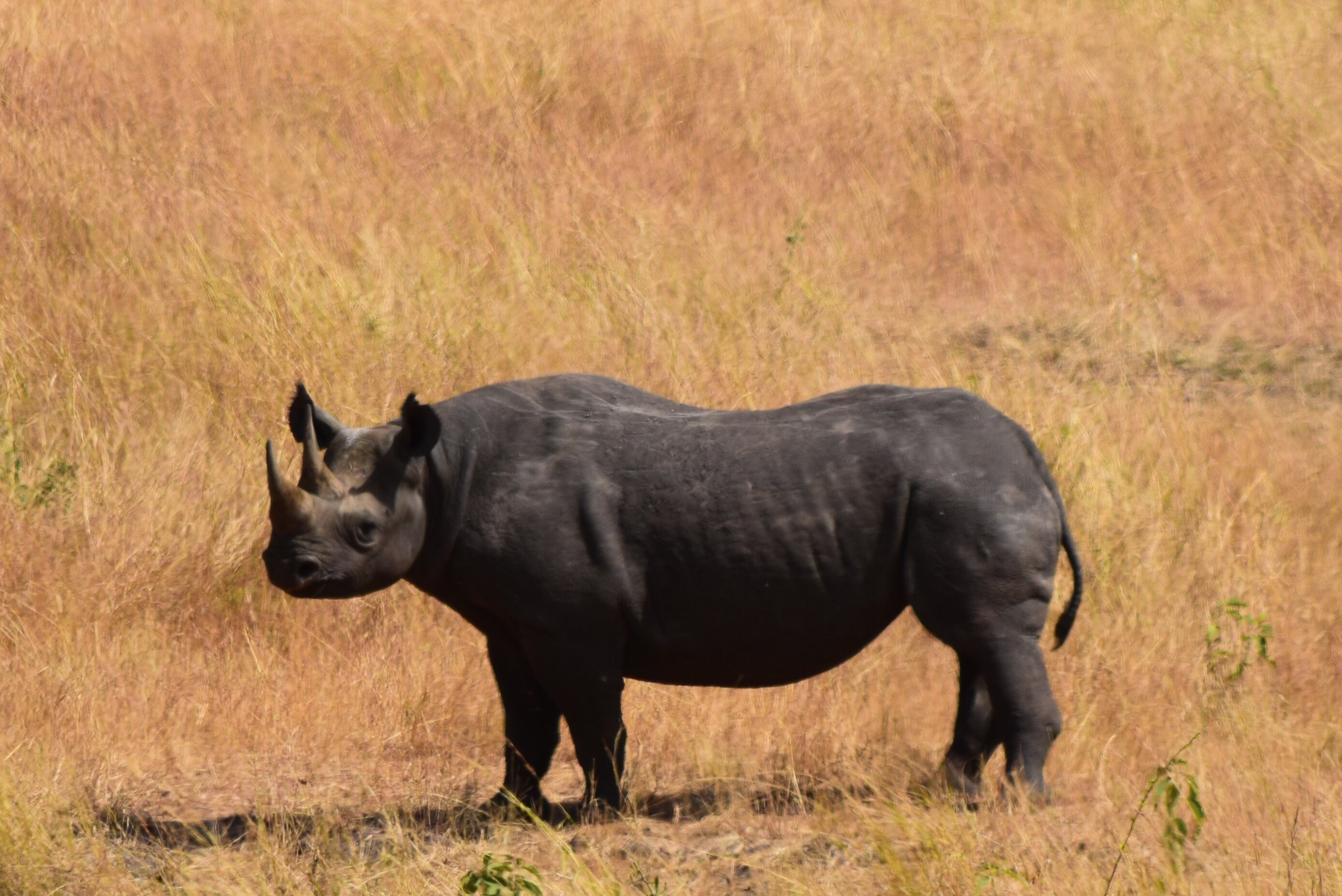
 One of the more difficult animals to see was the black rhino, in part because they’re critically endangered. We were lucky and saw this beautiful lady early on in the trip.
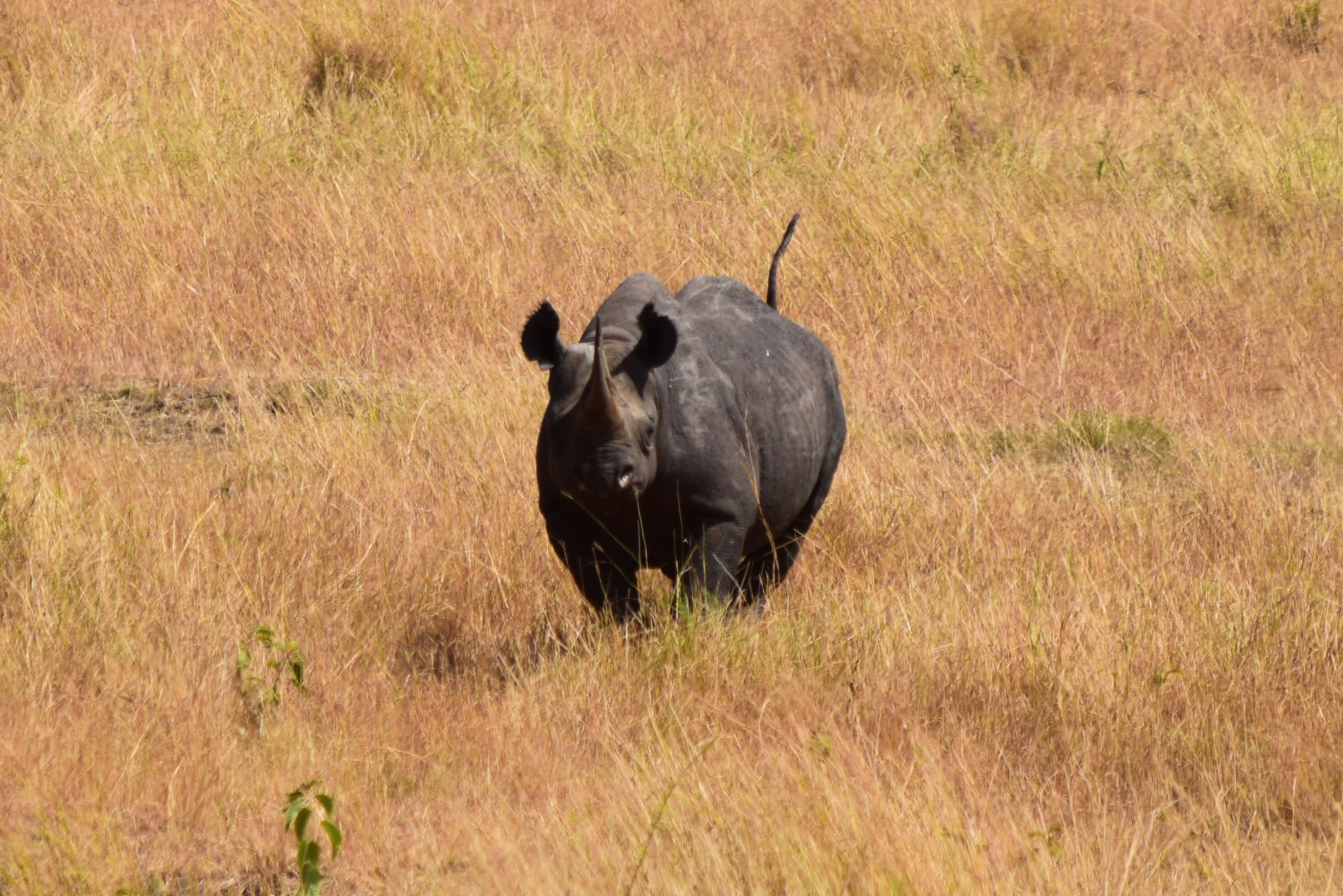 The rhinos are protected by armed rangers, and they had to be repopulated from South Africa several years ago. Luckily, there have not been any deaths by poaching within the last year.
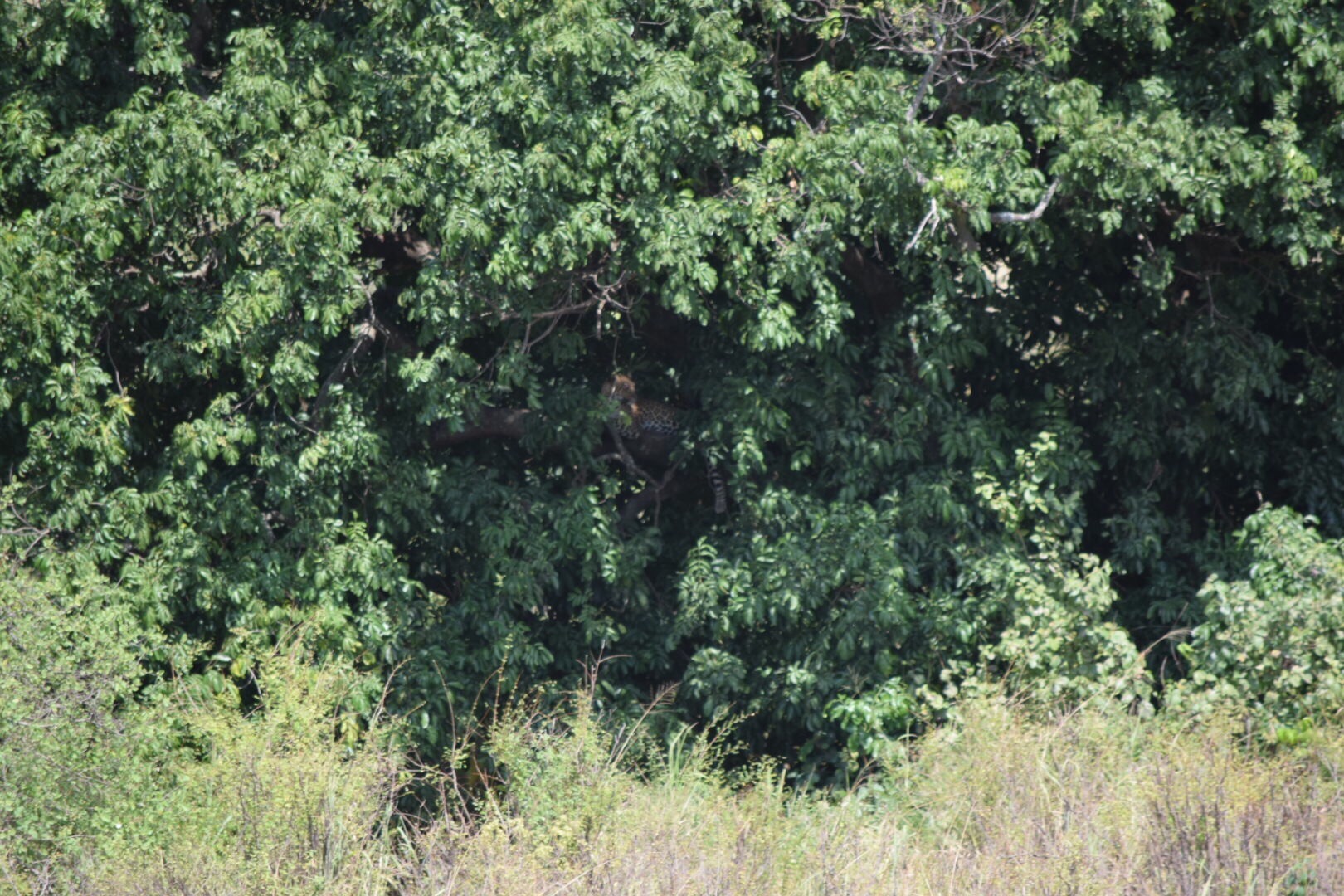
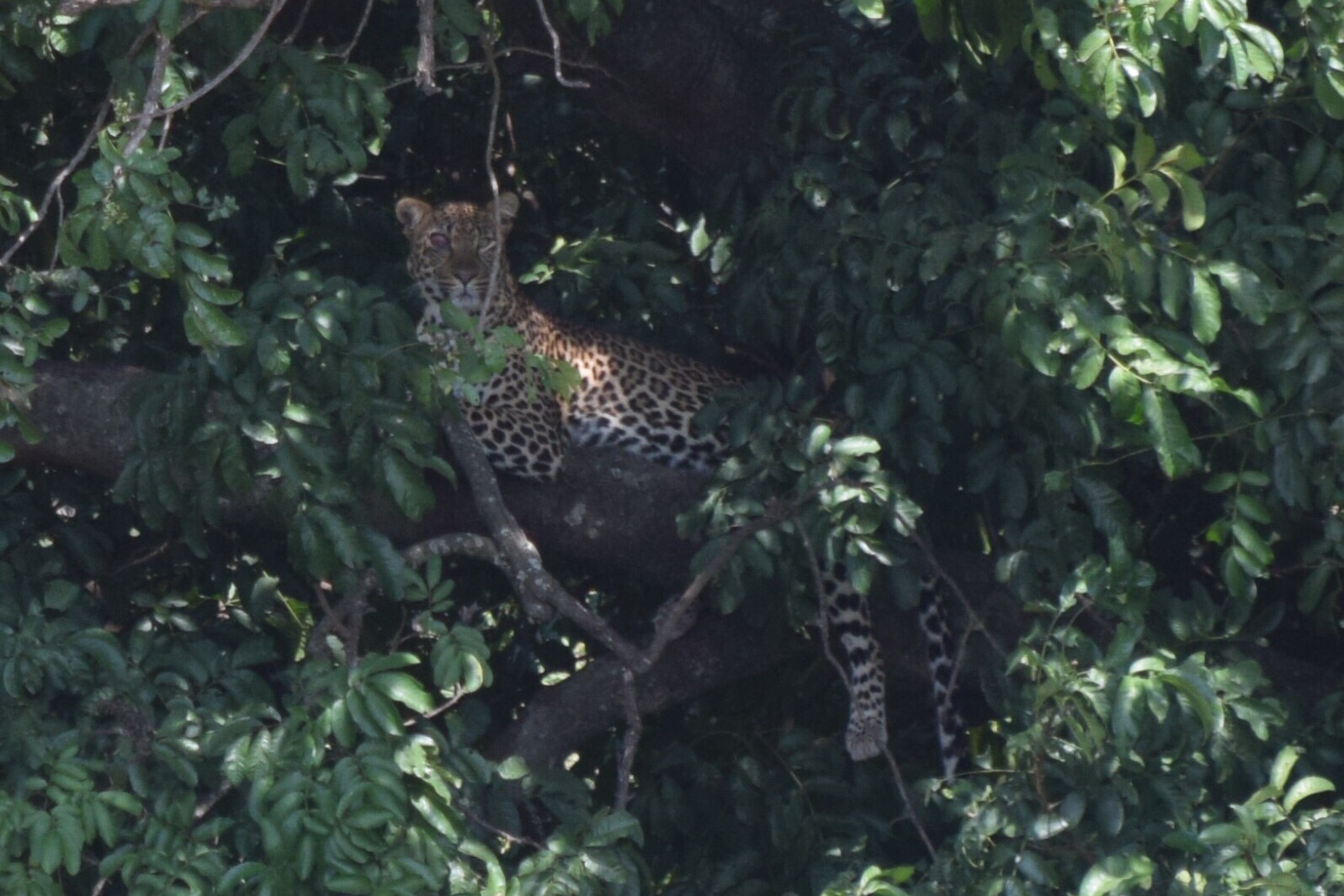
 Leopard was by far the toughest to find, as they are mostly active nocturnally and lie around well camoflaged in trees during the day. Spotting one is all about pattern recognition. Here is one that we finally found across a stream, and this is with 300mm zoom!
 A beautiful animal, his right eye was damaged and pink – my guess is ruptured globe secondary to claw injury.
 We saw a second leopard minutes after finding the first.
 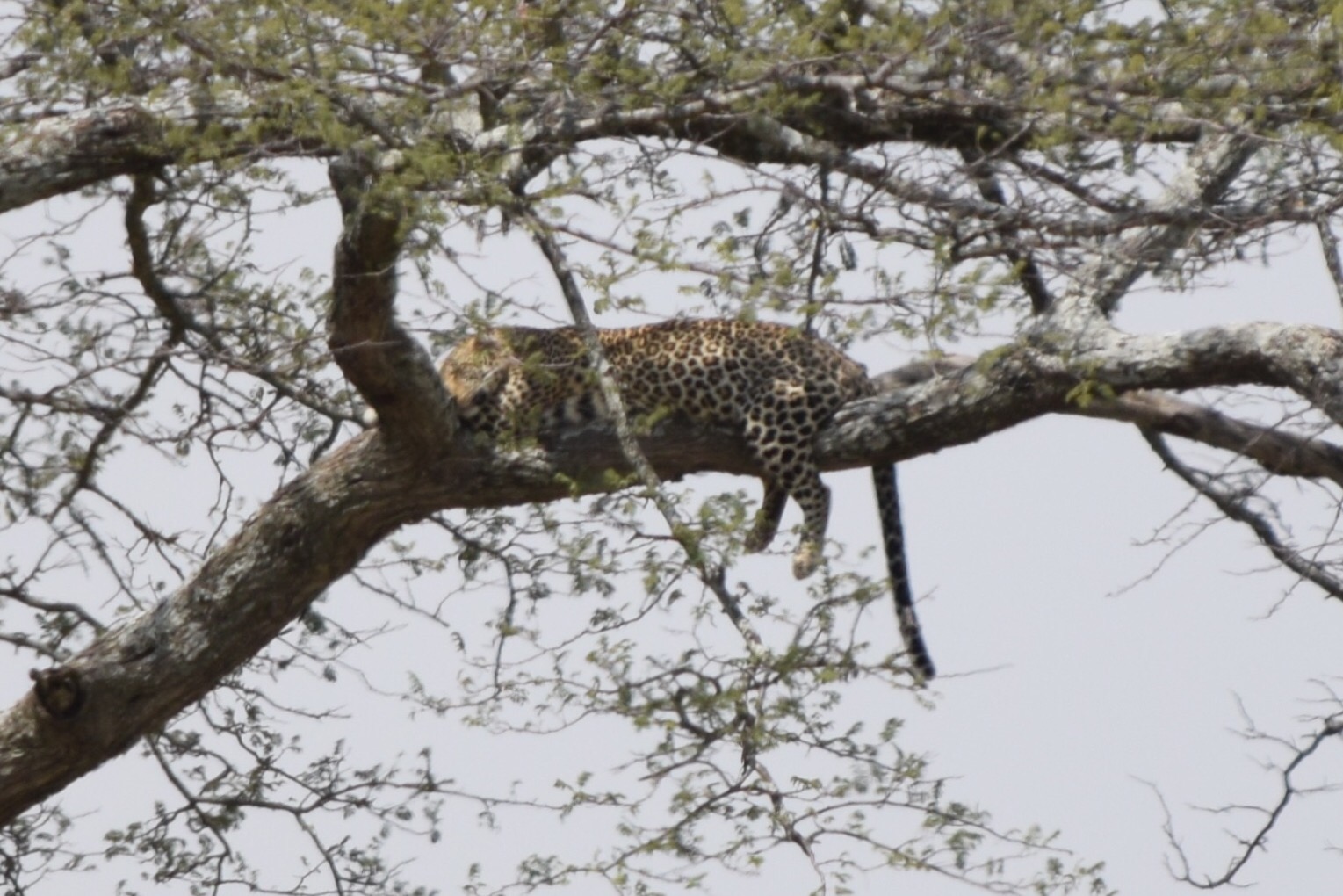 Just in time, as we were on our way to Ngorongoro crater, where leopards are much rarer. Next post – the crater and the Masai!
 round the world in sixty days
Female lions lie on their backs after mating to assist the passage of sperm to ova.
LikeLike