Each day, we learned what the plan was for the next day – we didn’t know it in advance. So after climbing two reasonably tall passes, Stok La and Madok La, we were confronted with what Tsering (our guide) promised to be our hardest day yet: two consecutive mountain passes reaching our highest altitude of the trip, 17,000 feet on Shang La pass. This would take us through the summer digs of the Ladakh nomads.
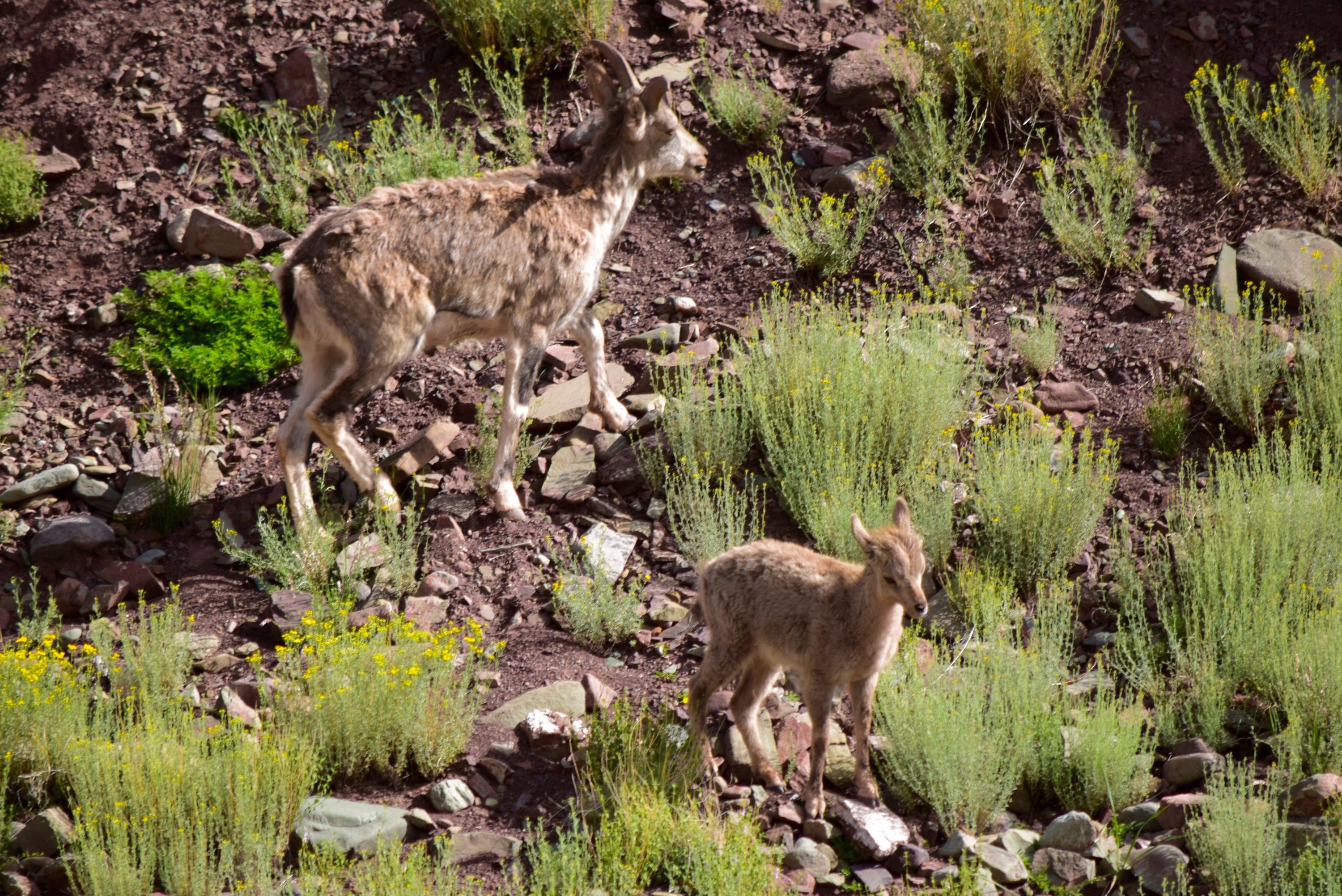
We set off early that morning. Our minds were quickly diverted from the strain of the climbs by interesting wildlife and stunning views. We saw a Bharal leap past one of the nomadic people’s cow.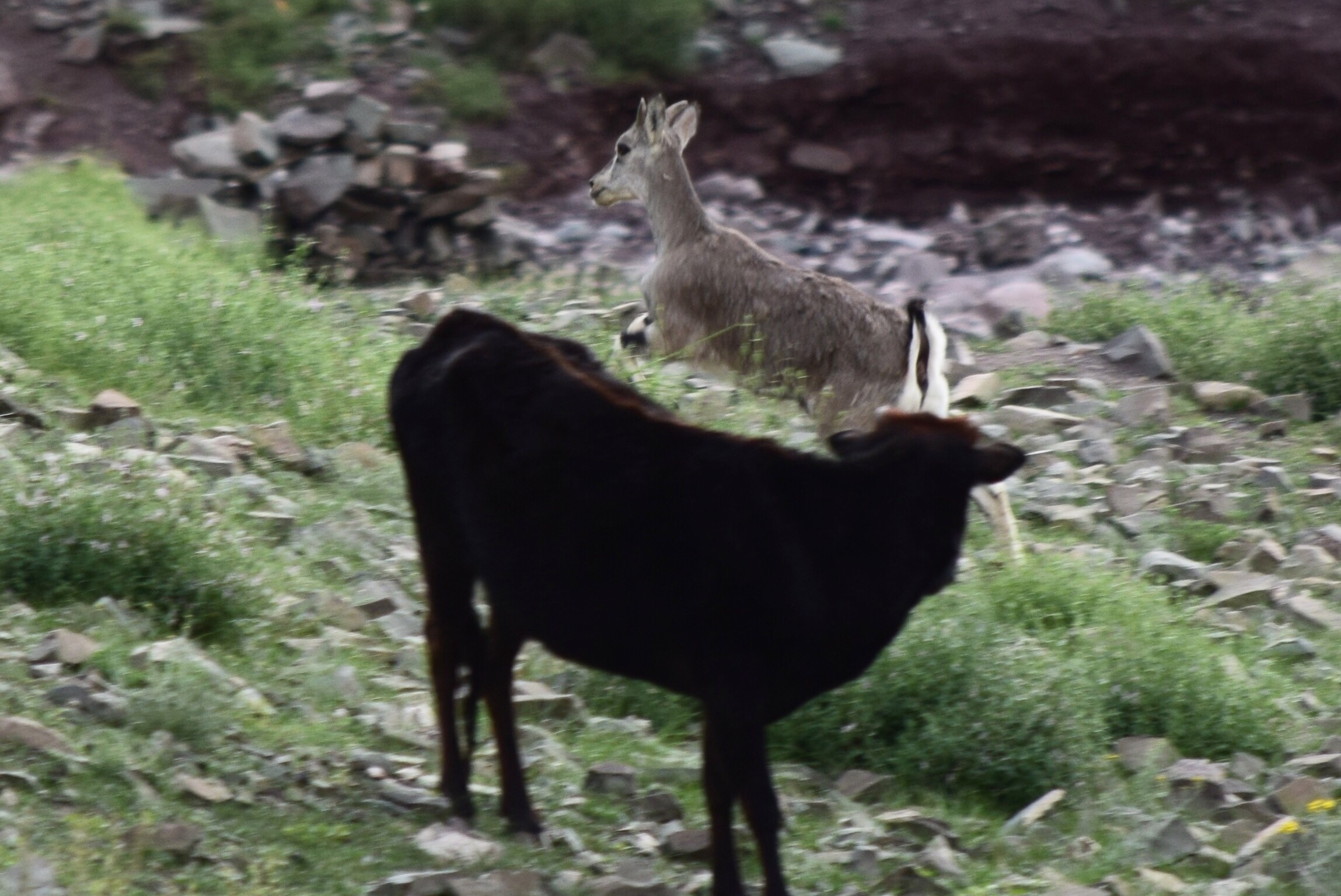
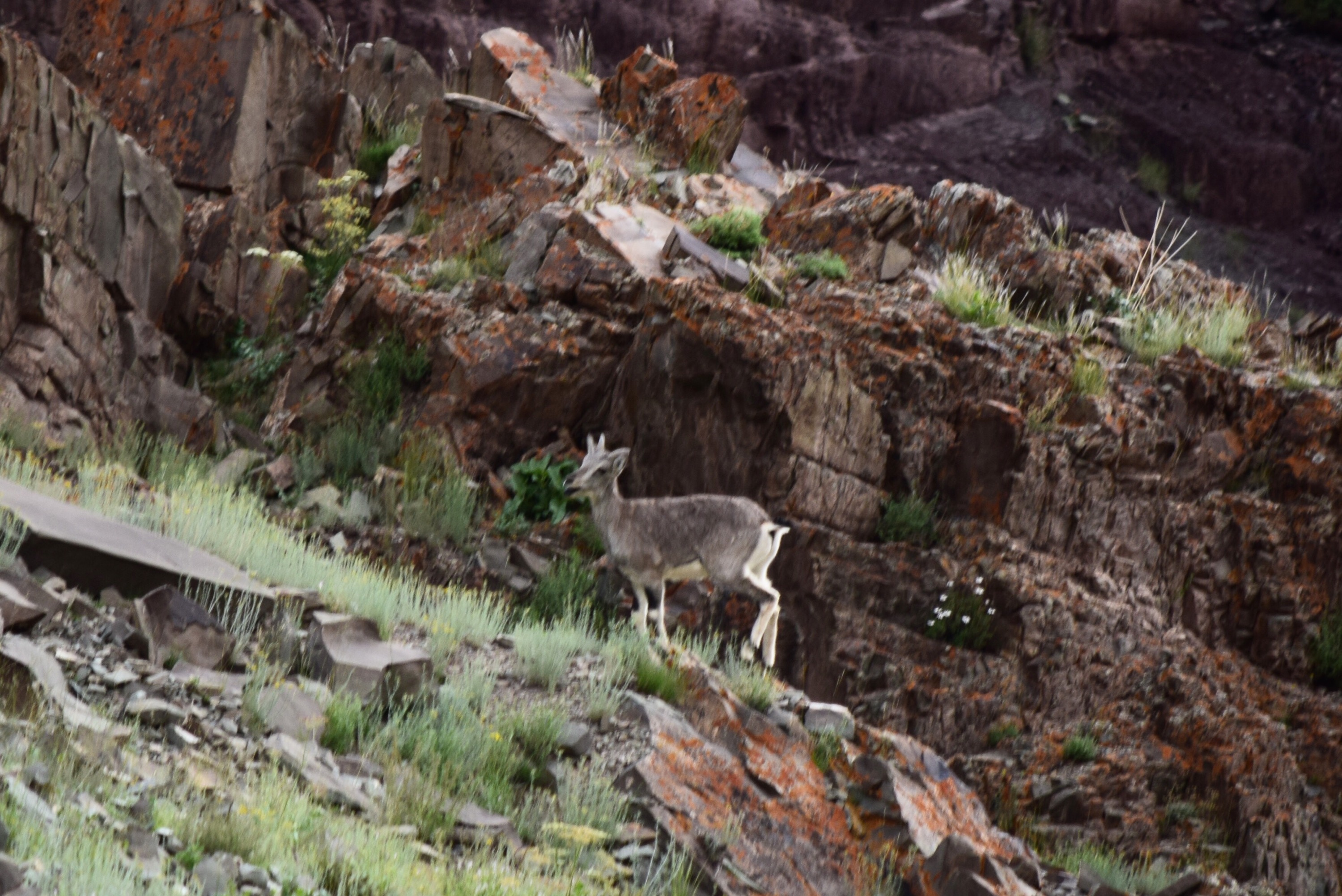 And a whole family of Bharal (blue sheep)
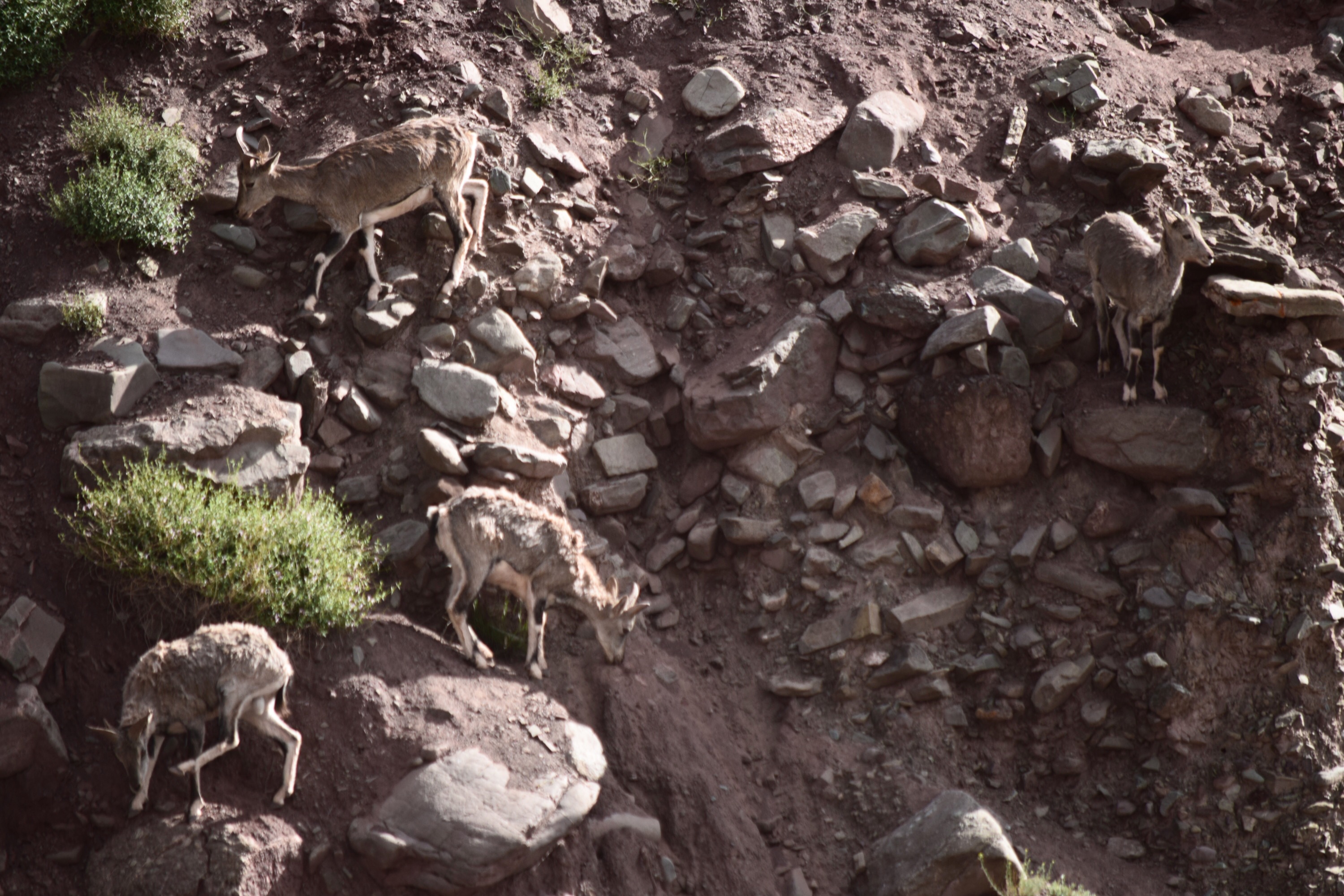 Maybe these mountain goats are not as sexy as the big five, but still impressive to see these large mammals eke out an existance on the rock faces while avoiding the elusive snow leopard – the ghost cat.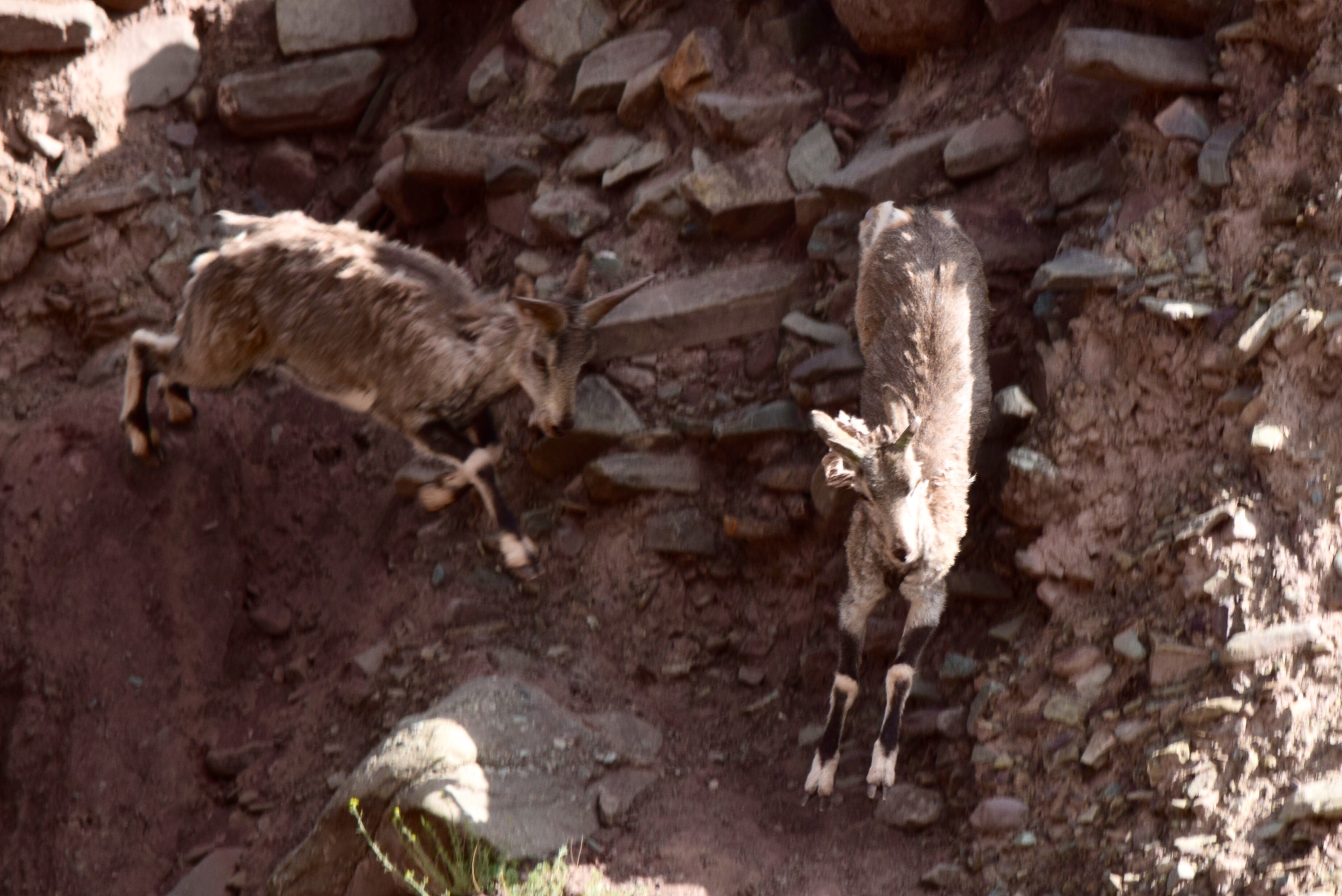
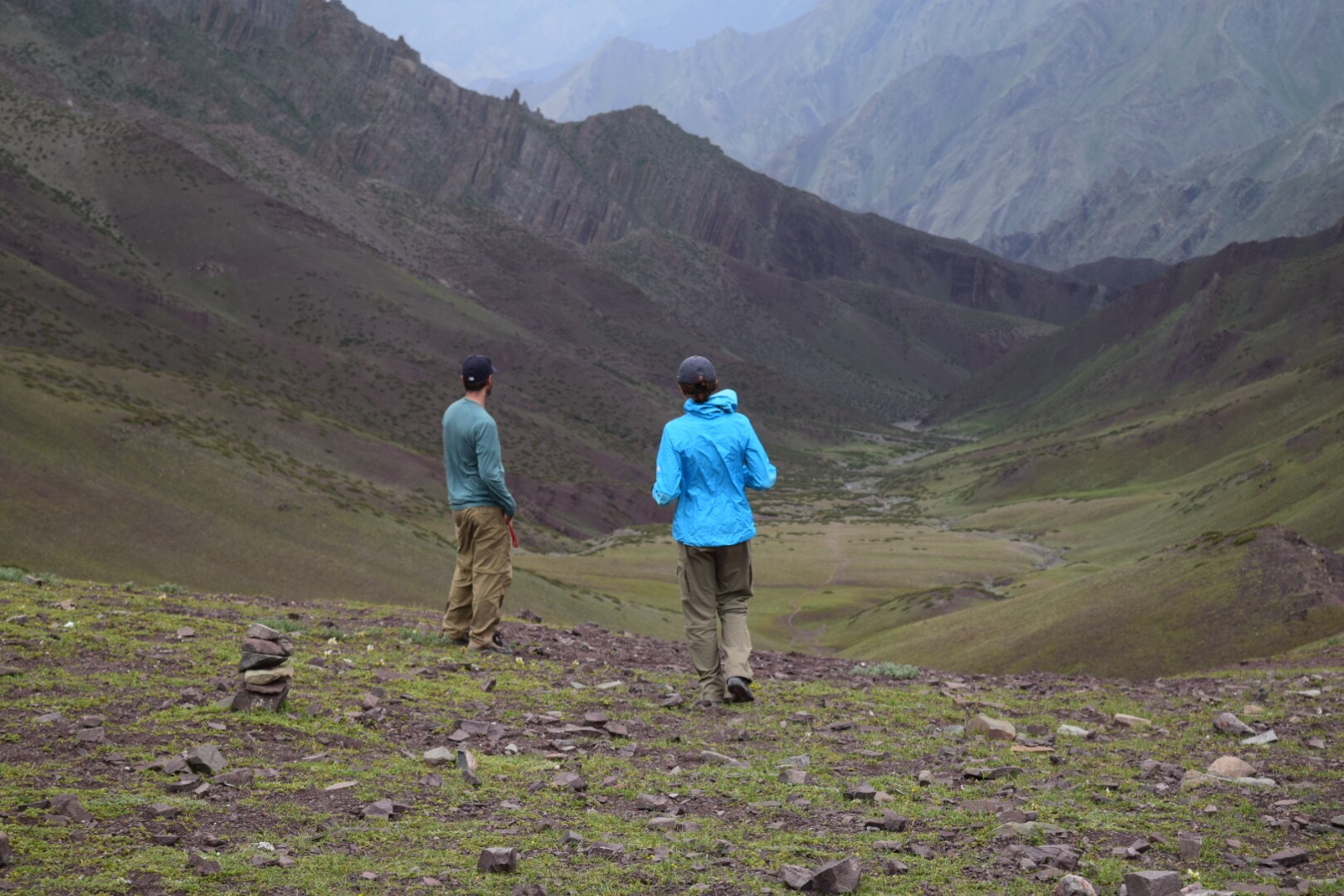
 The scenery was so beautiful it was almost unreal, and the mountain backdrops and clear dry air made every picture we took look good.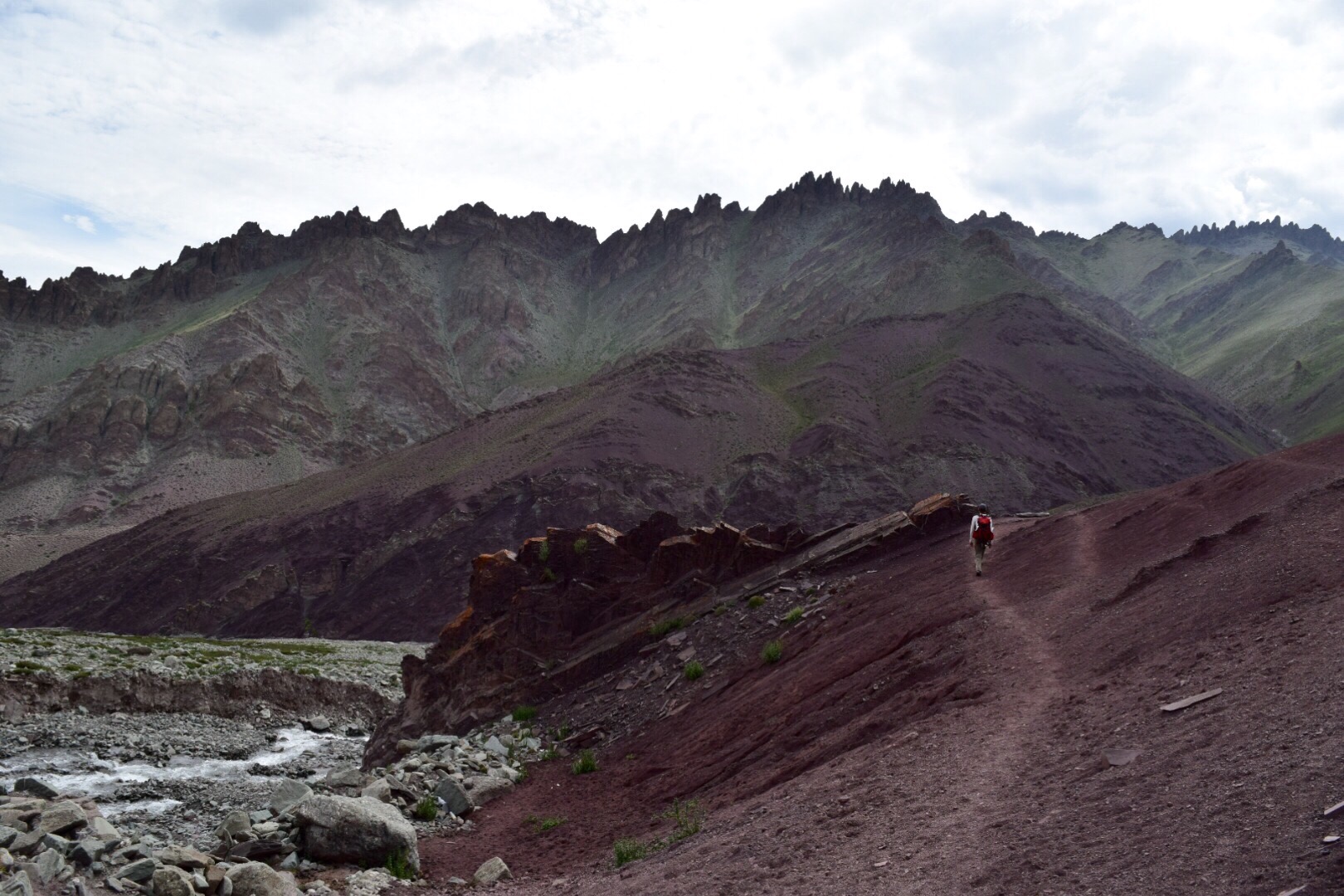
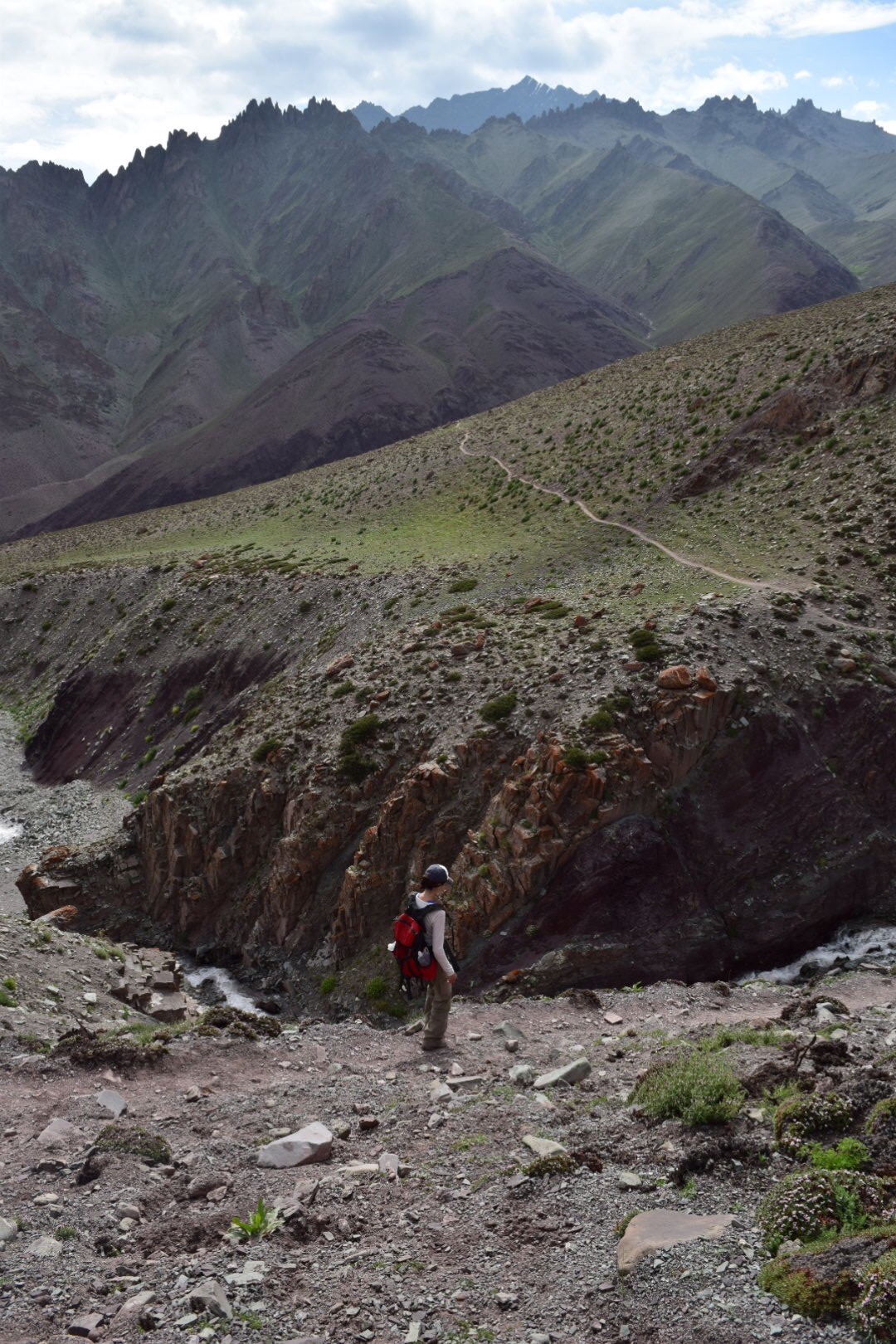
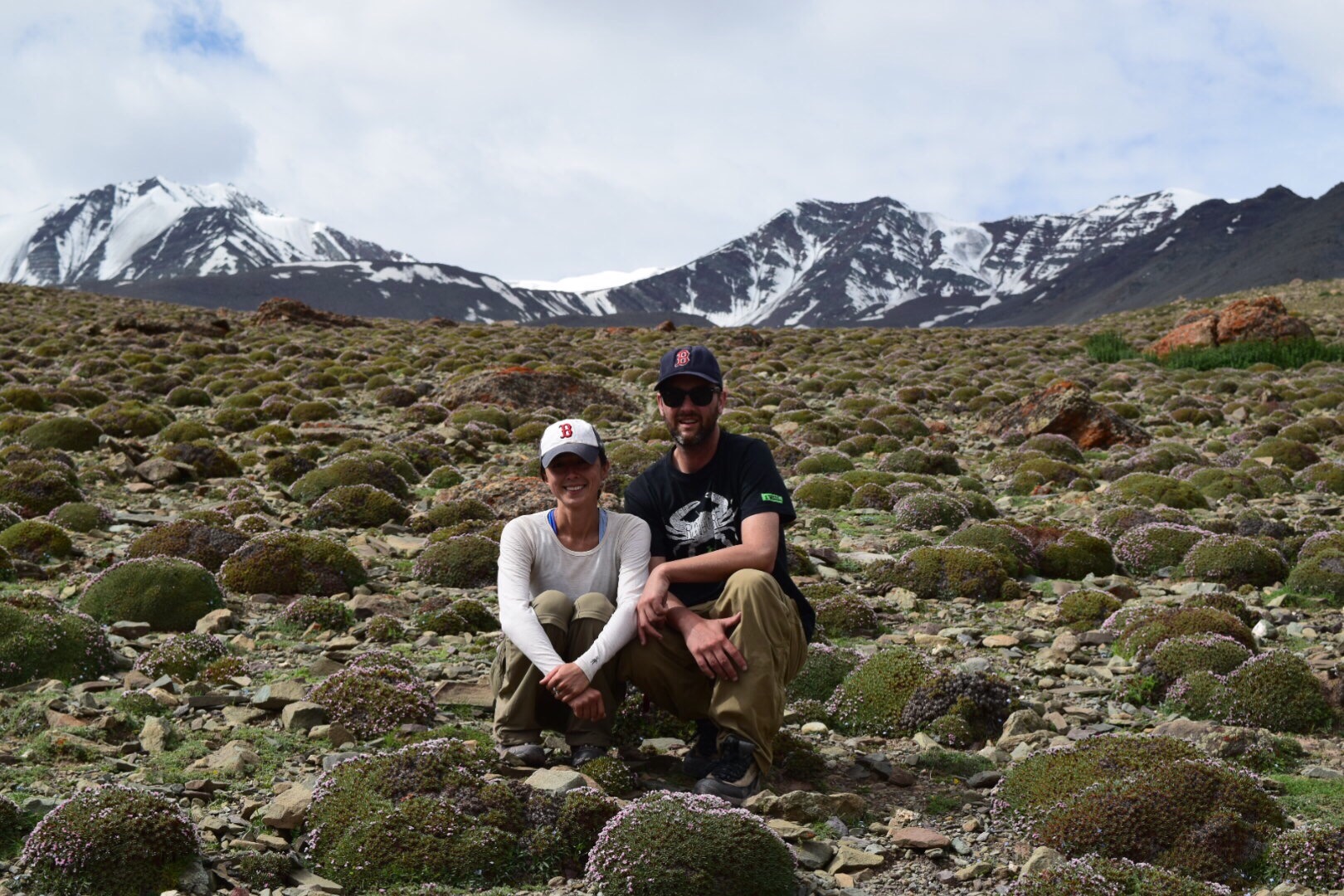 Case in point: Jen posing with yak poop drying on a rock – still a great view. The nomadic people of Ladakh use dried yak turds like charcoal briquettes.
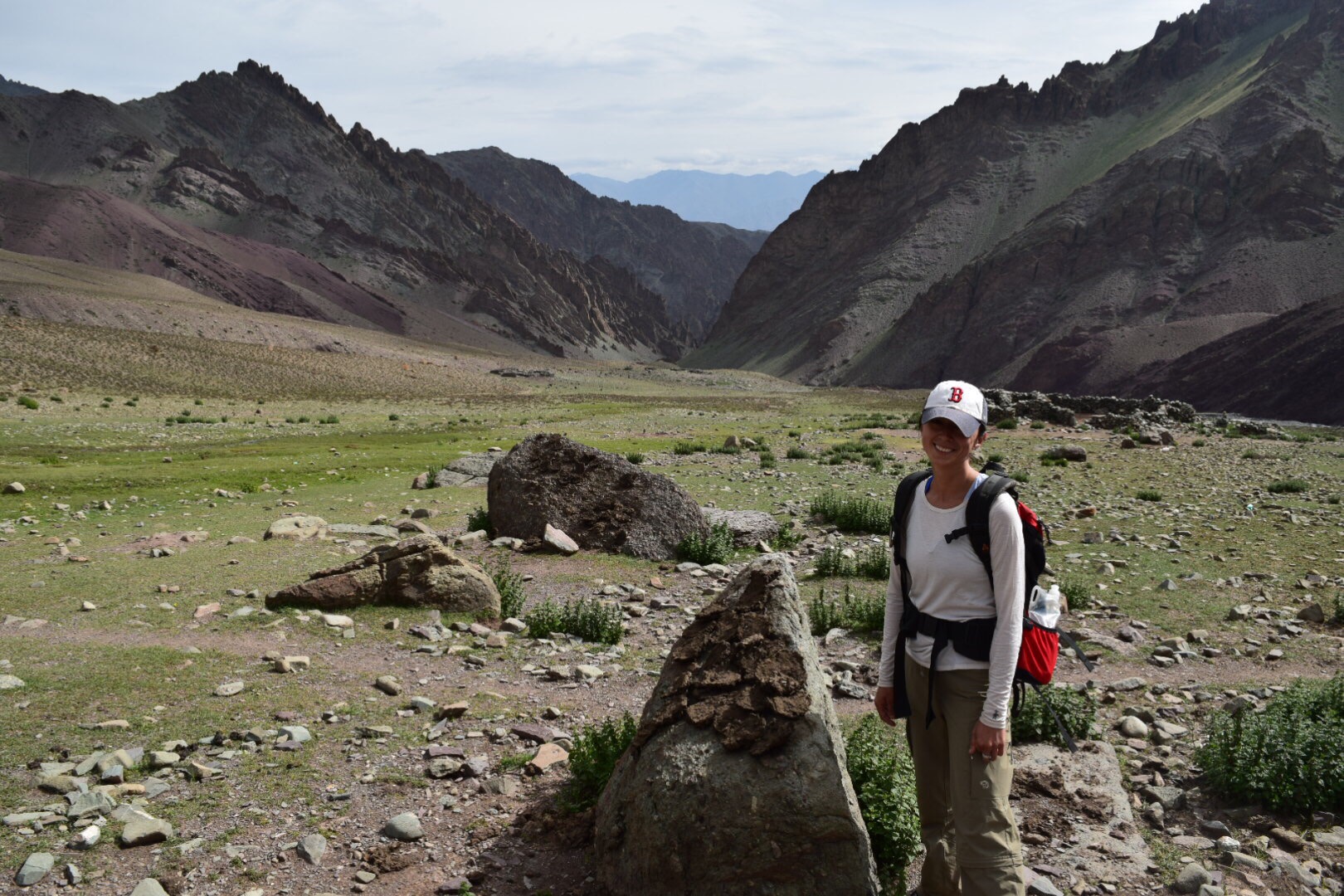 We speculated these yak patties also gave our drinking water its lovely brown hues.
Anyway, the last two passes were difficult as promised, and even though we shunned taking breaks during a climb as a rule, we needed them this time.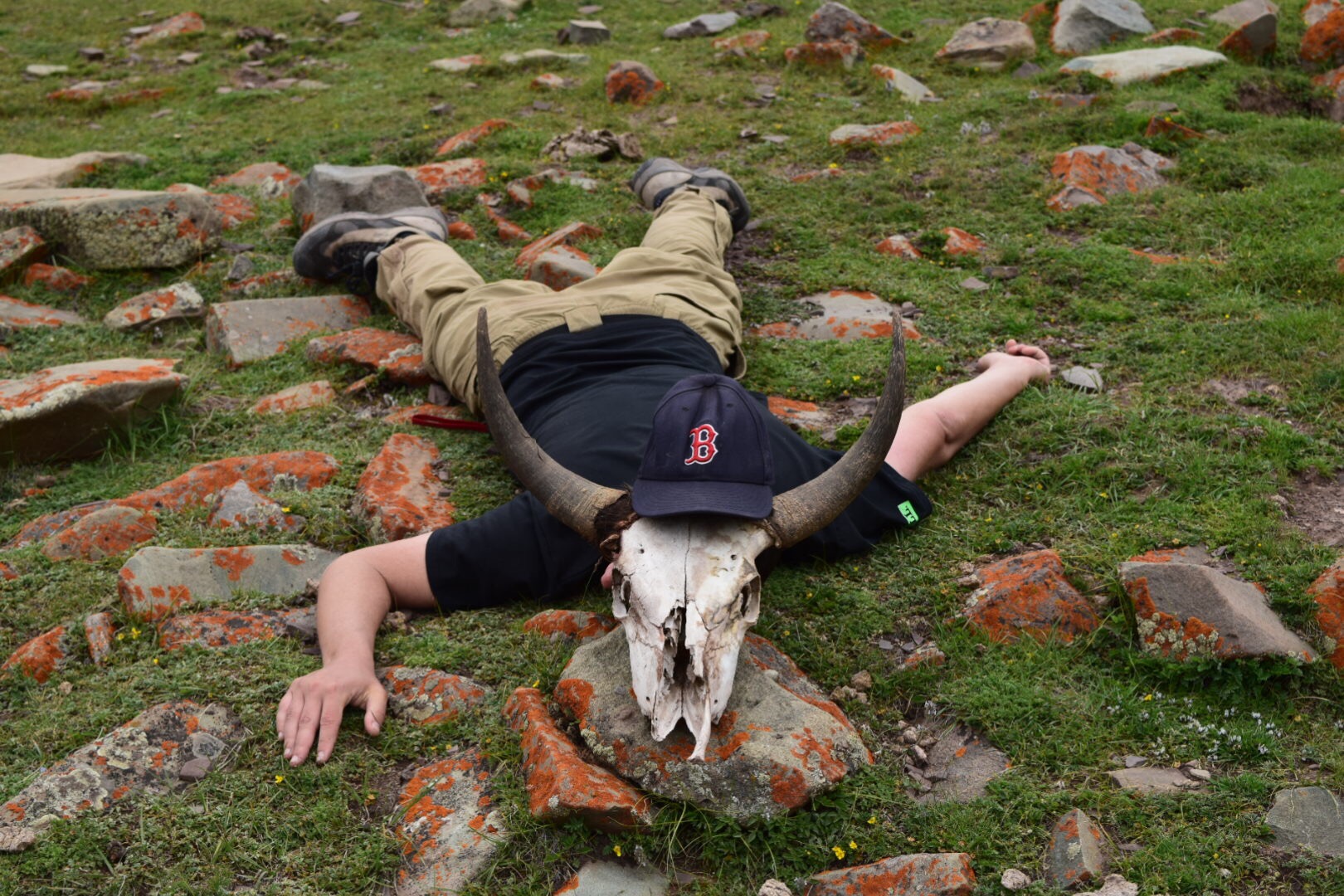
Unfortunately, resting and backslapping on top of pass one…
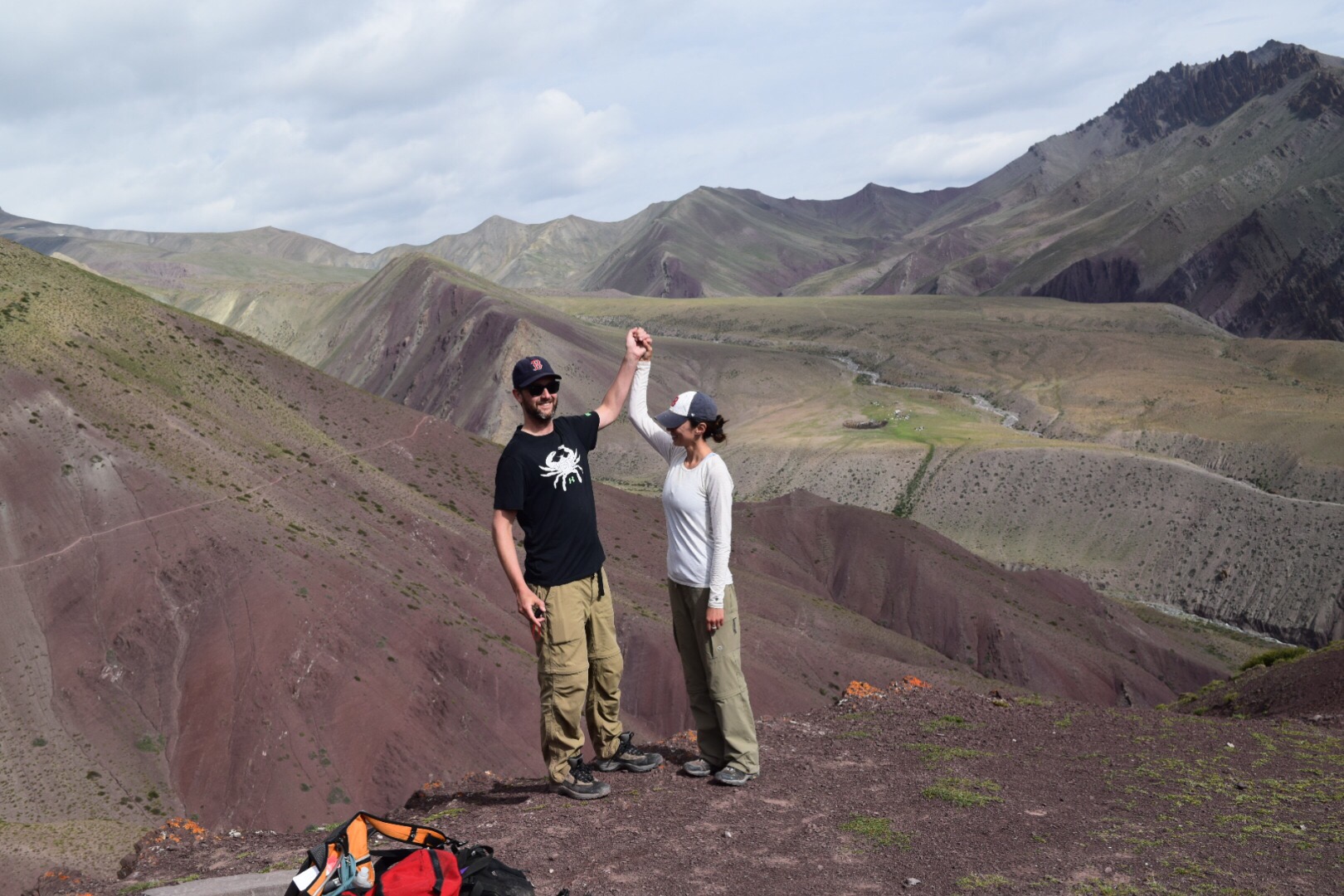
slowed us down enough to get passed by our Dutch nemeses on the way up of the second pass. Either way we were happy to reach Shang La Pass (17,000 feet).
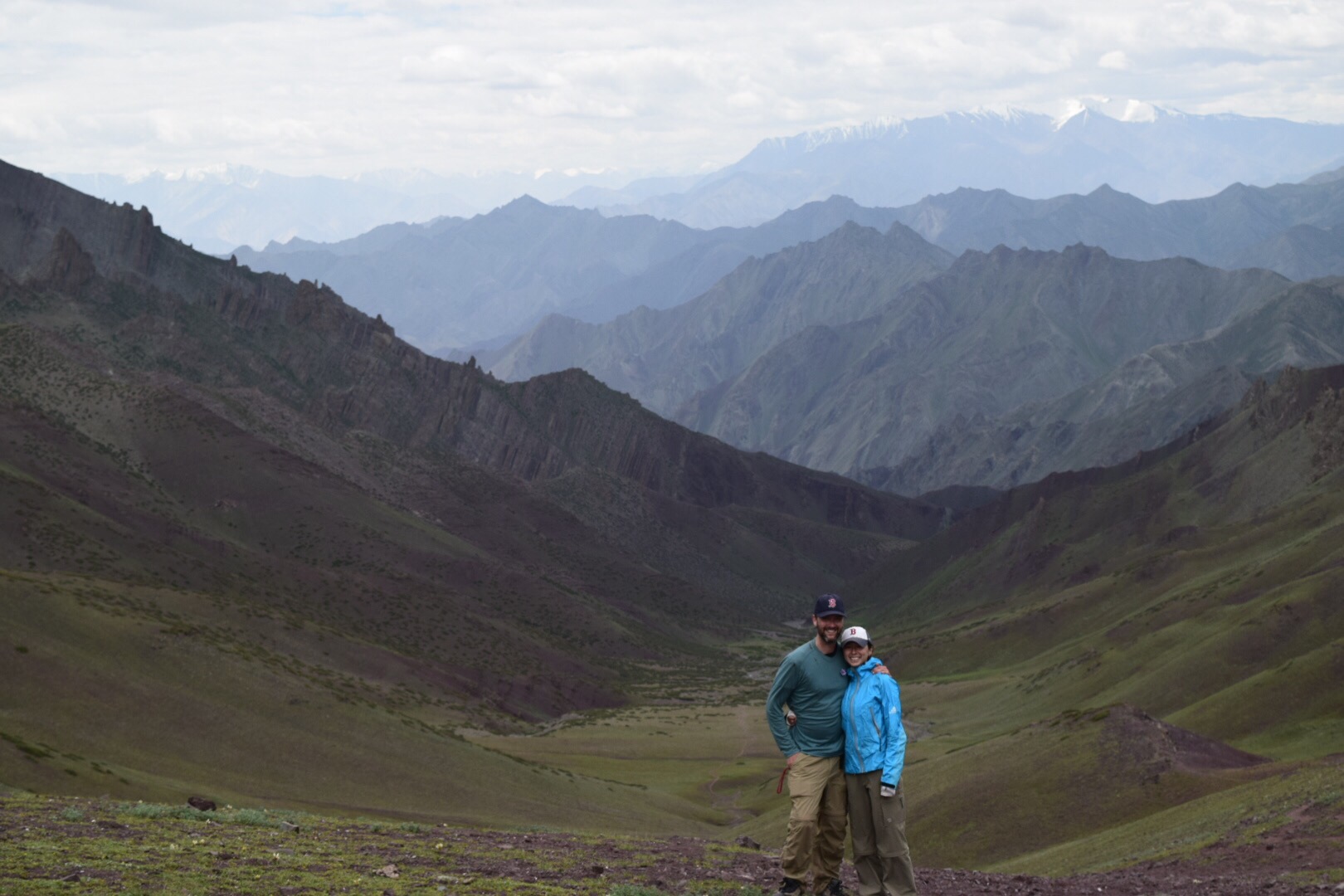 We knew it was mostly downhill from here.
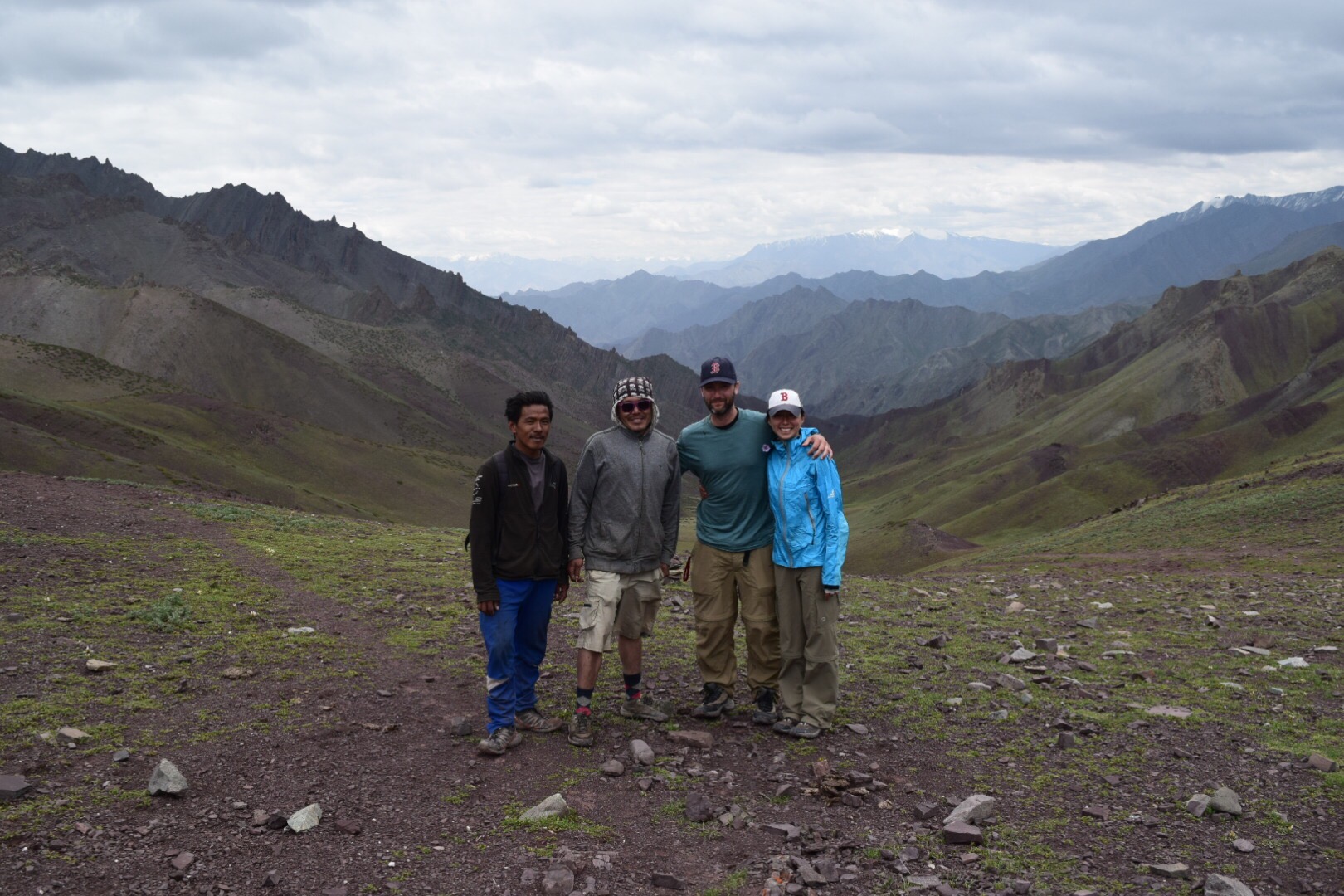
 Our cook on the far left, Ngima Sherpa. Yes his last name is Sherpa. Our guide, Tsering, second left, is Tibetan. Dream team.
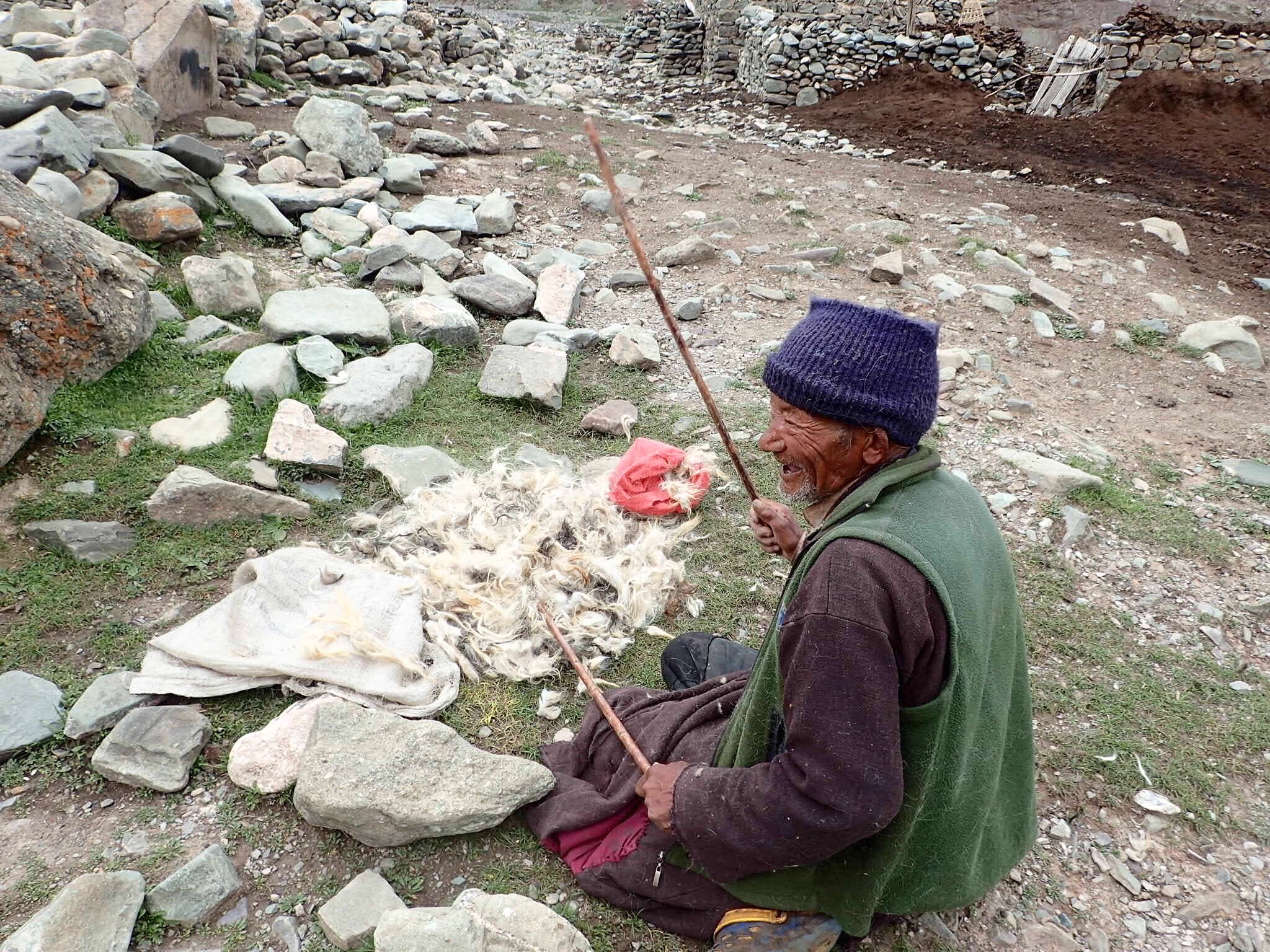
 Next we descended to the campsite, which was set inside the walls of one of the local Ladakh nomads’ summer homesteads. Jesse went exploring and found this happy guy beating some wool…
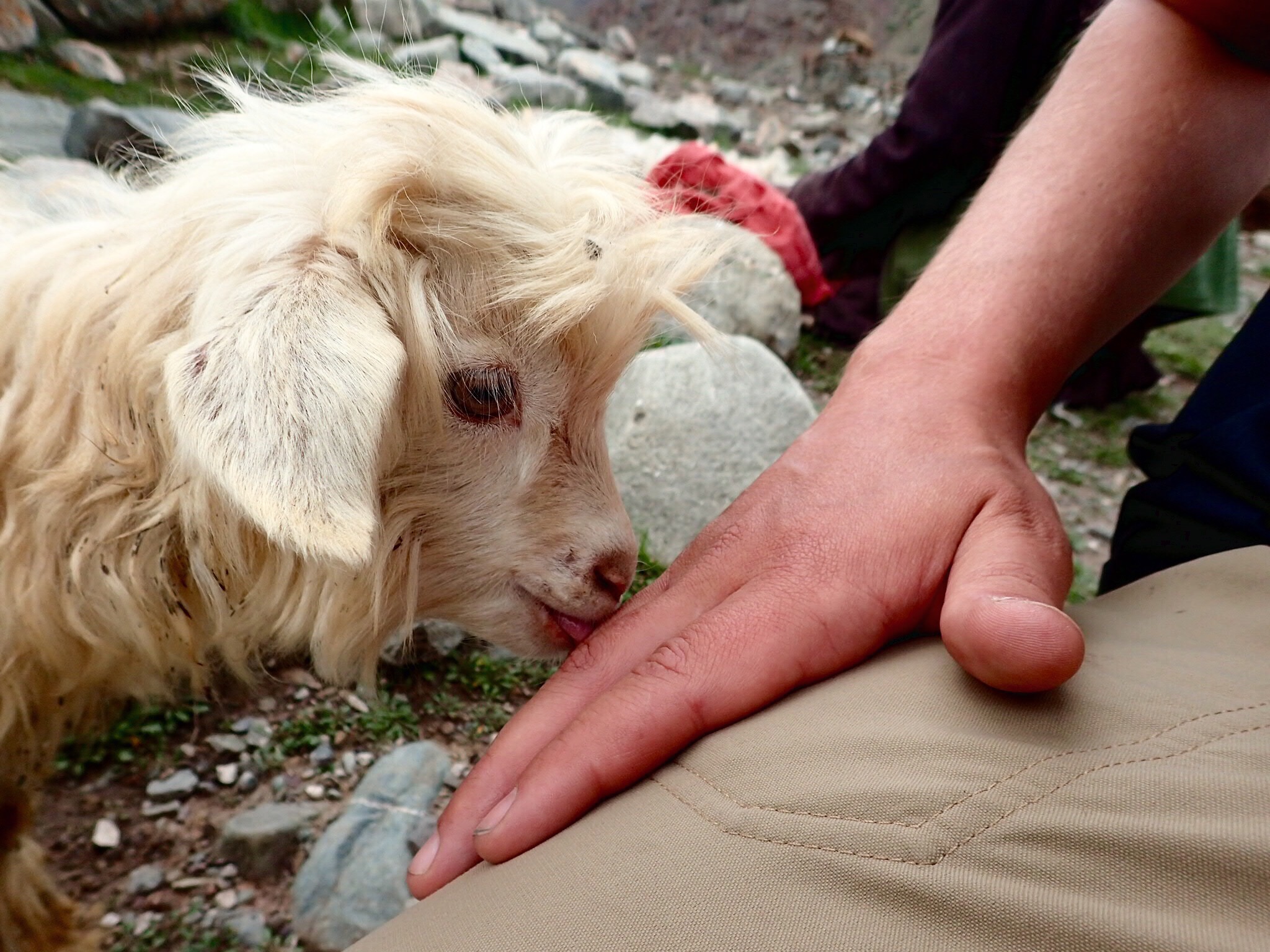
 and hanging out with his baby goat.
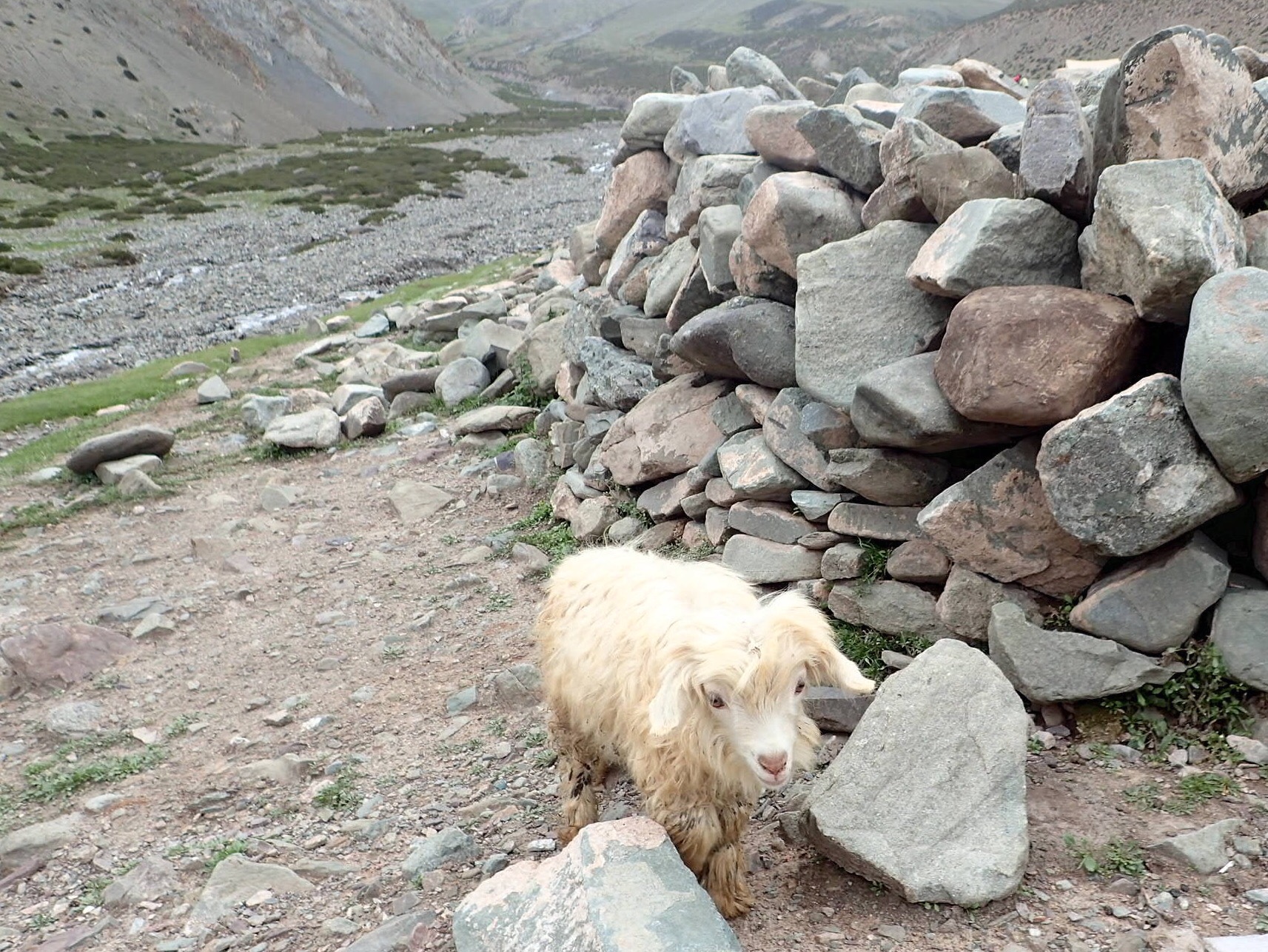 Who was very friendly.
 On the way down, Tsering told us that the following two days would be really light – no significant climbs, and shorter distances as well. Since we were in the habit of shortening or treks by a day (see Congo and Kili), the wheels were spinning.
We really wanted to see the high altitude lakes, and had initially been told it was impossible by the trekking company. But now Tsering said that perhaps if we left very early the next day and walked fast, he could call to the office at the next camp where there might be cell phone reception to arrange for a car to pick us up, and a permit to go into the protected area where the lake is. The plan was hastily ratified – we would combine the final two days and hike out the next day.
Since this was now to be our last night on the trek, Tsering started to make the arrangements – offloading our now unneeded food to other groups and some of the local nomads and briefing the pony man. There was no turning back now. We said our thank yous to the team, and were pleasantly surprised by this beautiful celebratory cake Ngima baked us.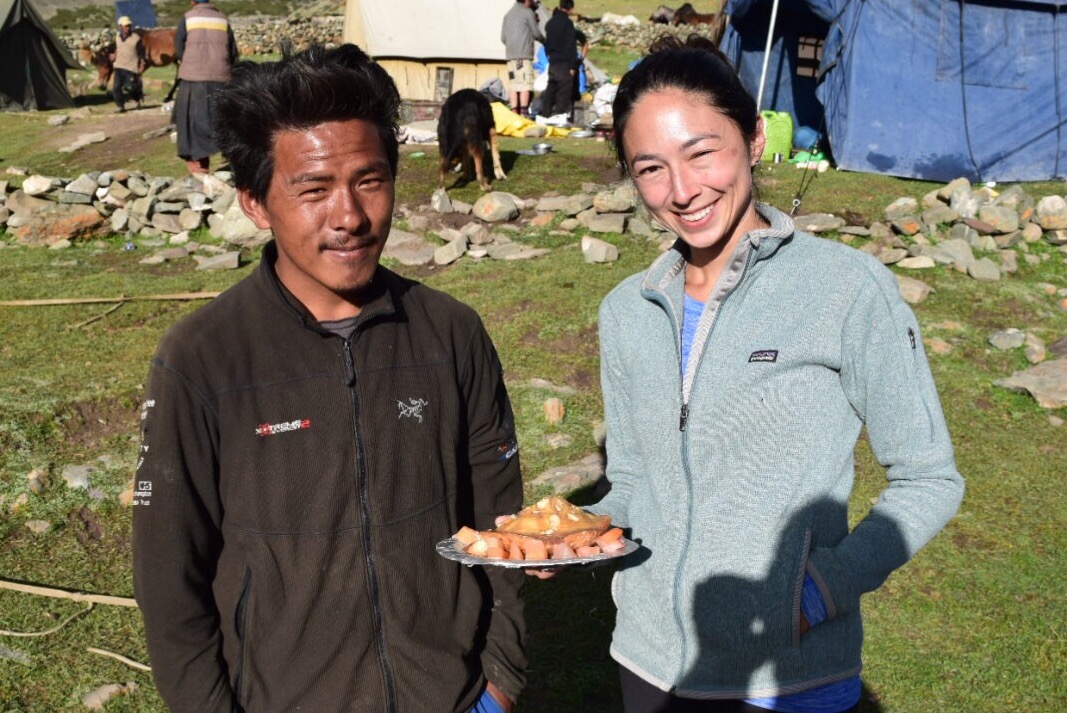 I’m no expert but I expect baking a cake at 15,000 feet is difficult. Beyond his high altitude baking skills, Ngima was a remarkable person and positive force for us.
Ngima’s home has been destroyed in the Nepal earthquake. He normally is a guide in Nepal (a true Sherpa), but he had to come to Ladakh as the trekking industry in Nepal had taken a hit. His plan was to work the summer as a cook in Ladakh so his family can rebuild their homes. Perhaps the only time he wasn’t smiling the whole trek was when he spoke of his village in Nepal, as he was fighting his emotions. We promised we would come trek with him in Nepal soon.
Bellies full of cake we made our way out of the campsite as the local guy’s baby yak and cows saw us off.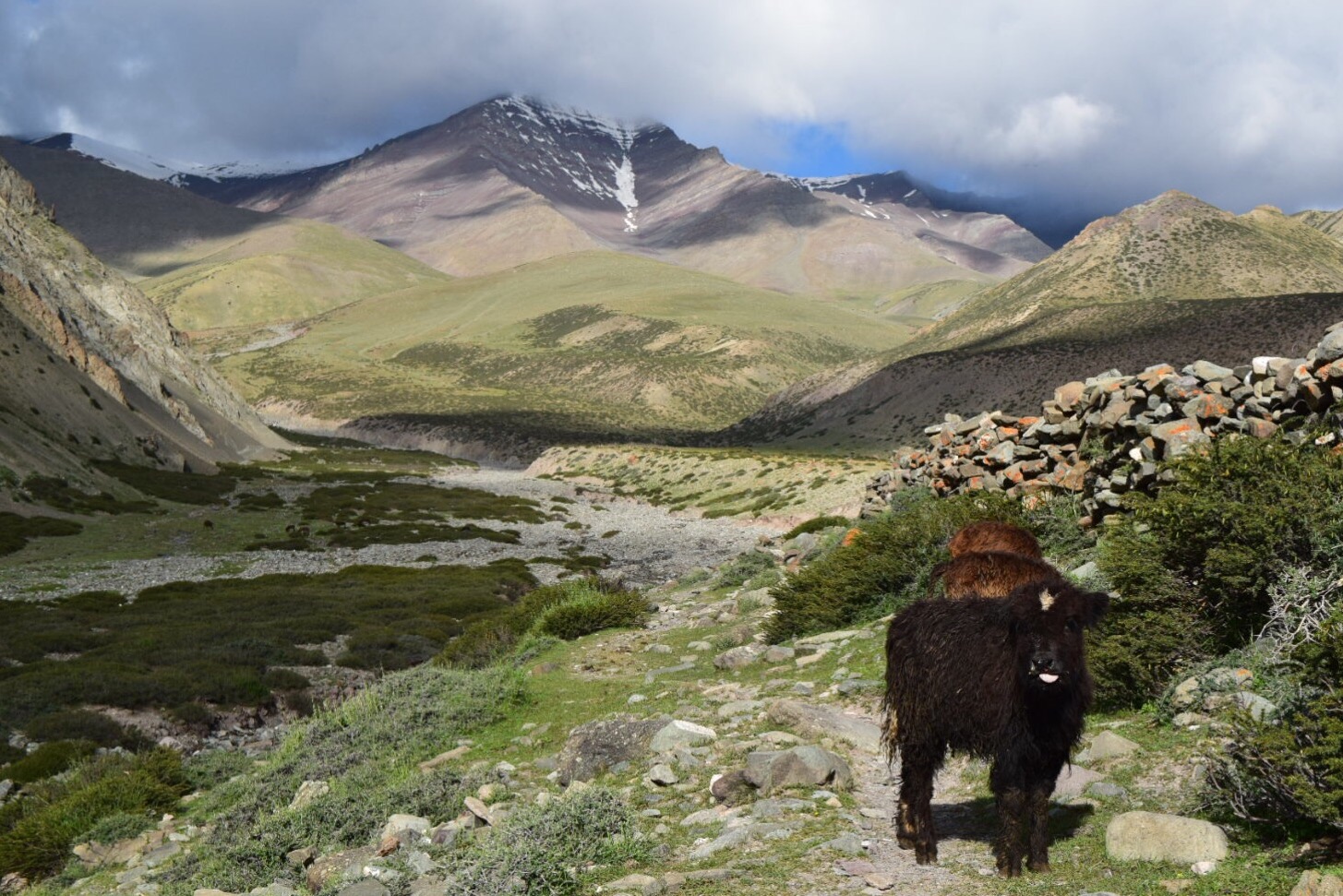 According to plan we quickly moved along the river valley and eventually reached more civilization – the trail became paved road, there were some telephone wires and little farms and schools.
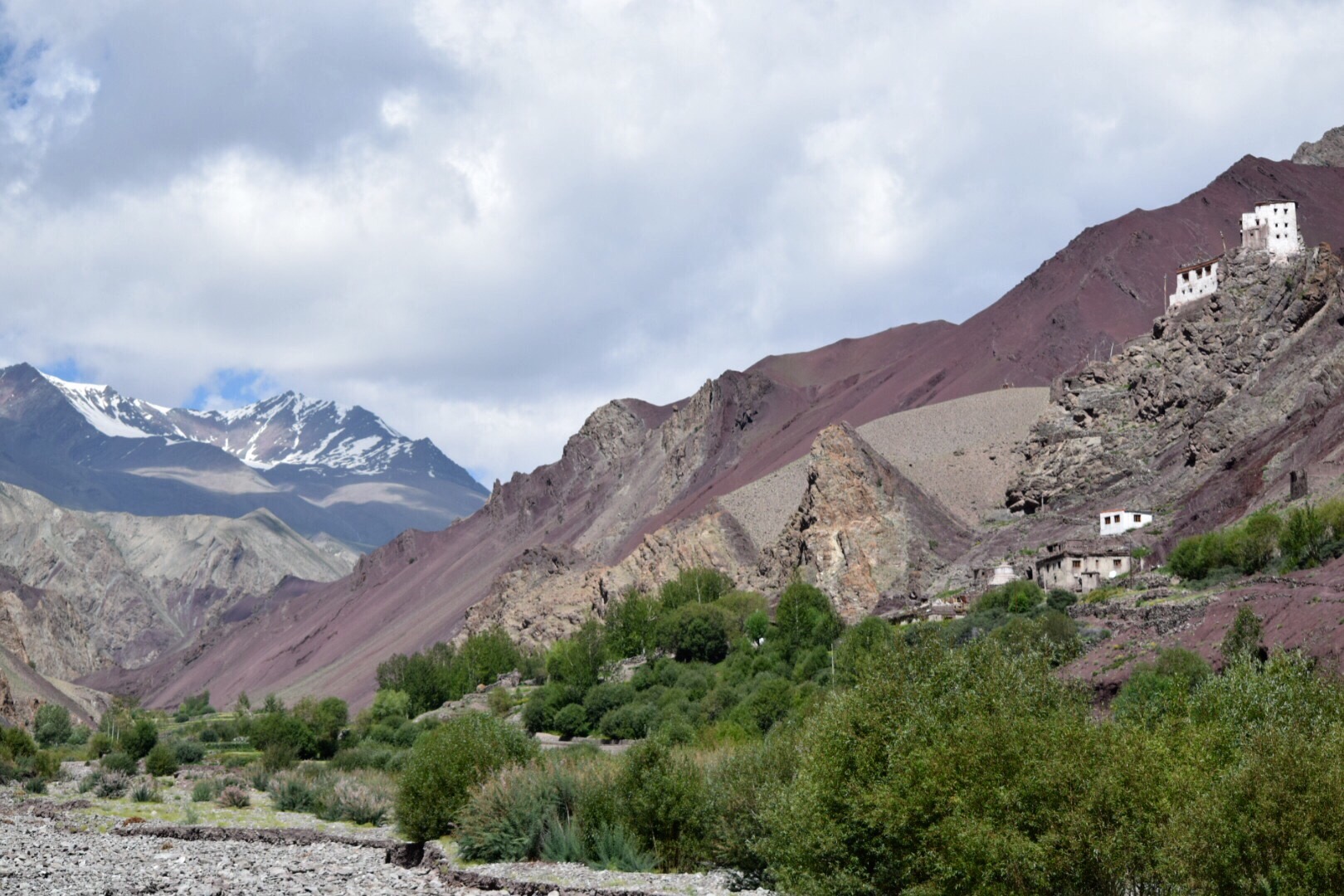 We also saw some examples of the damage overflowing rivers and flash floods could cause.
 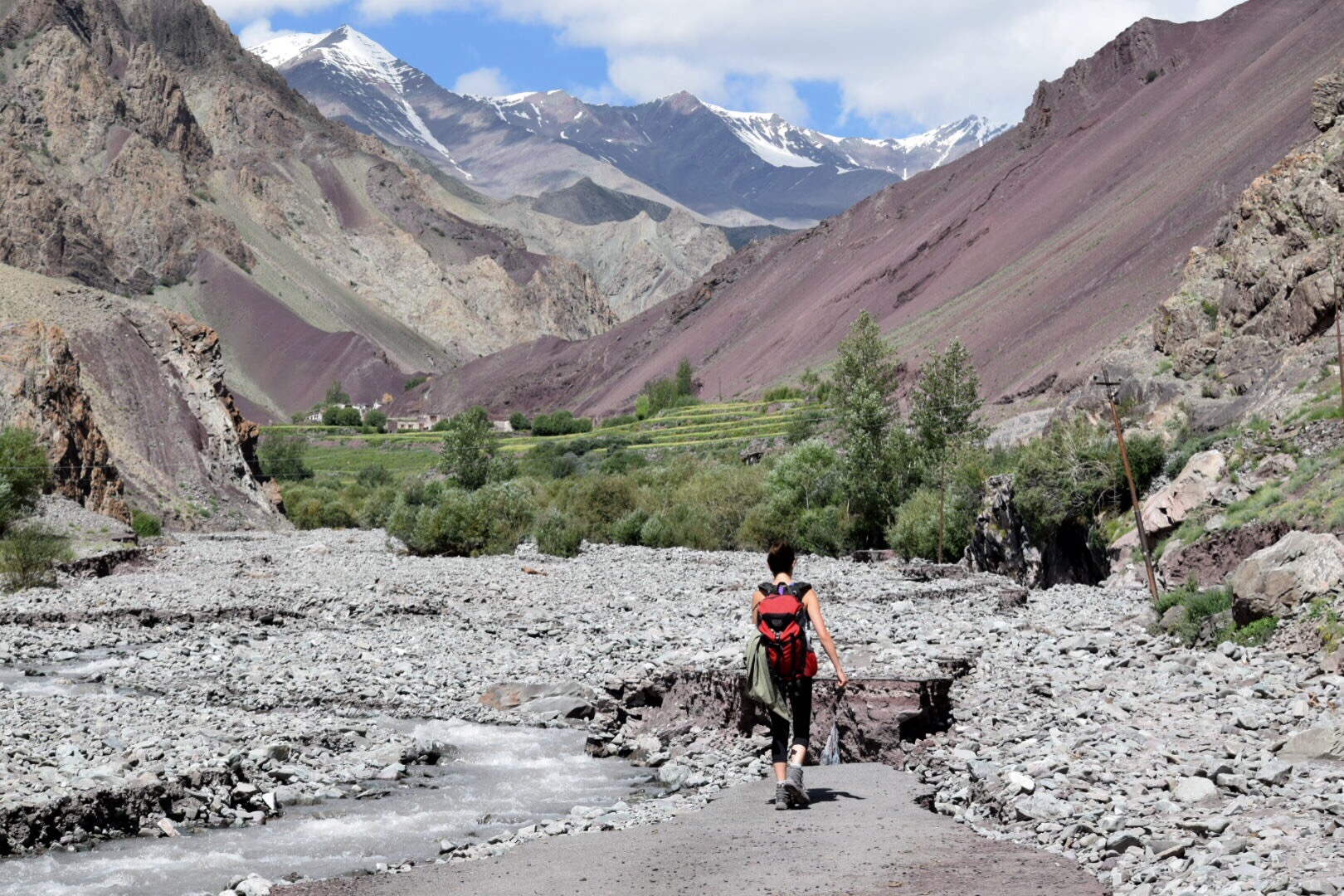 Now that we were in cell phone range we could arrange our transport out of the Hemis National Park and make our way to the lakes. The complication was that Tsering’s cell phone was dead. Ironically, Jesse’s phone was charged. We tried charging Tsering’s phone, then switching his SIM card into our phones, both to no avail. All of the local homes we passed either had no functioning phone, or no one was home. We started to get a little nervous.
Near the end of the trail we reached a group of Spanish trekkers offloading their ponies and having lunch. With a little persuasion, they agreed to give us a ride back into a nearby town where we could call the office and try to get things arranged for a car trip out to see Tso Moriri lake.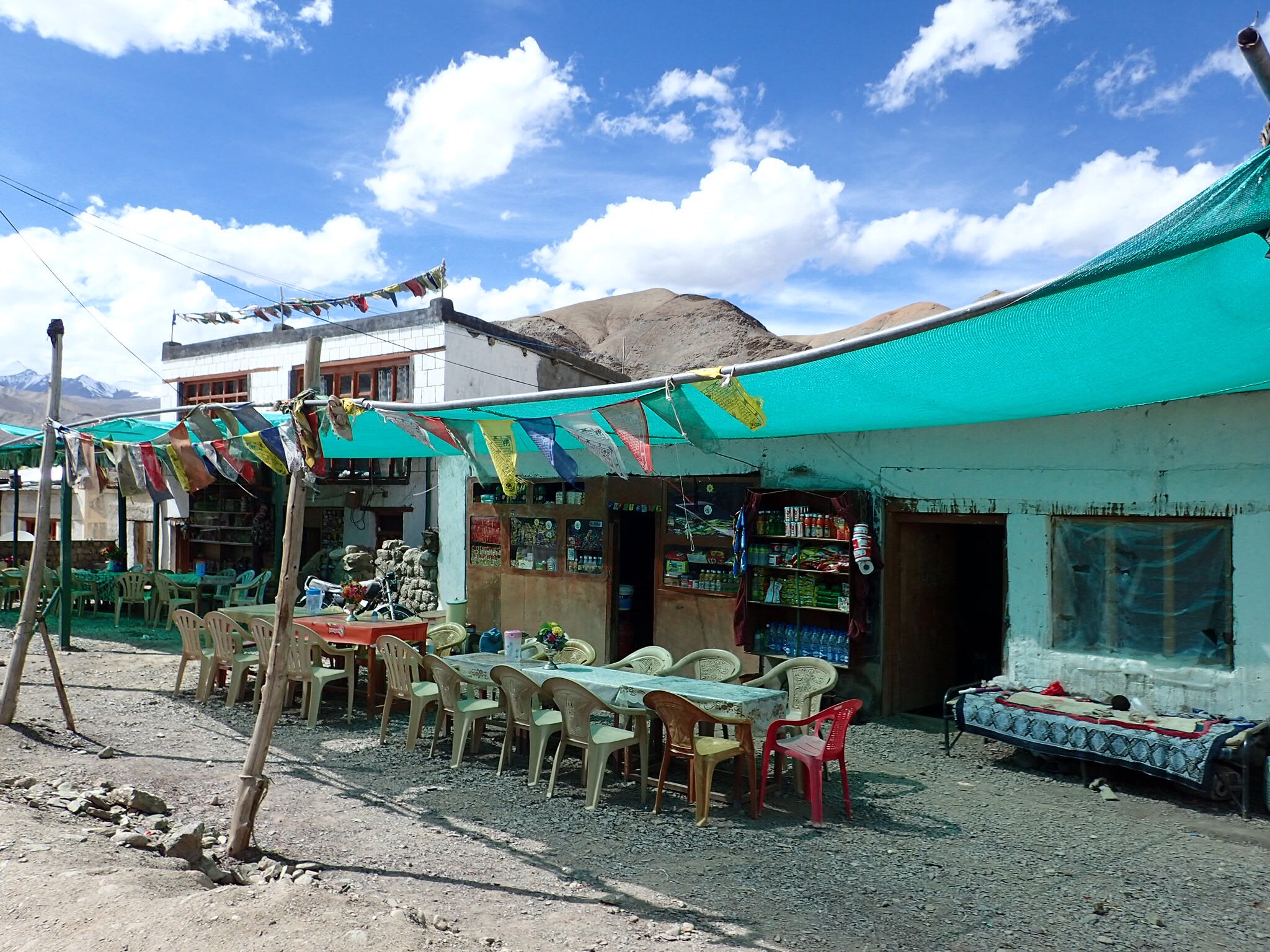 At least we weren’t stranded, and no more camping! Gracias a Dios! To be continued…
 round the world in sixty days
Reading your post is like touring with u… Very nice. Thanks for sharing
LikeLiked by 1 person