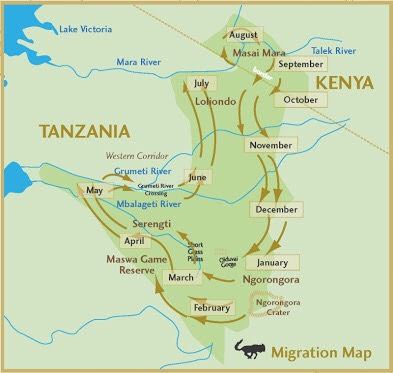
One of the allures of a Serengeti safari is the Great Migration. Wildebeest in the Serengeti and Masai Mara parks are famous for running in great throngs, following the rains and the growing grass.
This is the main reason we flew into Lobo airstrip and booked a stay at the Migration Camp in the Loliondo area of the Serengeti. This would put us in the right area of the park at the right time to witness this spectacle of nature: This flurry of hooves and horns speeding across the savannah and crossing rivers, despite lions and crocodiles, to get to their greener grass on the other side.
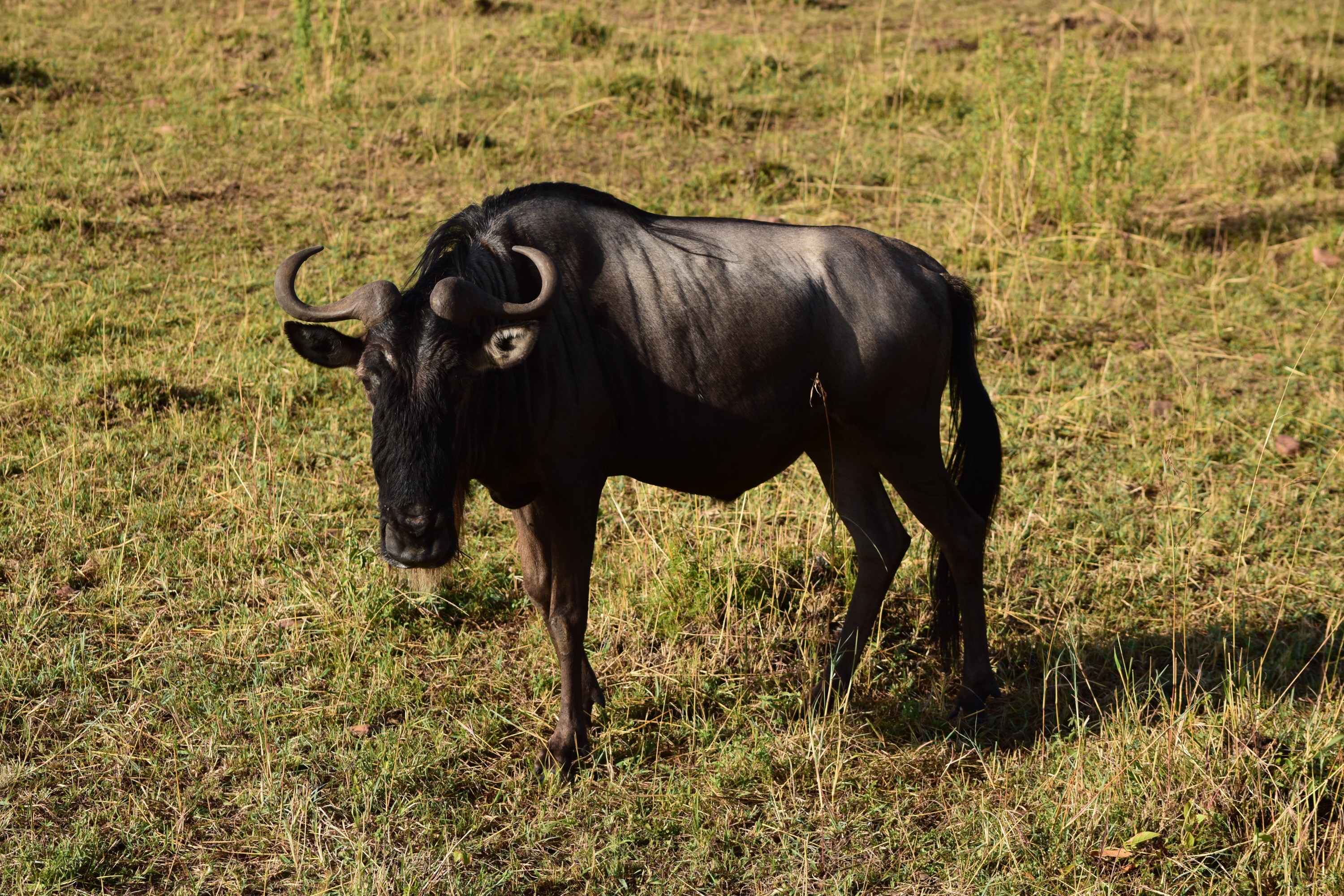
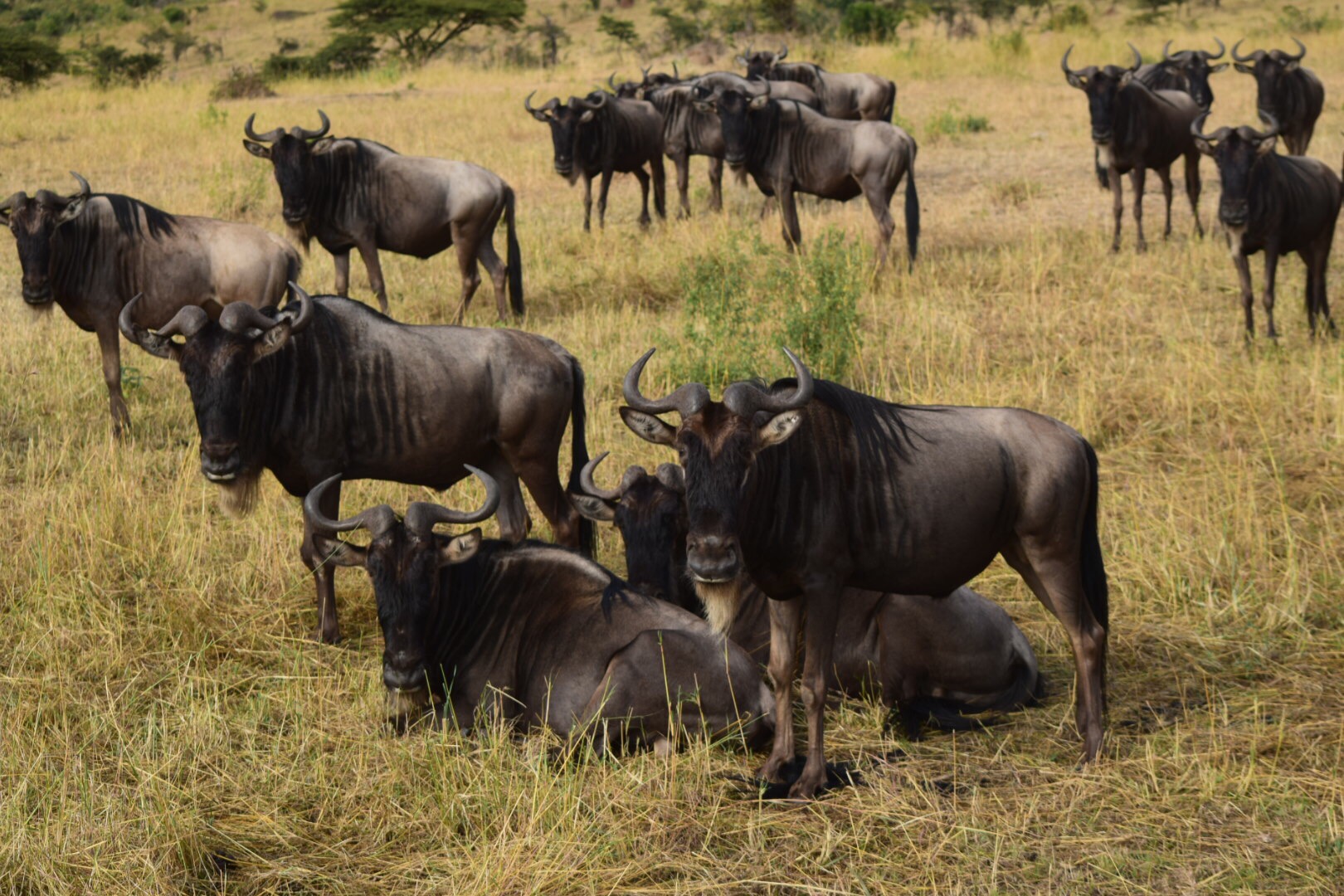
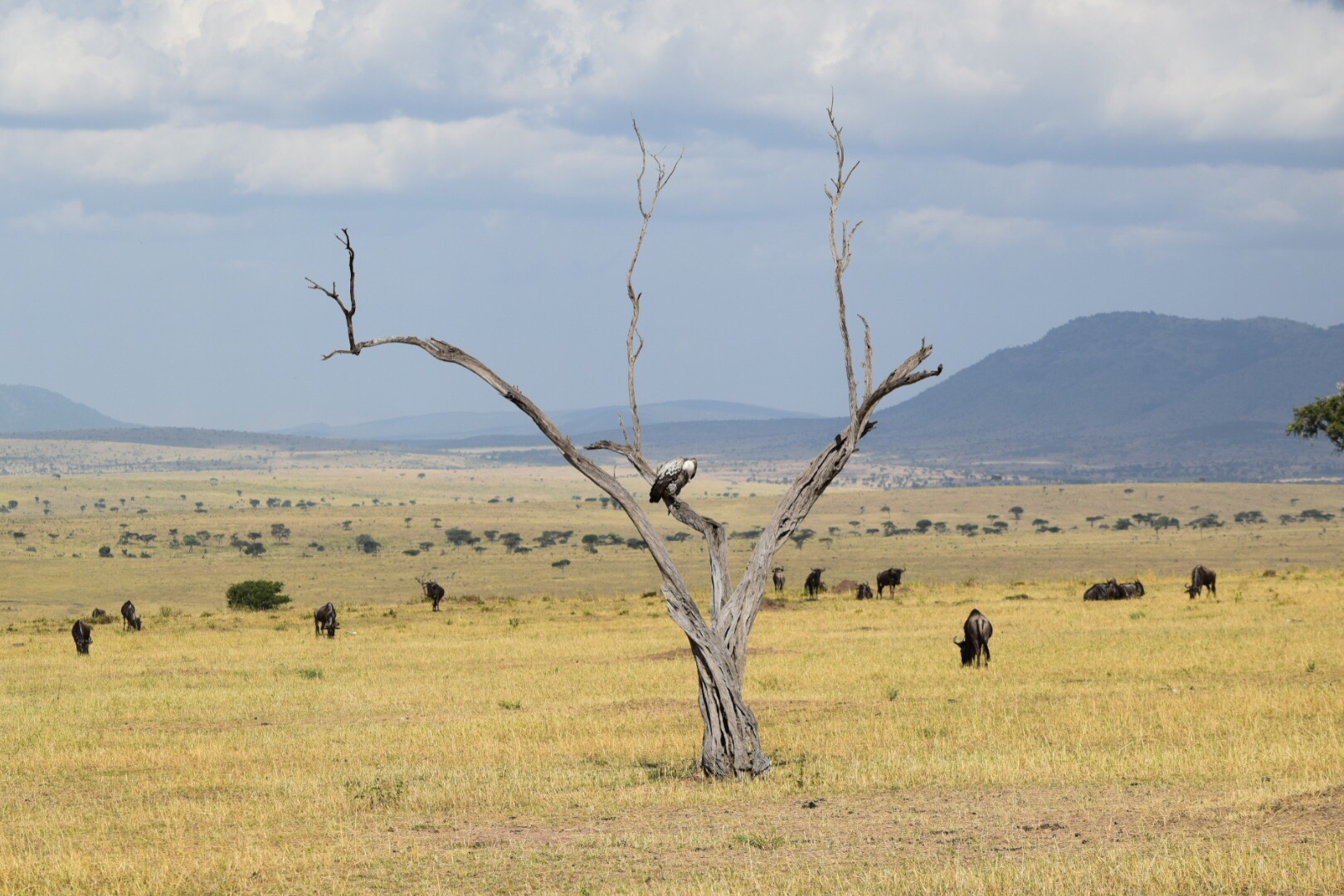
 Turns out the rains were very early and very short this year, with the wildebeest starting their trek north far ahead of schedule leaving nothing left to see except this guy who didnt get the memo…
 I blame global warming.
Max (our guide) told us we might be lucky to see some stragglers, or the tail end (get it?) of some herds moving into Kenya’s Masai Mara park. We were given the choice to take a sure bet successful safari in Lobo or drive 3 hours North for a possible tail end. The true gamblers that we are, we set off at daybreak.
As we neared the Kenyan border, we began to see a much larger concentration of wildebeest. However they certainly weren’t migrating anywhere.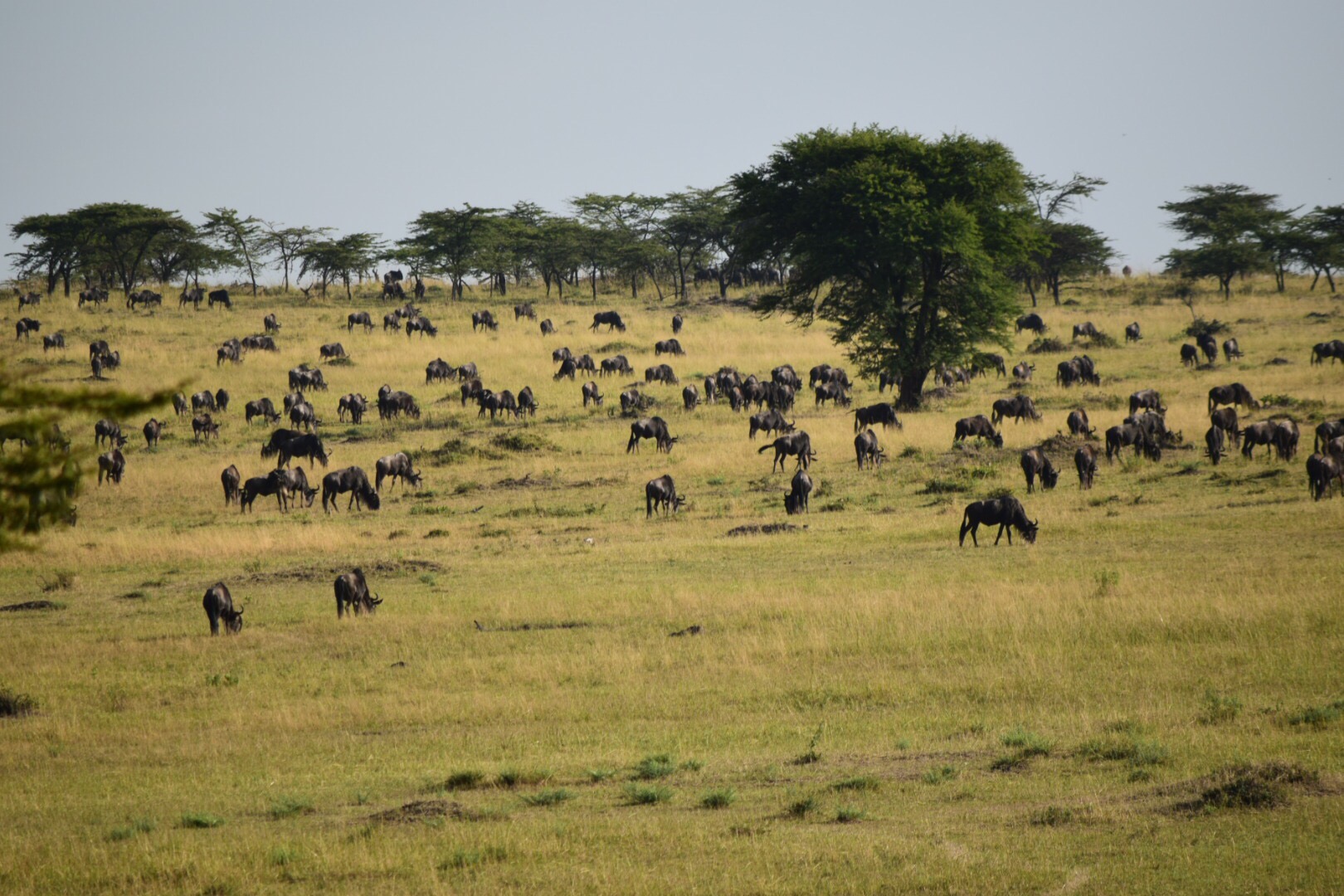 They are funny looking animals up close – certainly not photogenic, nor were there any cute babies, or any other endearing attributes to speak of. They basically sat or stood around eating grass and making this grunting-snort noise. Watching a wildebeest is basically like watching an ugly cow. For good reason most people don’t watch ugly cows.
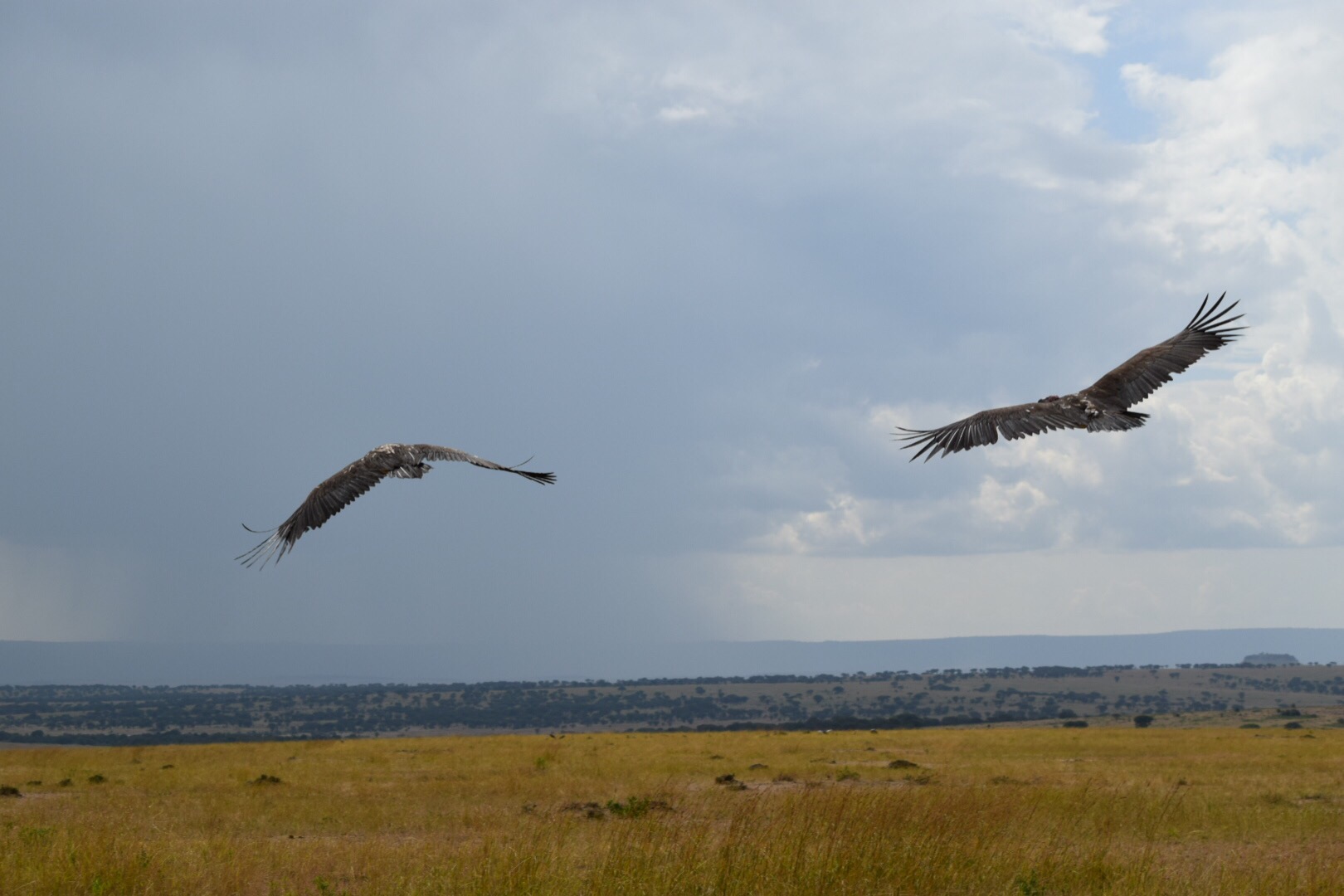
 Carcasses began to appear here and there in the bush, with a corresponding uptick in the vulture population, lingering evidence of the earlier migration.
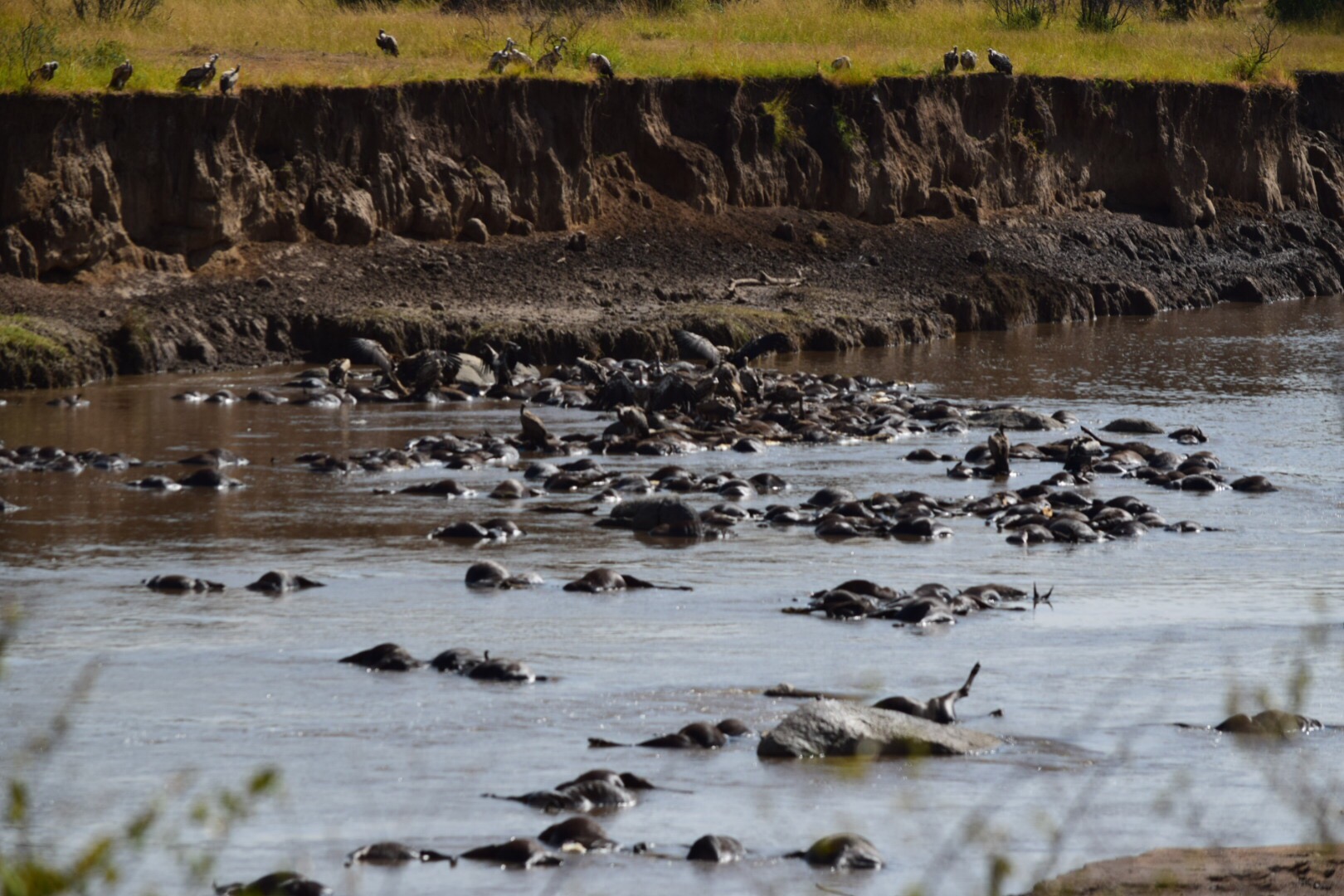
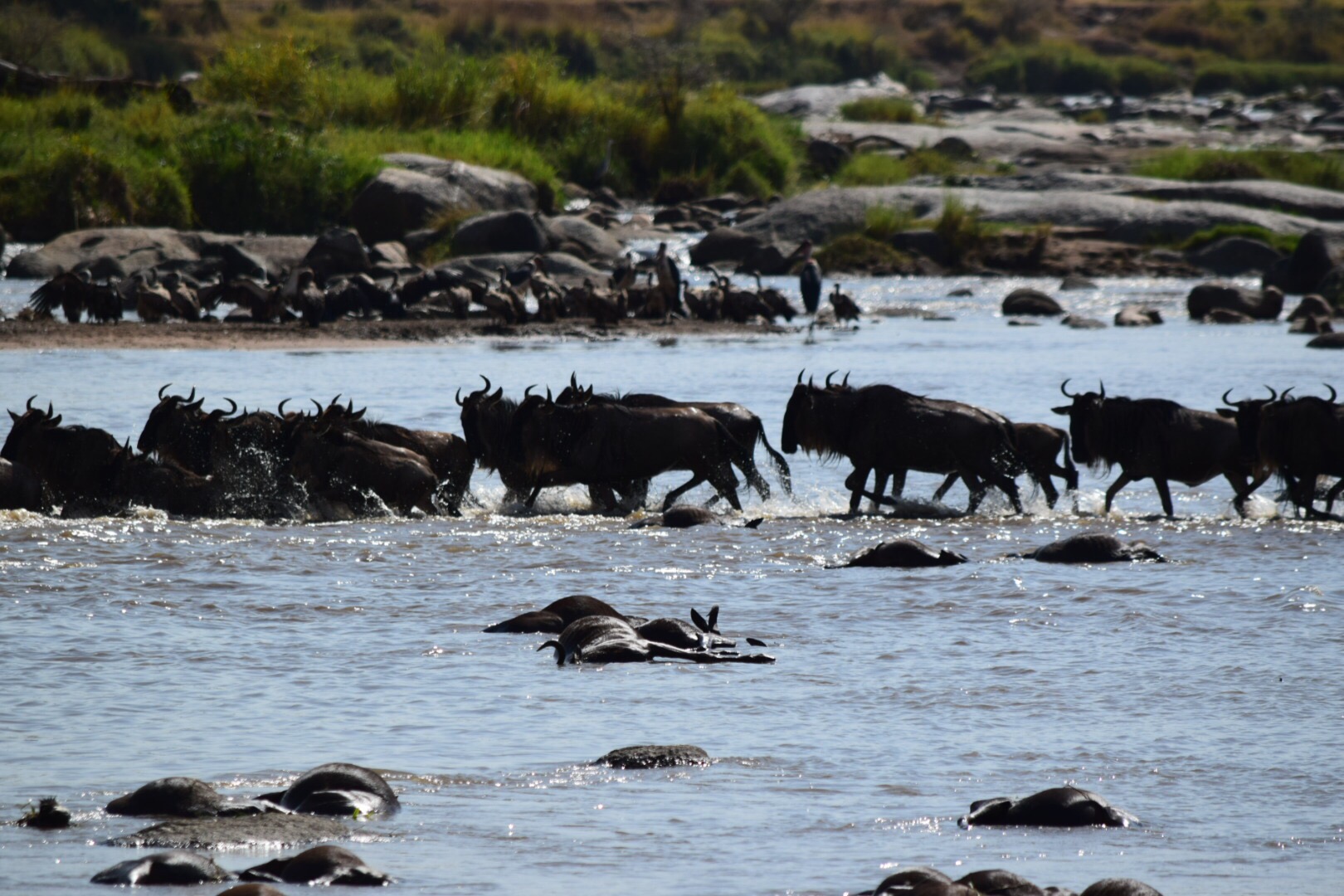
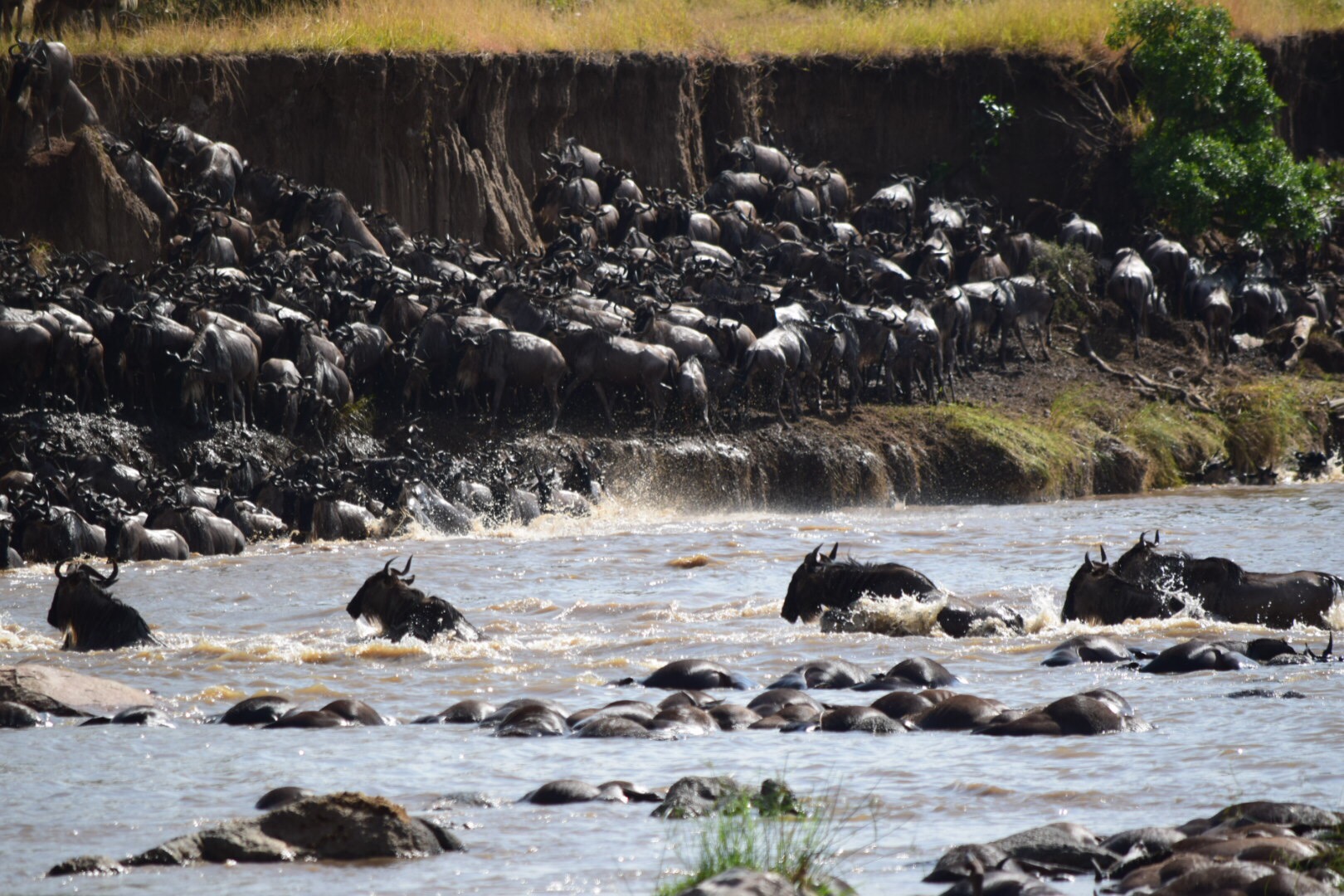
  After a three hour drive, the sinking feeling of having missed a truly great spectacle growing along the way, we arrived at the Mara river. There was more evidence: Hundreds of wildebeest carcasses in the river from a previous crossing, likely from earlier in the morning or the day before….
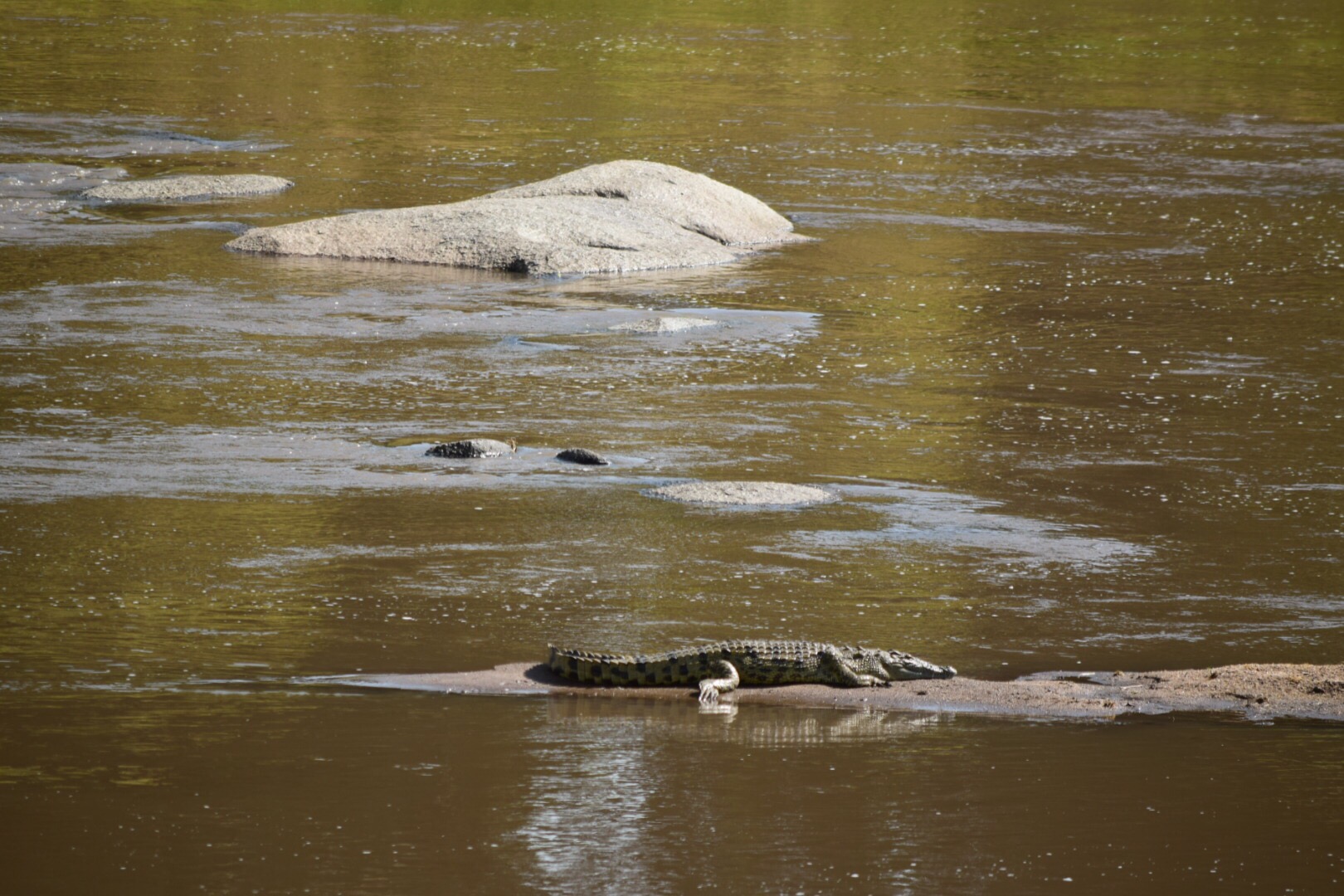
 and some very lazy and well fed crocodiles.
 And then it happened. As we were spotting crocs in the river, a smaller herd (a few hundred) approached the river bank. Unaware or unfazed by their ill-fated brethren, they mustered their collective courage and then charged into the river (note the hippo in the background).
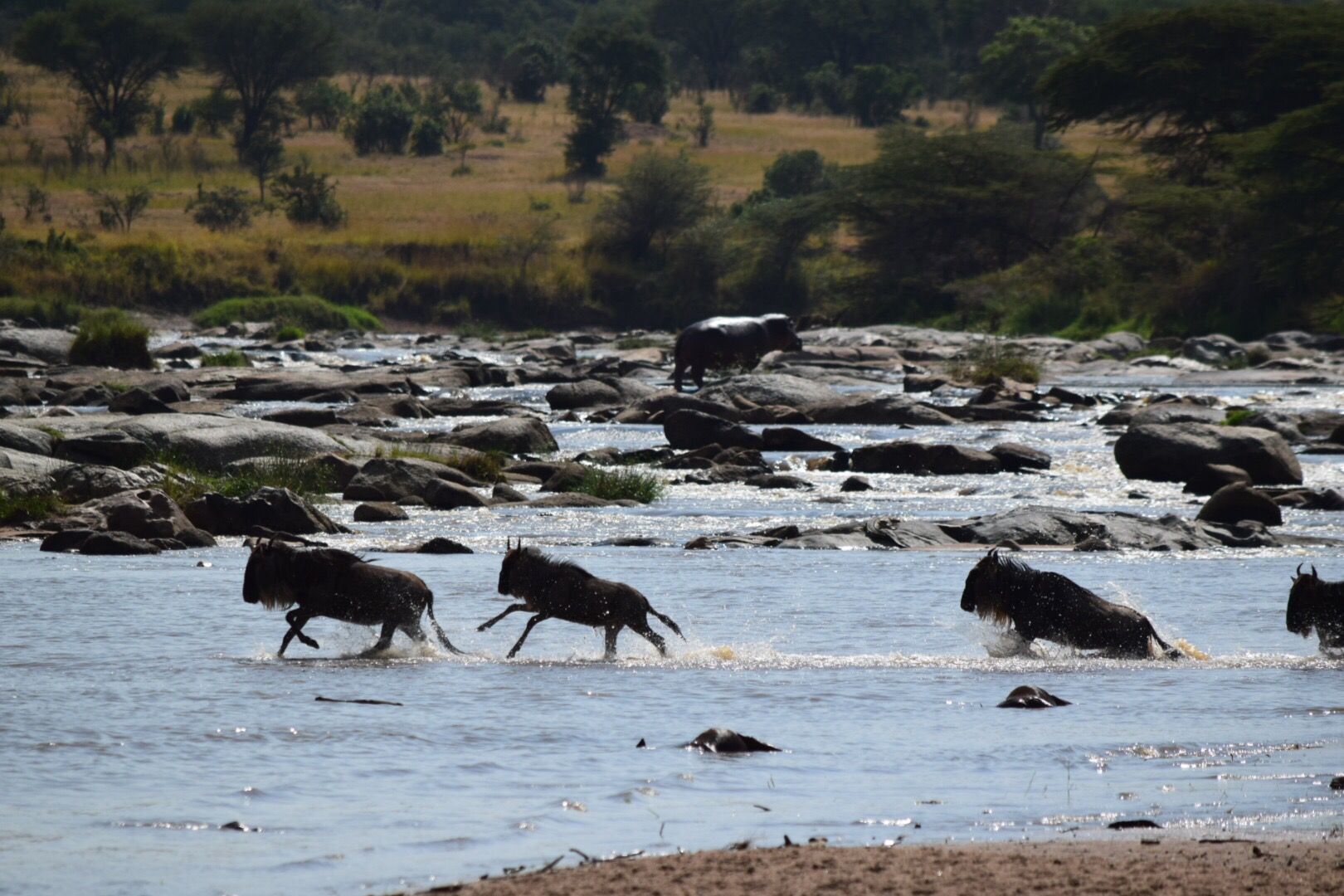 Once the first few took the plunge, the rest followed. Havoc broke loose as hundreds of wildebeest all lined up to cross the river in the same narrow stretch (note vultures in background).
 On the far side of the river there was utter chaos as the wildebeest all tried and failed to climb the cliff. It became clear that the dead that lay in the river were drowned trying and failing to scale this cliff.
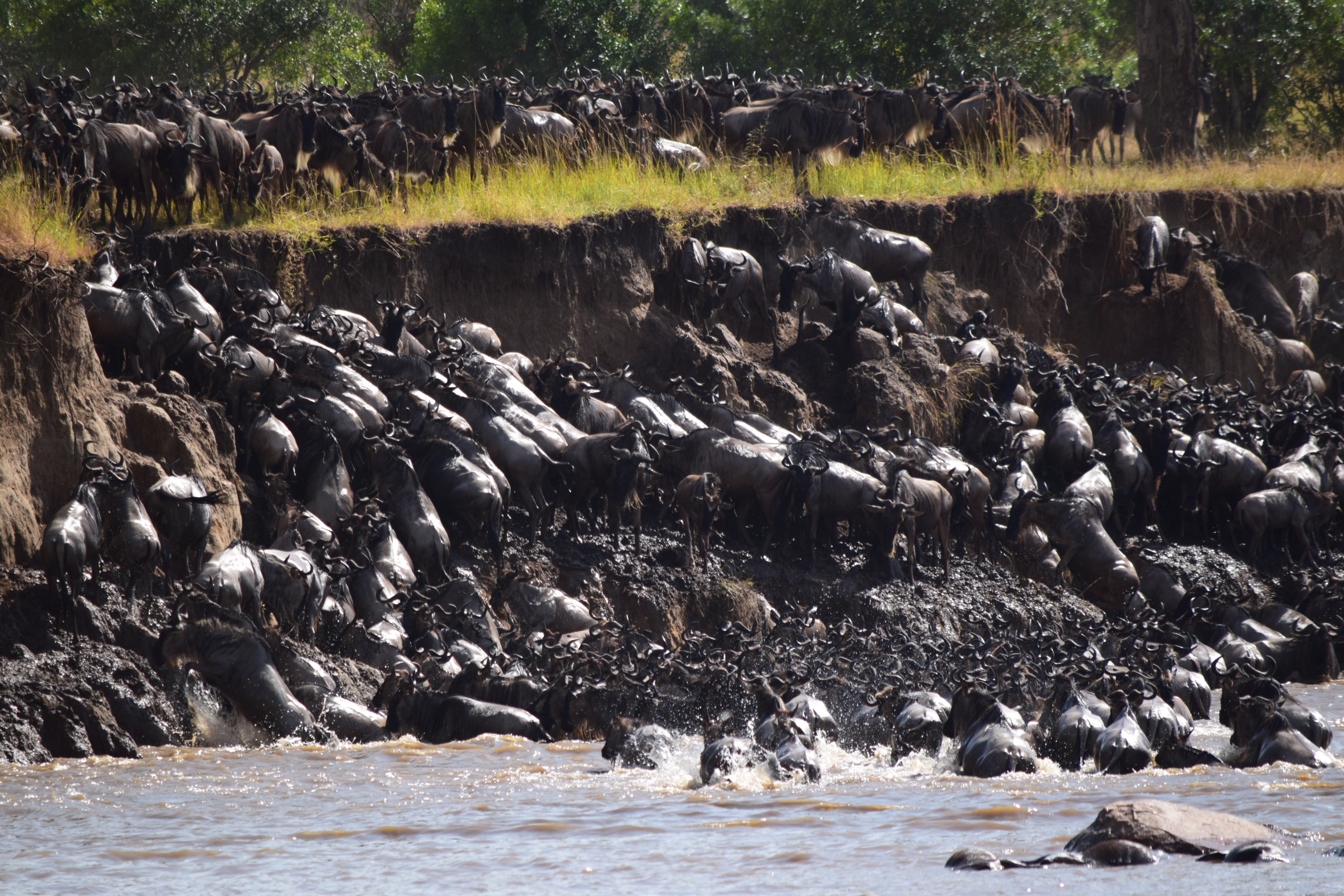 Climbing out of the water.
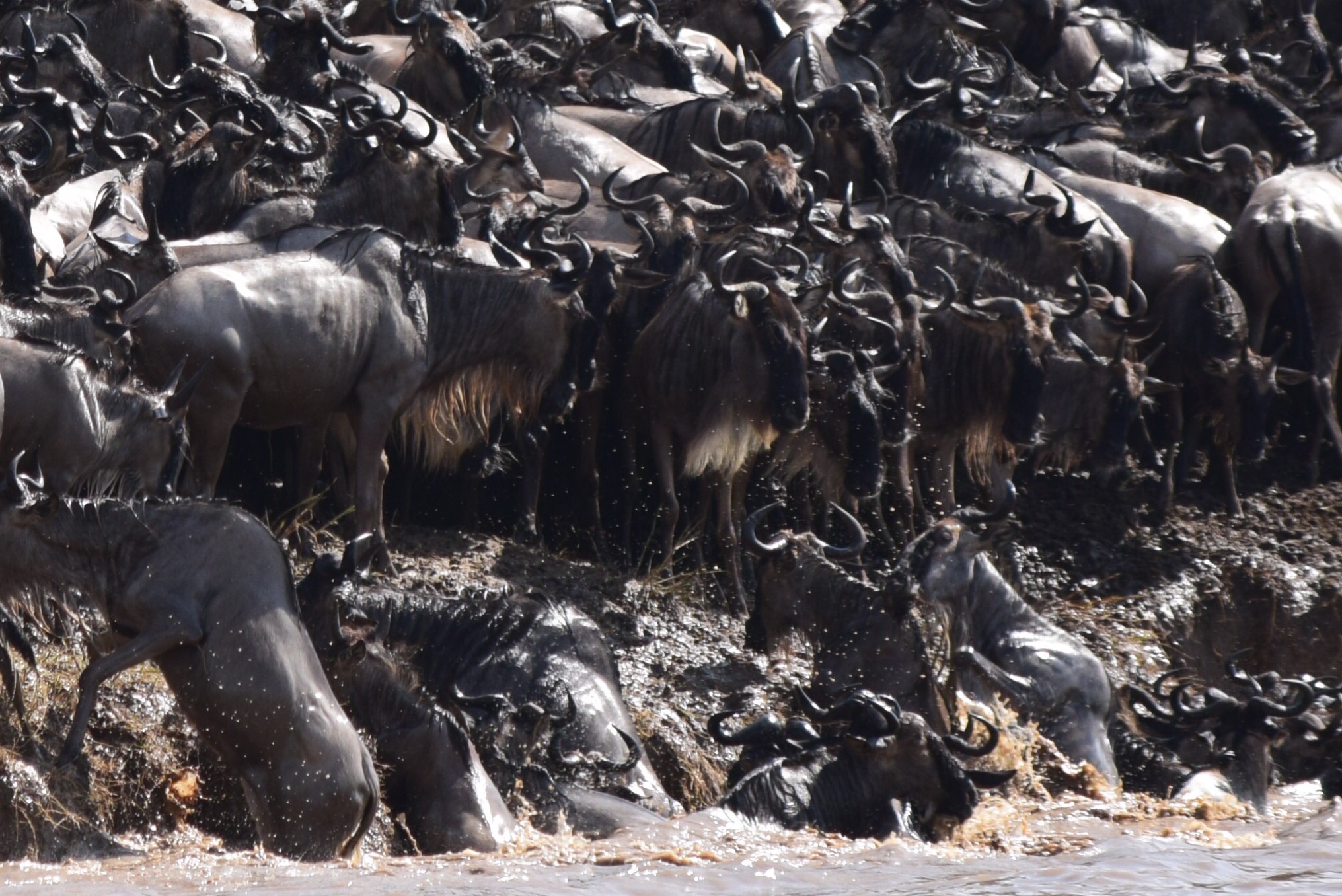 A swarm of bodies and horns.
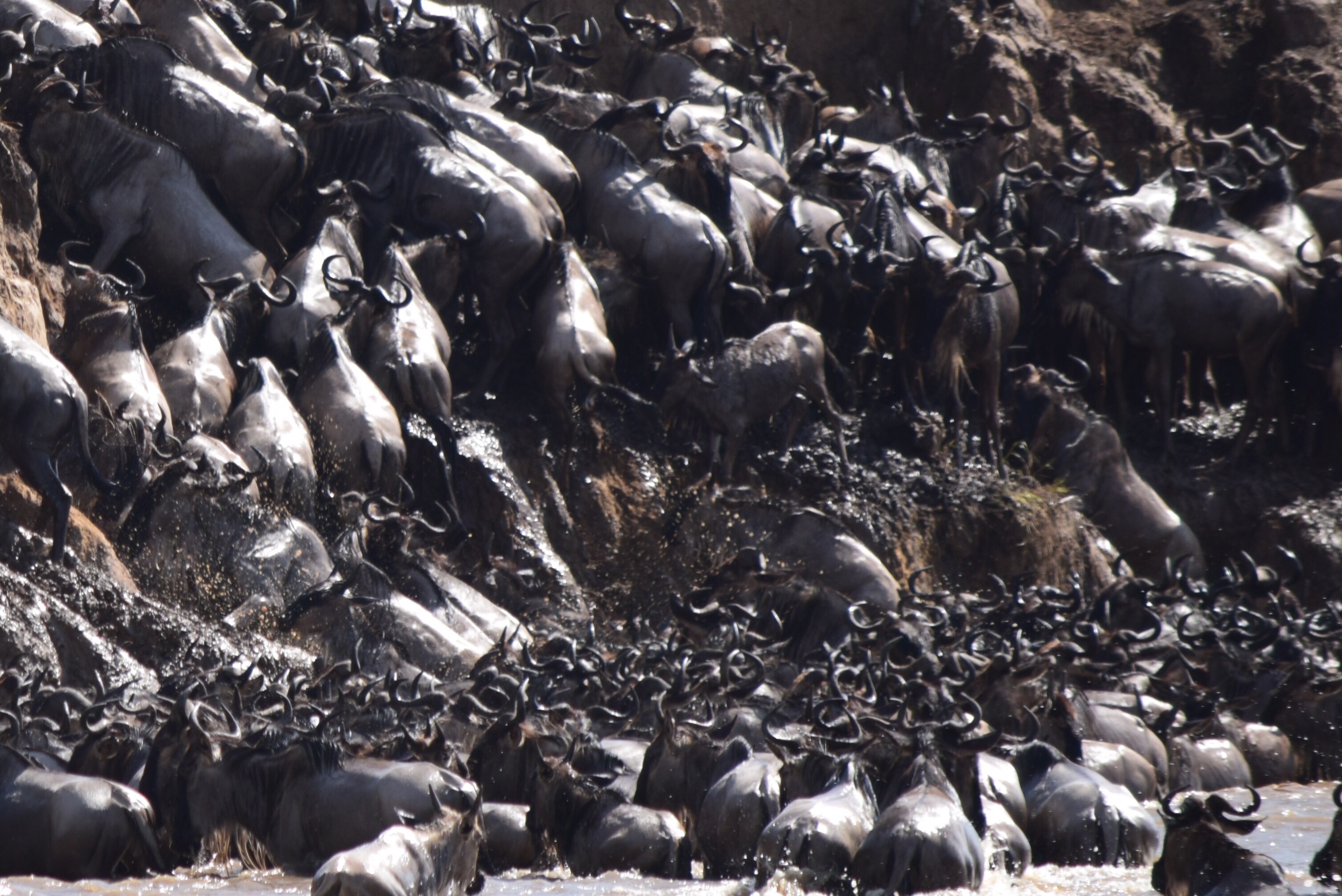 Some fell over their brethren back into the water, some went back across the river to where they started, but most ended up filtering eventually over to the side where they could climb up the bank safely.
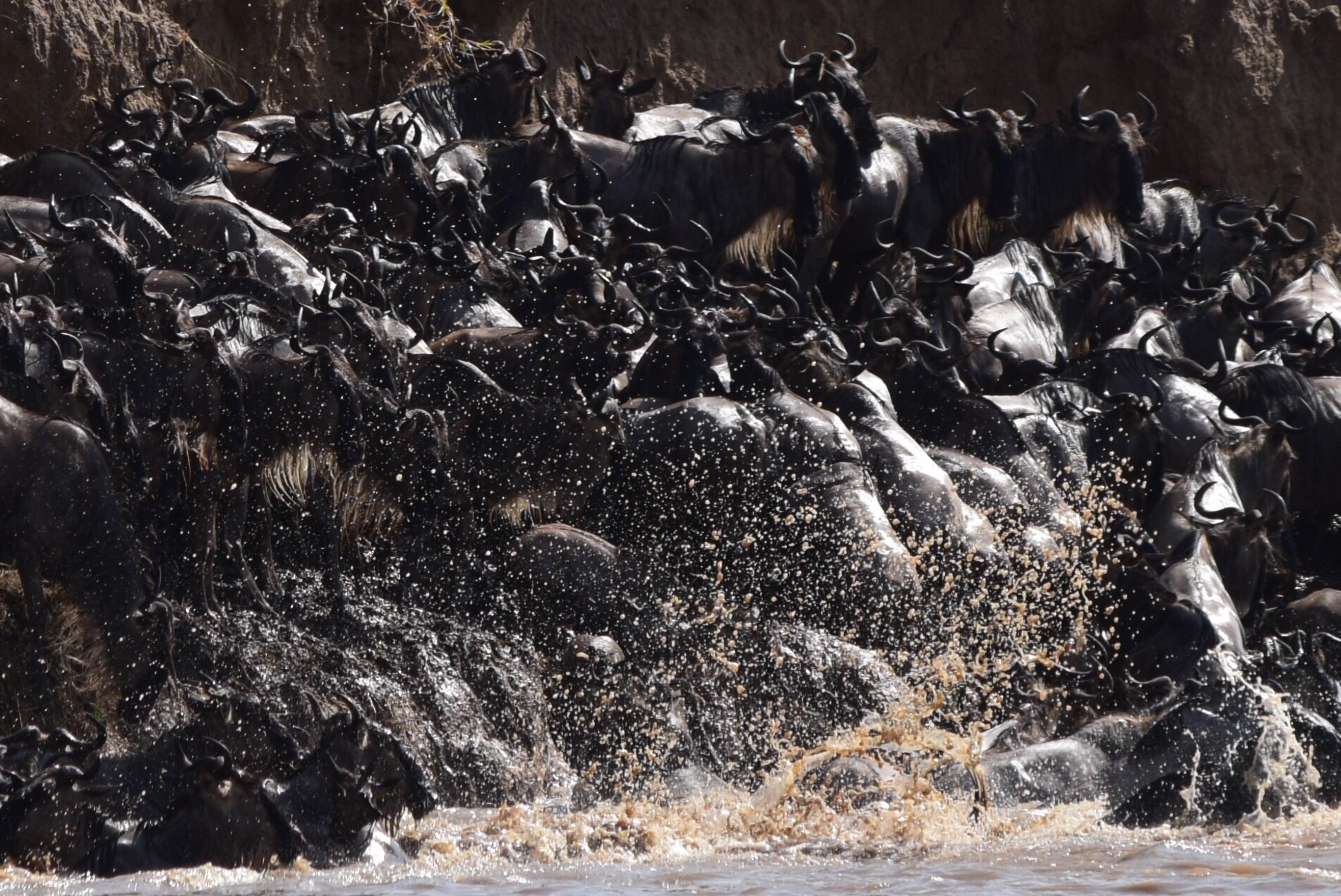 The whole spectacle was so impressive: the hordes of wildebeest lined up on one side, then swimming in water over their heads past scores of dead wildebeest, to join the massive wall of confusion on the other side.
  Though the vultures patiently watched, there were no deaths on this crossing.
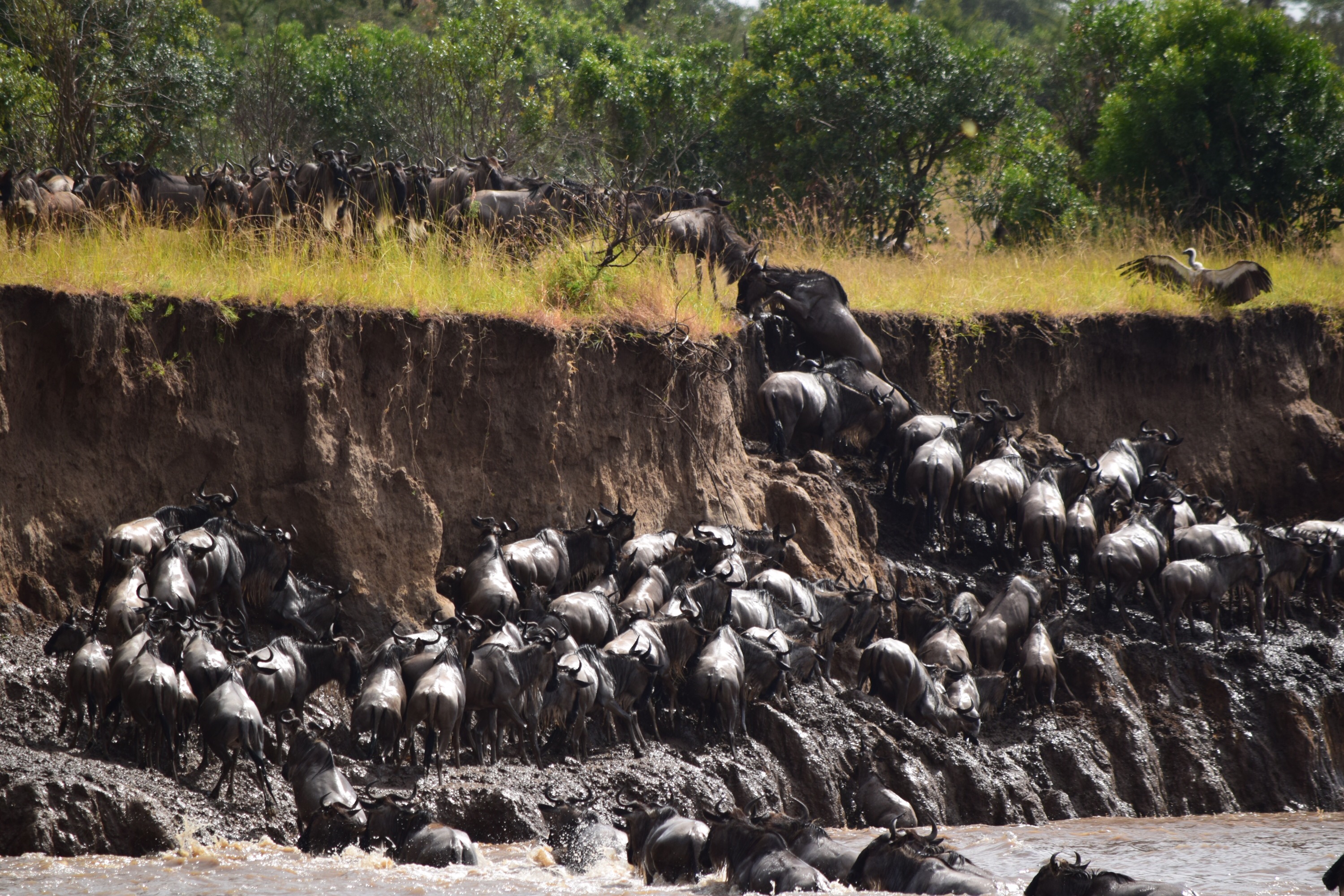 It was a once in a lifetime experience to see this crossing, and witness the triumph of perserverence and blind instinct.
 round the world in sixty days